


 IND
IND UAE
UAE SA
SA


Chatbots are no longer a “nice-to-have” feature. They are now a core part of customer support, sales, onboarding, and internal automation.
But one question still confuses decision-makers:
Should you use an AI chatbot or a rule-based chatbot?
On the surface, both answer questions and automate conversations. In reality, they differ massively in how they work, how much they cost, how they scale, and the return on investment they deliver.
This guide breaks down AI chatbots vs rule-based chatbots in simple, real-world terms—covering features, costs, performance, use cases, and ROI—so you can choose the right approach without overengineering or overspending.
Table of Contents
- What Is a Rule-Based Chatbot?
- What Is an AI Chatbot?
- How Rule-Based and AI Chatbots Actually Work
- Feature Comparison: AI vs Rule-Based Chatbots
- Cost Comparison (Setup, Maintenance & Scaling)
- Performance Comparison (Accuracy, Flexibility & UX)
- ROI Comparison: Which Delivers Better Business Value?
- Real-World Use Cases
- When Rule-Based Chatbots Make Sense
- When AI Chatbots Are the Better Choice
- Common Mistakes Businesses Make
- Final Verdict
- FAQs & People Also Ask
What Is a Rule-Based Chatbot?
A rule-based chatbot follows predefined rules, scripts, and decision trees. It responds only when a user’s input matches specific keywords or patterns.
If the input doesn’t match a rule, the chatbot fails or redirects the user.
Key characteristics
- If/then logic
- Fixed conversation paths
- No learning or adaptation
- Predictable but rigid
Example:
If user says “pricing” → show pricing page
If user says “contact” → show contact form
Rule-based chatbots are easy to understand—but limited.
What Is an AI Chatbot?
An AI chatbot uses natural language processing (NLP) and machine learning to understand user intent, context, and variations in language.
Instead of matching keywords, AI chatbots interpret meaning.
Key characteristics
- Understands natural language
- Handles multiple phrasings
- Learns from interactions
- Improves over time
AI chatbots are far more flexible and conversational—but also more complex.
Read More: AI Chatbots in Healthcare: Improving Patient Engagement
How Rule-Based vs AI Chatbots Actually Work
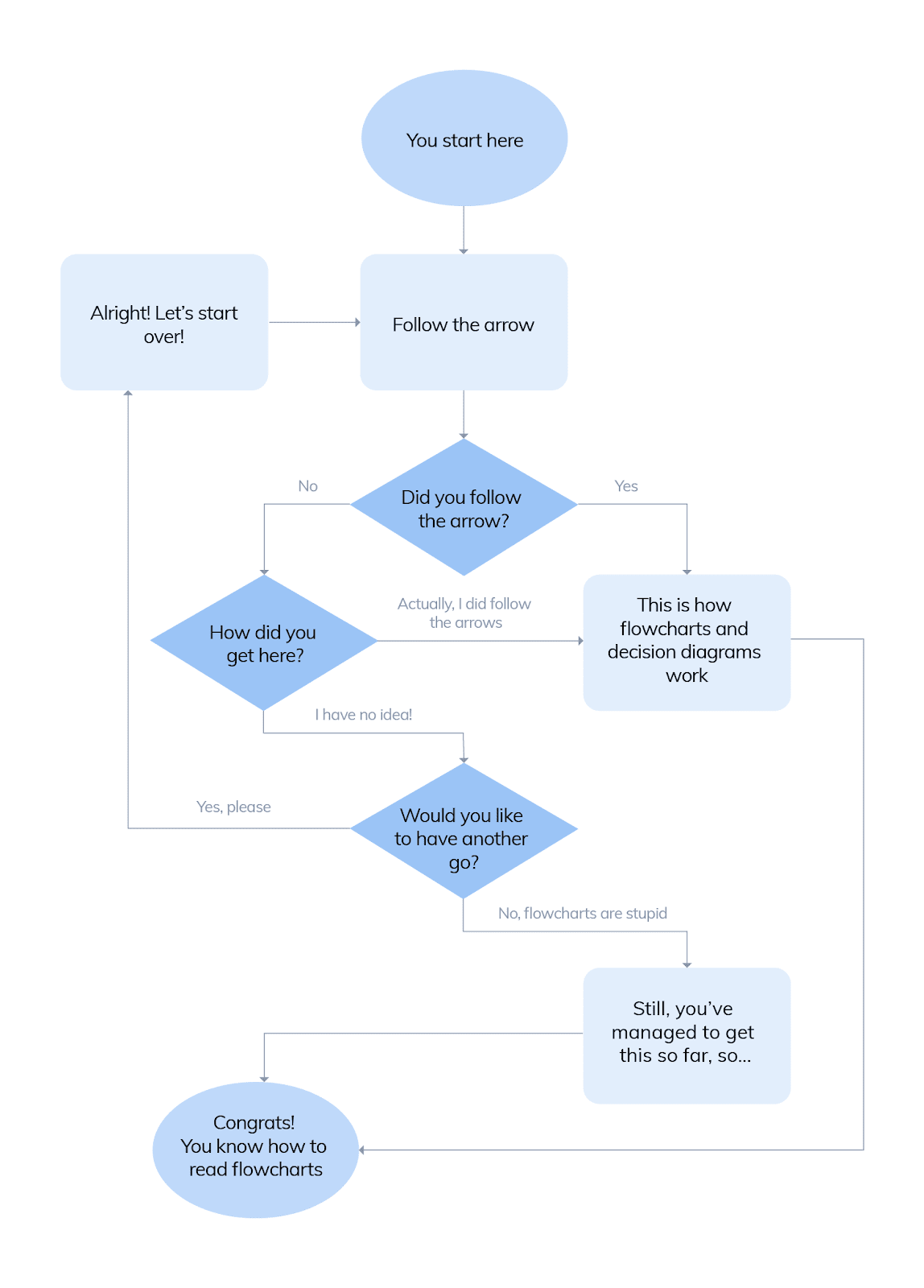
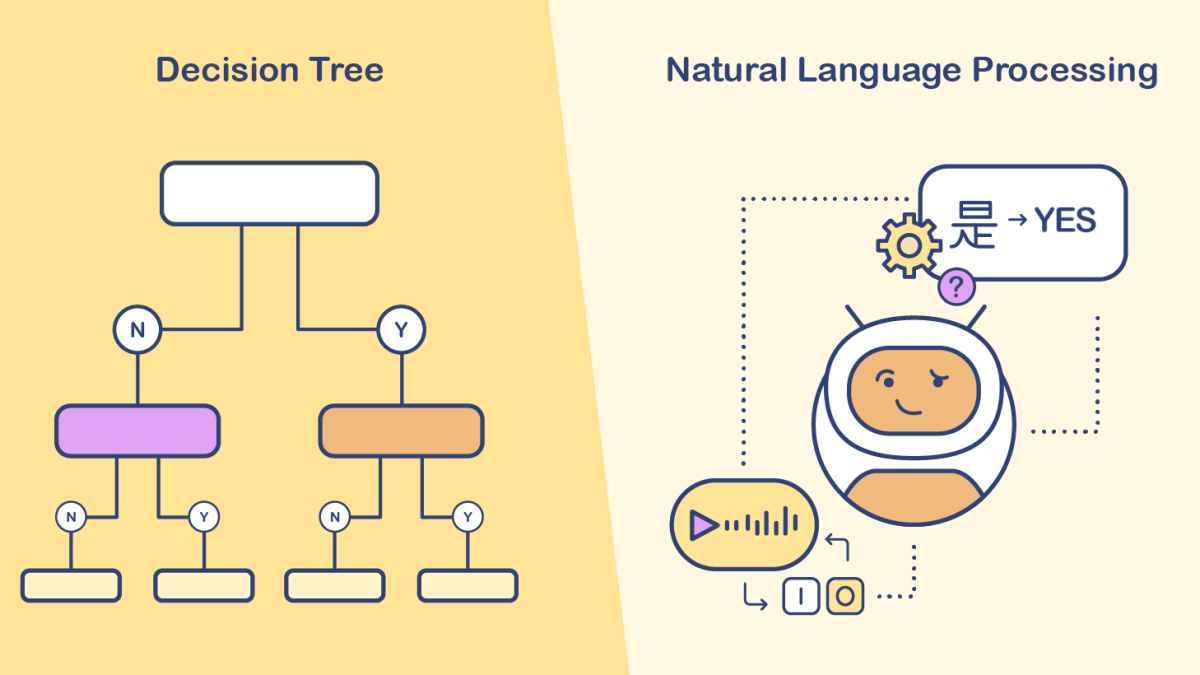
Rule-Based Chatbot Workflow
- User inputs text
- System checks predefined rules
- If match found → respond
- If no match → fallback or error
AI Chatbot Workflow
- User inputs text
- NLP model analyzes intent and context
- System generates or selects best response
- Model improves with usage
Core difference:
Rule-based chatbots follow scripts.
AI chatbots understand language.
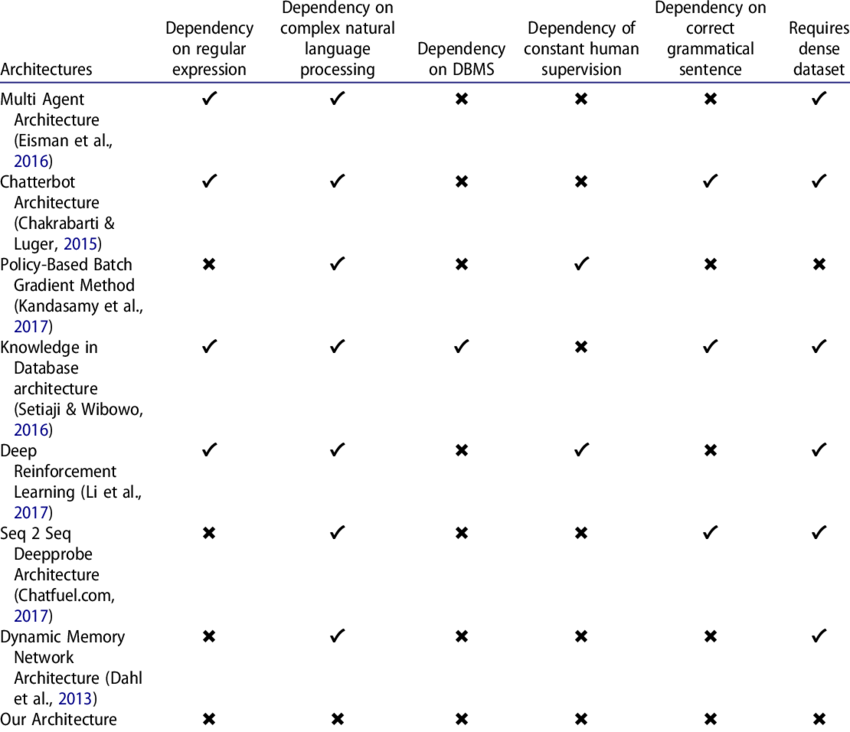
Feature Comparison: AI vs Rule-Based Chatbots
|
Feature |
Rule-Based Chatbots |
AI Chatbots |
|
Natural language understanding |
No |
Yes |
|
Handles varied user inputs |
Limited |
Strong |
|
Learns over time |
No |
Yes |
|
Personalization |
Minimal |
Advanced |
|
Multi-turn conversations |
Weak |
Strong |
|
Scalability |
Manual |
Automatic |
|
Maintenance effort |
High |
Lower over time |
Cost Comparison: Setup, Maintenance & Scaling
Rule-Based Chatbot Costs
- Initial setup: Low
- Maintenance: High (manual updates)
- Scaling: Expensive (more rules = more work)
Typical cost range:
- $500–$5,000 setup
- Ongoing manual maintenance
AI Chatbot Costs
- Initial setup: Medium to high
- Maintenance: Lower long-term
- Scaling: Efficient and automated
Typical cost range:
- $3,000–$30,000+ setup
- Usage-based or subscription pricing
Key insight:
Rule-based chatbots are cheaper to start.
AI chatbots are cheaper to scale.
Also Check: AI Chatbots vs. Live Agents: Which One Do Customers Prefer?
Performance Comparison: Accuracy, Flexibility & UX
Rule-Based Chatbots
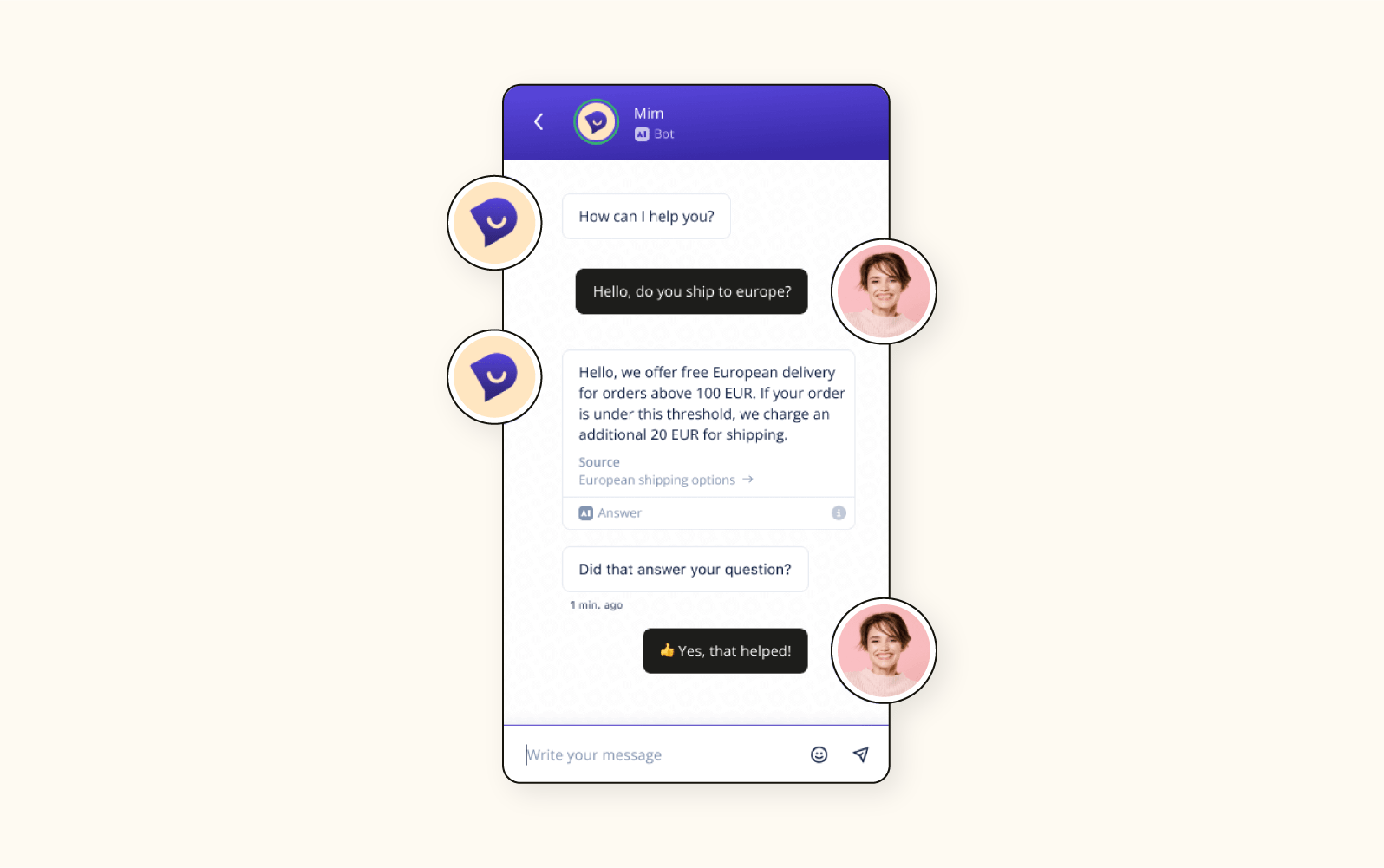
Accurate for predefined questions
Fail when users deviate from scripts
Poor user experience for complex queries
AI Chatbots
Handle natural conversation
Adapt to user intent
Provide consistent experience across channels
In real deployments, AI chatbots typically reduce:
- User frustration
- Support tickets
- Human agent workload
ROI Comparison: Which Delivers Better Business Value?
Rule-Based Chatbot ROI
Best for:
- Simple FAQs
- Fixed workflows
- Short-term automation
ROI is limited because:
- Maintenance costs grow
- User satisfaction plateaus
- Cannot handle complexity
AI Chatbot ROI
Best for:
- Customer support
- Sales qualification
- Lead generation
- Internal automation
AI chatbots deliver higher ROI by:
- Reducing support costs
- Increasing conversions
- Operating 24/7
- Scaling without proportional cost increases
In most growing businesses, AI chatbots outperform rule-based chatbots within 6–12 months.
Real-World Use Cases
Use Cases for Rule-Based Chatbots
- Static FAQ pages
- Appointment booking
- Simple form guidance
- Internal tools with fixed inputs
Use Cases for AI Chatbots
- Customer support automation
- E-commerce recommendations
- Banking and fintech support
- Healthcare triage
- SaaS onboarding
- HR and IT helpdesks
When Rule-Based Chatbots Make Sense
Choose rule-based chatbots if:
- Your use case is very simple
- Conversations never change
- Budget is extremely limited
- No need for personalization
When AI Chatbots Are the Better Choice
Choose AI chatbots if:
- Users ask questions in many ways
- You want better customer experience
- You expect growth and scale
- You care about long-term ROI
- Conversations are complex or evolving
Common Mistakes Businesses Make
-
Choosing rule-based chatbots for complex use cases
- Expecting AI chatbots to work without training
- Underestimating maintenance costs of rule-based systems
- Ignoring ROI and focusing only on setup cost
- Not aligning chatbot choice with business goals
Final Verdict
In contrast, businesses focused on enhanced customer experience, long-term scalability, and measurable ROI are rapidly shifting to AI chatbots. These systems are powered by advanced AI models that run efficiently on high-performance infrastructure such as H100 GPU, enabling faster inference, lower latency, and more accurate responses.
With AI model GPU as a Service, organizations can access enterprise-grade GPU power on demand, eliminating the need for heavy upfront investments in hardware. This model allows AI chatbots to scale instantly as user traffic grows, while maintaining consistent performance during peak loads.
Additionally, integrating an AI voicebot expands conversational capabilities beyond text. Voice-enabled AI bots deliver natural, human-like interactions across customer support, sales, and service channels, making conversations more intuitive and accessible.
As customer expectations evolve, most modern businesses quickly outgrow rigid rule-based systems. AI-powered chatbots and voicebots—accelerated by GPU infrastructure and delivered through flexible GPU-as-a-Service platforms—are now becoming the standard choice for companies aiming to innovate, scale, and stay competitive across industries.
FAQs
1. What is the main difference between AI and rule-based chatbots?
Rule-based chatbots follow predefined rules, while AI chatbots understand natural language and adapt to user intent.
2. Are AI chatbots more expensive than rule-based chatbots?
AI chatbots usually cost more initially but deliver better long-term ROI due to scalability and reduced maintenance.
3. Can rule-based chatbots use AI?
Some hybrid chatbots combine rules with AI, but pure rule-based chatbots do not learn or adapt.
4. Which chatbot is better for customer support?
AI chatbots are better suited for customer support because they handle varied questions and complex conversations.
5. Do AI chatbots replace human agents?
No. AI chatbots handle repetitive queries, allowing human agents to focus on complex or sensitive issues.
Author Bio:
Meghali is a tech-savvy content writer with expertise in AI, Cloud Computing, App Development, and Emerging Technologies. She excels at translating complex technical concepts into clear, engaging, and actionable content for developers, businesses, and tech enthusiasts. Meghali is passionate about helping readers stay informed and make the most of cutting-edge digital solutions.