

 IND
IND UAE
UAE SA
SA


Understanding GPU as a Service: Your Essential Guide
Were you searching for, "What are the key terms I need to know about GPU as a Service?"
GPU as a Service (GPUaaS) represents a transformative cloud computing model that provides on-demand access to powerful Graphics Processing Units without the burden of purchasing, maintaining, or managing physical hardware. This pay-as-you-go approach democratizes access to high-performance computing resources essential for artificial intelligence, machine learning, deep learning, scientific computing, and rendering workloads.
Here's the thing:
The GPU as a Service market has exploded from USD 3.80 billion in 2024 to a projected USD 12.26 billion by 2030, growing at a remarkable CAGR of 22.9%. With North America accounting for over 32% of the global market share, and enterprises rapidly adopting cloud-based GPU solutions, understanding the terminology has become mission-critical for success.
But navigating the technical jargon can feel overwhelming.
That's exactly why we've created this comprehensive glossary—to demystify the essential terms powering today's AI revolution and help you make informed infrastructure decisions for 2026 and beyond.
What is GPU as a Service?
GPU as a Service (GPUaaS) is a cloud-based delivery model where providers offer remote access to Graphics Processing Units through virtualized infrastructure. Rather than investing in expensive on-premises hardware, organizations rent GPU compute power on-demand, paying only for what they use.
Think of it this way:
Just as Netflix transformed video consumption from ownership to streaming, GPUaaS transforms computing power from capital expenditure to operational flexibility. The global market was valued at USD 4.31 billion in 2024 and is projected to reach USD 49.84 billion by 2032, exhibiting a CAGR of 35.8%—a testament to its explosive adoption across industries.
Core GPU Terminology
CUDA (Compute Unified Device Architecture)
CUDA is NVIDIA's proprietary parallel computing platform and programming model that enables developers to leverage GPU power for general-purpose processing. CUDA cores are versatile, general-purpose processing units capable of handling a wide range of parallel computing tasks, from graphics rendering to scientific simulations.
Why it matters: CUDA has become the de facto standard for GPU programming, with extensive libraries and frameworks that accelerate development cycles for AI and HPC applications.
Tensor Cores
Specialized processing units introduced in NVIDIA's Volta architecture designed specifically for matrix operations in AI workloads. Tensor Cores are specialized units in NVIDIA GPUs designed to accelerate matrix operations like multiplications and convolutions, delivering up to 12x throughput improvement over previous generations.
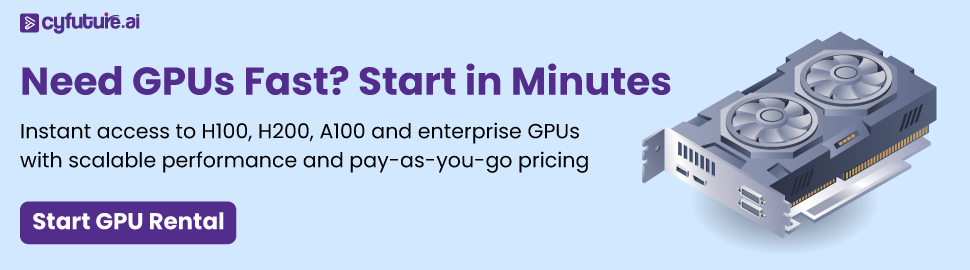
Real-world impact: A single NVIDIA V100 contains 640 Tensor Cores, enabling mixed-precision training that dramatically reduces training time for deep neural networks without sacrificing accuracy.
vRAM (Video Random Access Memory)
High-speed memory dedicated to GPUs for storing textures, frame buffers, and compute data. VRAM technologies like GDDR6 or HBM (High Bandwidth Memory) provide extremely high throughput, essential for handling massive datasets in AI training.
Key consideration: Model size directly correlates with vRAM requirements. Training a large language model with 175 billion parameters requires GPUs with at least 40GB vRAM, making hardware selection critical for project success.
Read More: GPU as a Service (GPUaaS): Providers, Pricing, Trends & Use Cases (2026)
GPU Service Models Explained
vGPU (Virtual GPU)
A virtualization technology that enables multiple virtual machines to share a single physical GPU simultaneously. vGPU allows a physical GPU to be partitioned, with each VM getting its own dedicated portion of GPU resources, enabling efficient resource utilization in cloud environments.
Use case: Virtual Desktop Infrastructure (VDI) deployments, where hundreds of remote workers need graphics acceleration without dedicated hardware.
GPU Passthrough
A method where an entire physical GPU is dedicated exclusively to a single virtual machine, providing near-native performance. Unlike vGPU's shared approach, GPU passthrough offers maximum, uninterrupted GPU performance ideal for AI training, 3D simulations, or advanced video processing.
When to choose passthrough: Mission-critical AI training workloads, real-time rendering, or applications requiring guaranteed, isolated GPU resources.
Multi-Instance GPU (MIG)
Technology introduced by NVIDIA in 2020 that partitions a single physical GPU into multiple isolated instances at the hardware level. Each instance operates independently with its own dedicated compute, memory, and bandwidth resources, delivering superior isolation compared to time-slicing approaches.
Business advantage: Maximize GPU utilization by running multiple independent workloads on expensive H100 or A100 GPUs, reducing infrastructure costs by up to 40%.
Workload and Processing Terms
HPC (High-Performance Computing)
Computing systems designed to process massive datasets and perform complex calculations at extraordinary speeds. HPC refers specifically to clusters of computers in cloud systems used for high-speed data ingestion and processing, orchestrated through specialized technologies like containerization and distributed file systems.
Industry applications:
- Financial modeling and risk analysis
- Genomic sequencing and drug discovery
- Climate modeling and weather prediction
- Oil and gas exploration simulations
Inference
The operational phase where trained AI models make predictions on new data. Unlike training, which requires enormous computational resources, inference servers benefit dramatically from batch processing multiple jobs together, drastically increasing computational efficiency in terms of processing speed and energy consumption.
Performance metric: Modern inference servers achieve sub-100ms latency for real-time applications like autonomous vehicles and fraud detection systems.
Batch Processing
The technique of grouping multiple computational jobs together for simultaneous processing, maximizing GPU utilization. GPU-based inference computational efficiency drastically increases by processing multiple jobs together in a batch, improving both performance and energy efficiency.
Optimization tip: Implement dynamic batching with configurable timeout windows to balance latency requirements against throughput maximization.
GPGPU (General-Purpose GPU)
The utilization of GPUs for computational tasks traditionally handled by CPUs. GPGPU is the use of a graphics processing unit to perform computation in applications traditionally handled by the central processing unit, enabling massive parallelization for scientific computing, data analytics, and AI workloads.
Performance comparison: A single GPU can match the performance of dozens of CPU servers for parallelizable workloads, delivering transformative cost-efficiency.
Also Check: GPU as a Service vs On-Premise GPUs: Cost, Performance & Scalability Comparison (2026)
Cloud Infrastructure Components
GPU Instances
Pre-configured virtual machine offerings with dedicated GPU resources available for immediate deployment. Cloud providers like Cyfuture AI offer diverse instance types—from lightweight T4 instances for inference to powerful H100 configurations for large-scale training.
Cyfuture AI advantage: With support for NVIDIA H100, H200, A100, V100, P100, T4, and K80 GPUs, Cyfuture AI provides unmatched flexibility for diverse AI workloads across Indian enterprises.
Spot Instances
Cost-optimized GPU instances available at discounted rates (up to 90% off) that can be reclaimed by the provider with short notice. Ideal for fault-tolerant workloads like hyperparameter tuning, rendering, and batch analytics.
Strategic use: Combine spot instances for non-critical experimentation with reserved instances for production workloads, optimizing infrastructure spend by 50-70%.
Reserved Instances
GPU resources committed for extended periods (1-3 years) at significantly reduced hourly rates compared to on-demand pricing. Perfect for predictable, long-running workloads with consistent resource requirements.
ROI calculation: Annual AI training pipelines running 24/7 achieve 40-60% cost savings through reserved instance commitments versus on-demand pricing.
Bare Metal GPU Servers
Physical servers with dedicated GPU hardware, providing maximum performance without virtualization overhead. Cyfuture AI offers advanced NVIDIA GPUs with flexible pay-as-you-go models on both virtualized and bare metal configurations.
Performance edge: Eliminate the 2-5% overhead from virtualization layers, critical for latency-sensitive applications and maximum throughput scenarios.
Performance and Scaling Metrics
TFLOPS (Teraflops)
A measurement of computational performance representing trillions of floating-point operations per second. Modern GPUs like the NVIDIA H100 deliver over 1,000 TFLOPS for AI training workloads.
Benchmark context: The NVIDIA A100 achieves 312 TFLOPS in FP16 precision with Tensor Cores, enabling training of transformer models with billions of parameters.
Memory Bandwidth
The rate at which data transfers between GPU memory and processing cores, measured in GB/s. High bandwidth memory (HBM) in modern GPUs provides 2-3TB/s bandwidth, eliminating memory bottlenecks in data-intensive workloads.
Why it matters: Memory bandwidth directly impacts training speed for large models. Insufficient bandwidth creates bottlenecks regardless of compute capacity.
NVLink
NVIDIA's high-speed interconnect technology enabling direct GPU-to-GPU communication at speeds up to 900 GB/s. Essential for multi-GPU configurations running distributed training workloads.
Scaling advantage: NVLink enables near-linear scaling across 8-GPU configurations, dramatically reducing training time for large language models.
PCIe (Peripheral Component Interconnect Express)
The standard interface connecting GPUs to system motherboards. Modern PCIe Gen5 delivers 128 GB/s bandwidth per x16 slot, sufficient for most single-GPU workloads.
Deployment consideration: Multi-GPU setups benefit from PCIe switches and NVLink bridges to maximize inter-GPU communication bandwidth.
Industry Statistics: The GPUaaS Revolution
The numbers tell a compelling story:
- The global GPU as a Service market reached USD 4.96 billion in 2025 and is forecasted to reach USD 31.89 billion by 2034, accelerating at a CAGR of 22.98%
- Large enterprises held 62% of the market share in 2025, with SMEs experiencing the fastest growth rate
- Gaming segment accounted for the largest revenue share in 2024, followed rapidly by IT & telecom sectors
- In January 2025, SK Telecom launched GPUaaS services in South Korea, marking significant global expansion
And here's what's driving adoption:
The convergence of AI democratization, cloud-first strategies, and cost optimization imperatives. Organizations recognize that a server with a single GPU can surpass the performance of dozens of CPU servers, making GPUaaS economically irresistible.
Regional Growth: India's AI Infrastructure Boom
India has emerged as a powerhouse in the GPU cloud ecosystem. Cyfuture AI operates MeitY-empanelled data centers certified for PCI DSS and ISO 27001, ensuring data sovereignty and security for Indian enterprises and government deployments.
Cyfuture AI's competitive edge:
- Enterprise-grade infrastructure with 99.9% uptime guarantee
- Support for cutting-edge NVIDIA H100, H200, and A100 GPUs
- Flexible pay-as-you-go pricing optimized for Indian market
- 24/7 expert support with deep AI infrastructure expertise
- Zero-latency inference for mission-critical applications
The domestic AI infrastructure has transformed dramatically, with total data center capacity in India exceeding 700MW by 2024, positioning the nation as a major AI development hub.
Security and Compliance Terms
Data Sovereignty
The principle that data is subject to the laws and governance of the country where it's stored. Critical for regulated industries like healthcare, finance, and government sectors.
Compliance requirement: Organizations handling sensitive data must ensure their GPU cloud provider maintains local data centers with appropriate certifications.
Encryption at Rest/Transit
Security protocols protecting data stored in systems (at rest) and during transfer (in transit). Modern GPU cloud platforms implement AES-256 encryption standards with TLS 1.3 for data transmission.
ISO 27001 / PCI DSS Compliance
International standards for information security management and payment card data protection. Cyfuture AI implements enterprise-grade security protocols including encryption, multi-layer firewalls, and real-time threat detection, maintaining full compliance.
Cost Optimization Strategies
Pay-Per-Use Pricing
Billing model charging based on actual GPU consumption, typically measured per hour or minute. Pay-per-use models allow organizations to manage computing expenses efficiently by adjusting GPU resources according to current needs.
Cost control: Implement automated shutdown policies for idle instances, potentially saving 40-60% on development and testing environments.
Subscription-Based Plans
Committed usage models offering discounted rates for predictable workloads. Subscription-based plans accounted for the largest market revenue share in 2024, providing cost predictability and budget certainty.
Strategic approach: Reserve baseline capacity through subscriptions while handling spikes with on-demand instances, optimizing both cost and performance.
Emerging Technologies
AI Accelerators
Specialized hardware designed specifically for AI workloads, including NVIDIA's DGX systems and Google's TPUs. These purpose-built platforms deliver 10-100x performance improvements over general-purpose GPUs for specific AI tasks.
Quantum-Inspired Computing
Hybrid approaches combining classical GPU computing with quantum-inspired algorithms, accelerating optimization problems in logistics, finance, and drug discovery.
Edge AI
Deploying AI inference capabilities at network edges close to data sources. GPU-powered edge devices enable real-time processing for autonomous vehicles, smart cameras, and IoT applications with sub-10ms latency requirements.
Accelerate Your AI Journey with Cyfuture AI
Understanding GPU terminology is just the beginning.
The real transformation happens when you deploy this knowledge on world-class infrastructure designed for your success.
Cyfuture AI eliminates the complexity of GPU provisioning, scaling, and management—empowering your team to focus on innovation rather than infrastructure headaches. With flexible GPU-as-a-Service pricing that can slash AI infrastructure expenses by up to 70%, we make powerful AI accessible for startups and enterprises alike.
Deploy production-ready AI solutions in minutes instead of weeks. Scale from zero to thousands of concurrent requests in milliseconds. Achieve sub-100ms response times with intelligent load balancing across distributed nodes.
Frequently Asked Questions
1. What's the difference between GPU as a Service and traditional GPU hosting?
GPUaaS provides on-demand, elastic access to GPU resources through cloud platforms with pay-per-use pricing, while traditional hosting requires purchasing and maintaining physical hardware with significant upfront capital expenditure. GPUaaS eliminates infrastructure management complexity and enables instant scaling.
2. How much does GPU as a Service cost in India?
Pricing varies by GPU model and provider. NVIDIA H100 GPUs typically range from ₹200-400 per hour, while A100 GPUs cost ₹150-300 per hour. Cyfuture AI offers competitive pricing starting at ₹34 per hour for entry-level GPUs, with volume discounts and reserved instance options available.
3. Which GPU is best for AI training vs inference?
For training large models, choose high-memory GPUs like A100 (40-80GB) or H100 (80GB) with strong multi-GPU interconnects. For inference, lighter GPUs like T4 or L4 provide excellent performance at lower cost. The optimal choice depends on model size, batch size, and latency requirements.
4. Can I use multiple GPUs simultaneously for my workload?
Yes, most GPUaaS providers support multi-GPU configurations. Training large language models often requires 8-64 GPUs connected via NVLink or high-speed networking. Cyfuture AI supports scalable multi-GPU deployments with optimized networking for distributed training workloads.
5. What's the difference between CUDA Cores and Tensor Cores?
CUDA cores are general-purpose processing units handling diverse parallel computations, while Tensor Cores are specialized for matrix operations in AI workloads. Tensor Cores deliver 8-12x faster performance for deep learning tasks by executing mixed-precision matrix multiplications efficiently.
6. How do I choose between vGPU and GPU passthrough?
Choose vGPU for multi-tenant environments requiring cost-effective resource sharing, like VDI or development workloads. Select GPU passthrough for performance-critical applications requiring dedicated resources, such as production AI training or real-time rendering. Consider workload isolation requirements and budget constraints.
7. Is my data secure on GPU cloud platforms?
Reputable providers implement enterprise-grade security including encryption at rest and transit, network isolation, multi-factor authentication, and compliance certifications (ISO 27001, PCI DSS). Cyfuture AI maintains MeitY-empanelled data centers ensuring data sovereignty and compliance for Indian regulations.
8. Can GPUaaS handle my production AI workloads?
Yes, modern GPUaaS platforms are designed for production deployments with 99.9%+ uptime guarantees, automatic failover, elastic scaling, and global load balancing. Organizations worldwide run mission-critical AI services on GPUaaS infrastructure, benefiting from managed services and 24/7 support.
9. How quickly can I provision GPU resources?
Most GPUaaS providers enable GPU instance provisioning within 2-5 minutes. Cyfuture AI delivers instant access to pre-configured GPU environments, allowing deployment of production-ready AI solutions in minutes rather than weeks required for on-premises hardware acquisition.
Author Bio:
Meghali is a tech-savvy content writer with expertise in AI, Cloud Computing, App Development, and Emerging Technologies. She excels at translating complex technical concepts into clear, engaging, and actionable content for developers, businesses, and tech enthusiasts. Meghali is passionate about helping readers stay informed and make the most of cutting-edge digital solutions.