

 IND
IND UAE
UAE SA
SA


Introduction: Unlock Unprecedented AI Computing Power
Are you searching for scalable, cost-effective GPU infrastructure to accelerate your AI and machine learning projects?
The NVIDIA H100 GPU has emerged as the definitive choice for enterprises, researchers, and developers seeking to power compute-intensive AI workloads—from large language model training to real-time inference at scale. Built on the Hopper architecture, the H100 delivers up to 9x faster AI training and 30x faster inference compared to its predecessor, making it the gold standard for modern AI infrastructure in 2026.
Renting H100 GPUs offers organizations the flexibility to access cutting-edge hardware without massive capital expenditure, enabling rapid experimentation, scalable deployment, and optimized cost management for projects ranging from generative AI to high-performance computing (HPC).
Here's the thing:
The AI landscape is evolving at breakneck speed. And staying competitive means having access to the right computational resources at the right time.
Let's dive deep into everything you need to know about renting H100 GPUs.
What is NVIDIA H100 GPU?
The NVIDIA H100 Tensor Core GPU represents the fourth generation of NVIDIA's data center GPU architecture, specifically engineered for AI, machine learning, and high-performance computing workloads. Launched in 2022 and refined through 2024-2025, the H100 features:
- 80GB or 94GB HBM3 memory with up to 3TB/s bandwidth
- Fourth-generation Tensor Cores delivering 3,958 TFLOPS of FP8 performance
- Transformer Engine optimized for large language models
- NVLink connectivity supporting up to 900GB/s GPU-to-GPU communication
- PCIe Gen5 and SXM5 form factors for flexible deployment
According to NVIDIA's 2024 performance benchmarks, a single H100 can process inference requests up to 30x faster than the A100, while multi-GPU configurations deliver near-linear scaling for distributed training workloads.
Why Rent H100 GPU Instead of Buying?
The economics are compelling:
Capital Efficiency
Purchasing a single NVIDIA H100 SXM5 GPU costs approximately $30,000-$40,000, with complete 8-GPU systems exceeding $300,000. Add infrastructure, cooling, power, and maintenance—and you're looking at substantial six-figure investments.
Rental models eliminate this barrier.
Flexibility and Scalability
Machine learning projects have variable compute demands. Training a large language model might require 64 GPUs for two weeks, while inference workloads need sustained access to 4-8 GPUs. Rental providers enable you to scale up during intensive training phases and scale down during experimentation.
Here's what matters:
According to a 2025 Stanford HAI report, 68% of AI startups and research teams now prefer cloud GPU rental over on-premises infrastructure due to project-based resource requirements.
Access to Latest Hardware
GPU technology evolves rapidly. The H100 represents current state-of-the-art, but NVIDIA's roadmap includes next-generation architectures. Rental agreements provide pathways to upgrade without obsoleting expensive hardware investments.
Operational Simplicity
Managing GPU infrastructure demands expertise in data center operations, cooling systems, network architecture, and power distribution. Rental providers handle these complexities, allowing teams to focus exclusively on model development and deployment.
Read More: Buy GPU Server in India: Pricing, Warranty & Delivery
Top H100 GPU Rental Providers in 2026

The market offers diverse options:
Cyfuture AI
Cyfuture AI has positioned itself as a leading provider of H100 GPU infrastructure with enterprise-grade reliability and competitive pricing. Their H100 offerings include:
- On-demand and reserved instances with hourly to annual billing
- Pre-configured AI/ML environments with popular frameworks
- 99.95% uptime SLA backed by redundant infrastructure
- 24/7 technical support from AI infrastructure specialists
Cyfuture AI's hybrid cloud approach enables seamless integration between H100 GPU clusters and existing enterprise infrastructure, particularly valuable for organizations with data sovereignty requirements or hybrid deployment strategies.
AWS EC2 P5 Instances
Amazon's P5 instances feature 8x H100 GPUs with 640GB total GPU memory. Pricing starts at approximately $98.32/hour for on-demand instances, with significant discounts available through reserved instances and savings plans.
Google Cloud A3 Instances
Google offers H100-powered A3 instances with up to 8 GPUs, optimized for AI training and inference. Integration with Google's AI Platform and Vertex AI provides streamlined ML workflows.
Microsoft Azure ND H100 v5
Azure's ND H100 v5 series delivers high-bandwidth InfiniBand networking alongside H100 GPUs, ideal for distributed training across multiple nodes.
Lambda Labs
Lambda specializes in GPU cloud services with straightforward pricing (approximately $2.49/hour per H100) and no complex billing structures—popular among researchers and smaller teams.
H100 GPU Pricing Models and Cost Optimization
Understanding pricing structures is critical:
Hourly Rates (2026 Market Averages)
- Single H100 GPU: $2.00-$3.50/hour
- 8x H100 GPU system: $16.00-$28.00/hour
- Reserved instances (1-year): 30-40% discount
- Reserved instances (3-year): 50-60% discount
Cost Calculation Example
Training a 7B parameter LLM on the RedPajama dataset:
- Estimated training time: 120 hours on 8x H100
- Cost at $20/hour: $2,400
- Equivalent on-premises: $300,000+ hardware + $50,000/year operational costs
The ROI becomes clear for project-based work.
Optimization Strategies
Spot Instances
Providers like Lambda and Cyfuture AI offer spot pricing with 50-70% discounts for interruptible workloads. Ideal for training jobs with checkpointing.
Batch Scheduling
Consolidate training runs during off-peak hours when spot availability increases.
Mixed Precision Training
H100's FP8 Tensor Cores enable 2x throughput improvements with minimal accuracy impact, effectively halving training costs.
According to a 2025 analysis by Weights & Biases, teams implementing these optimization strategies reduced GPU costs by an average of 47% without compromising model performance.
Use Cases: When to Rent H100 GPUs
The H100 excels in specific scenarios:
Large Language Model Development
Training and fine-tuning transformer models with billions of parameters. The H100's Transformer Engine accelerates attention mechanisms, while high memory bandwidth handles massive datasets efficiently.
GPT-style models, BERT variants, and multimodal transformers see 5-9x speedups over previous generation hardware.
Computer Vision at Scale
Object detection, segmentation, and classification on high-resolution imagery. A single H100 can process 4K video streams in real-time or train ResNet-152 on ImageNet in under 30 minutes.
Generative AI and Diffusion Models
Stable Diffusion, DALL-E-style architectures, and video generation models benefit enormously from H100's tensor performance. Inference latency drops below 300ms for 512×512 image generation.
Drug Discovery and Molecular Dynamics
Protein folding simulations (AlphaFold-style), molecular docking, and quantum chemistry calculations leverage H100's FP64 double-precision capabilities alongside AI-accelerated algorithms.
Recommendation Systems
Real-time personalization engines processing billions of interactions. H100's memory bandwidth enables embedding tables exceeding 100GB while maintaining microsecond-latency inference.
How to Get Started with H100 GPU Rental
Follow this structured approach:
Step 1: Assess Your Requirements
Calculate your actual compute needs:
- Model size and architecture
- Dataset dimensions
- Target training duration
- Inference throughput requirements
Use tools like the Training Compute Calculator or consult provider technical teams.

Step 2: Choose Your Provider
Evaluate based on:
- Geographic availability (latency considerations)
- Network infrastructure (InfiniBand for multi-node)
- Software ecosystem (pre-installed frameworks)
- Support quality (critical for production deployments)
- Pricing transparency (hidden egress costs?)
Step 3: Environment Setup
Most providers offer:
- Pre-built Docker containers (PyTorch, TensorFlow, JAX)
- Jupyter notebook interfaces
- SSH access for custom configurations
- Dataset storage integration (S3, GCS compatibility)
Step 4: Optimize and Monitor
Implement monitoring from day one:
- GPU utilization metrics (target >85% for training)
- Memory usage patterns
- Training loss curves
- Cost tracking dashboards
Tools like NVIDIA DCGM, Weights & Biases, and provider-native dashboards provide visibility.
Step 5: Scale Strategically
Start with single-GPU experiments, validate your pipeline, then scale to multi-GPU distributed training. This approach minimizes costs during development while enabling rapid scaling for production.
Cyfuture AI: Your H100 GPU Partner

Cyfuture AI distinguishes itself through enterprise-focused H100 GPU infrastructure designed for mission-critical AI workloads. With data centers strategically located across key markets, Cyfuture delivers low-latency access to H100 clusters alongside comprehensive managed services.
Their platform supports seamless integration with existing cloud infrastructure, enabling hybrid deployments that balance performance, cost, and compliance requirements. For organizations scaling from experimentation to production AI systems, Cyfuture AI provides the technical expertise and infrastructure reliability essential for success.
Also Check: How to Rent NVIDIA H100, H200 & A100 GPUs On Demand
H100 vs. Alternative GPUs: Making the Right Choice
Not every workload demands H100s:
|
GPU |
Best For |
Approximate Cost/Hour |
|
H100 |
LLM training, large-scale inference |
$2.00-$3.50 |
|
A100 |
Mid-size models, established workflows |
$1.20-$2.50 |
|
L40S |
Graphics + AI hybrid, inference-focused |
$0.80-$1.50 |
|
RTX 6000 Ada |
Prototyping, smaller models |
$0.50-$1.20 |
An H100 makes financial sense when:
- Training time reductions justify higher hourly rates
- Memory requirements exceed 40GB
- Inference SLAs demand sub-second latency
- Distributed training benefits from NVLink bandwidth
For research experimentation or smaller models (under 1B parameters), A100 or L40S instances often provide better cost-performance ratios.
Security and Compliance Considerations
Enterprise AI workloads demand robust security:
Data Encryption
Ensure providers offer encryption at rest (AES-256) and in transit (TLS 1.3). H100s support confidential computing features for sensitive datasets.
Network Isolation
Deploy GPU instances within private VPCs with firewall rules restricting access. Many providers offer dedicated networking options for compliance-sensitive workloads.
Compliance Certifications
Verify provider certifications relevant to your industry:
- SOC 2 Type II for general security controls
- HIPAA for healthcare applications
- ISO 27001 for information security management
- GDPR compliance for European data
Cyfuture AI maintains comprehensive compliance certifications, enabling enterprises to deploy AI infrastructure while meeting regulatory requirements across industries.
Audit Logging
Enable detailed logging of GPU access, data transfers, and API calls for audit trails and security monitoring.
Future-Proofing Your H100 Investment
The AI hardware landscape evolves constantly:
NVIDIA's Roadmap
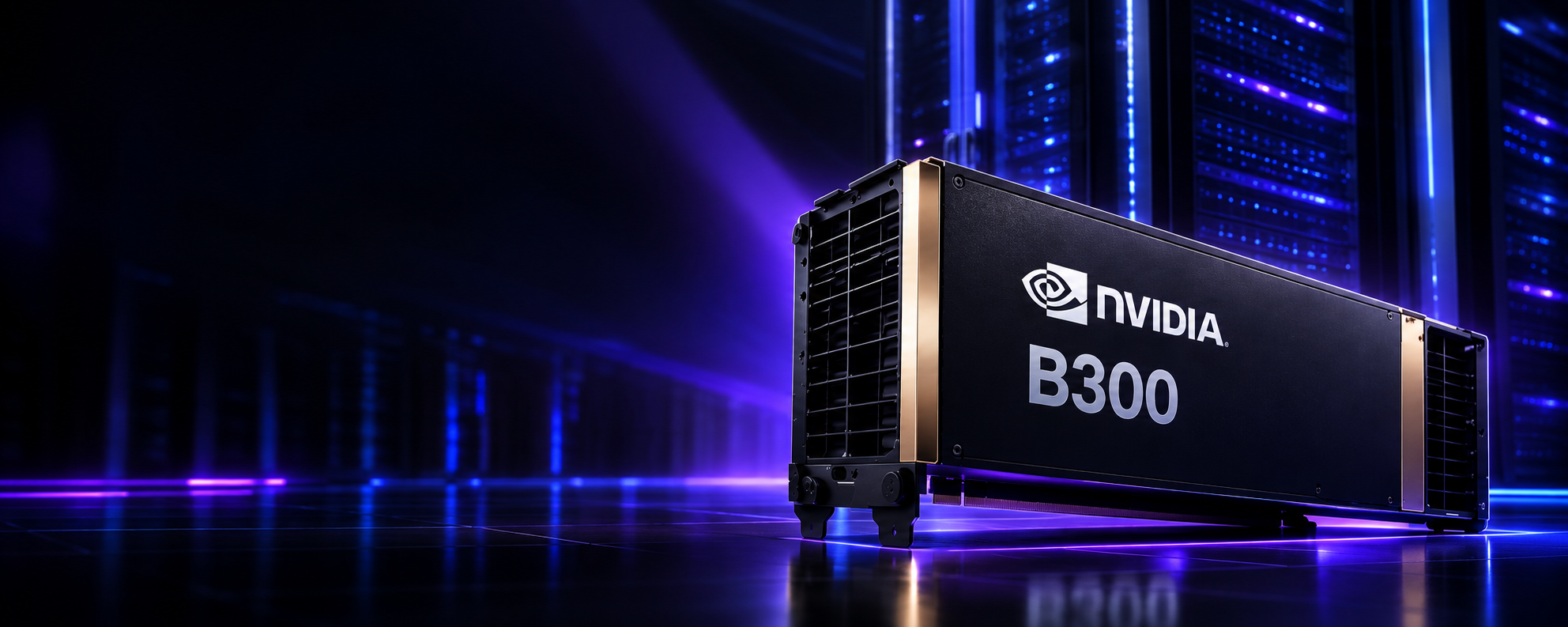
The Blackwell architecture (B100/B200 GPUs) launches in late 2025, promising further performance improvements. Rental agreements provide upgrade paths without hardware obsolescence concerns.
Software Ecosystem Evolution
Framework optimizations continue improving H100 utilization. PyTorch 2.x with compile mode and TensorFlow's XLA compiler deliver 20-30% performance gains over legacy code.
Emerging AI Paradigms
Techniques like mixture-of-experts (MoE), retrieval-augmented generation (RAG), and multimodal models all benefit from H100's architecture but have different scaling characteristics.
Rental flexibility enables adaptation as methodologies evolve.
Accelerate Your AI Journey with Cyfuture AI
The H100 GPU represents a transformative leap in AI computing capability, delivering unprecedented performance for the most demanding machine learning workloads. Whether you're training frontier models, deploying production inference systems, or conducting cutting-edge research, H100 rental provides the computational foundation for success without prohibitive capital requirements.
Choosing the right provider matters enormously. Infrastructure reliability, technical support quality, pricing transparency, and ecosystem integration separate mediocre experiences from exceptional ones.
Transform your AI development with Cyfuture AI's H100 GPU infrastructure—where enterprise-grade reliability meets competitive pricing and expert support.
Stop letting compute constraints slow your innovation. Start building the next generation of AI applications with the world's most powerful GPU architecture.

FAQ's
1. How much does it cost to rent an H100 GPU per hour?
H100 GPU rental costs range from $2.00 to $3.50 per hour per GPU for on-demand instances, with significant discounts (30-60%) available through reserved instances. Eight-GPU systems cost approximately $16-$28 per hour depending on provider and commitment level.
2. What is the difference between H100 PCIe and H100 SXM5?
H100 SXM5 offers higher power (700W vs 350W), faster NVLink connectivity (900GB/s vs none), and better multi-GPU scaling. PCIe variants provide easier deployment in standard servers but with reduced performance for distributed workloads. SXM5 is preferred for training, while PCIe works well for inference.
3. Can I run multiple AI models simultaneously on a single H100?
Yes, H100 supports Multi-Instance GPU (MIG) technology, allowing partitioning into up to seven isolated instances. This enables running different models or serving multiple clients on a single GPU while maintaining performance isolation and security boundaries.
4. How long does it take to train a large language model on H100?
Training time varies dramatically by model size. A 7B parameter model trains in 100-150 hours on 8x H100s, while 70B parameter models require 1,000-2,000 GPU-hours. GPT-3 scale models (175B parameters) need several thousand H100-hours for full training.
5. Which cloud providers offer the best H100 rental pricing?
Cyfuture AI, Lambda Labs, and CoreWeave typically offer competitive pricing, ranging from $2.00-$2.50/hour per GPU. Hyperscalers (AWS, Azure, GCP) cost slightly more ($2.80-$3.50/hour) but provide broader service integration and global availability.
6. Do I need specialized knowledge to rent and use H100 GPUs?
Basic familiarity with deep learning frameworks (PyTorch, TensorFlow) and command-line interfaces suffices for most use cases. Providers offer pre-configured environments with popular frameworks installed. For advanced distributed training, understanding parallel computing concepts helps but isn't mandatory initially.
7. What are the network requirements for multi-GPU H100 training?
For optimal multi-node training, InfiniBand networking (200-400 Gbps) or high-bandwidth Ethernet (100+ Gbps) is essential. Single-node multi-GPU setups rely on NVLink and function with standard networking. Most providers offer appropriate network infrastructure as part of their H100 offerings.
8. Can H100 GPUs handle real-time inference for production applications?
Absolutely. H100s deliver inference latency under 10ms for most models, with batch processing capabilities exceeding 10,000 inferences per second for optimized models. The Transformer Engine specifically accelerates LLM inference, making H100 ideal for production serving.
9. How do I migrate my existing A100-based workflows to H100?
Most PyTorch and TensorFlow code runs on H100 without modification. To leverage FP8 precision and Transformer Engine optimizations, minor code changes enable 2-3x additional speedup. Providers often offer migration guides and consulting services for optimization.
Author Bio:
Meghali is a tech-savvy content writer with expertise in AI, Cloud Computing, App Development, and Emerging Technologies. She excels at translating complex technical concepts into clear, engaging, and actionable content for developers, businesses, and tech enthusiasts. Meghali is passionate about helping readers stay informed and make the most of cutting-edge digital solutions.