

 IND
IND UAE
UAE SA
SA
AI Software Services Explained: Development to Deployment
AI software services are end-to-end professional offerings that cover the full lifecycle of building, deploying, and operating AI-powered applications — from data engineering and model training to API integration, MLOps automation, and post-production monitoring. They enable enterprises to adopt AI without building infrastructure from scratch.
- AI software services span six stages: data → model → validate → deploy → monitor → optimize
- Service types range from no-code AI app builders to fully custom model development
- MLOps reduces model deployment time from months to days through CI/CD automation
- Cloud, on-premise, hybrid, and edge deployment models serve different enterprise needs
- India-based AI development services offer 20–40% cost savings with full data residency compliance
Build and deploy AI applications on GPU-backed infrastructure with enterprise SLAs.
Explore AI App Builder →What Are AI Software Services
AI software services are specialized professional and platform offerings that help organizations design, build, deploy, and maintain software systems powered by artificial intelligence, machine learning, and large language models (LLMs).
Definition
Unlike traditional software development — which executes deterministic logic — AI software systems learn patterns from data, make probabilistic predictions, and improve over time through retraining. AI software services provide the infrastructure, tooling, expertise, and managed operations required for this distinct lifecycle.
Scope of AI Software Services
- Data engineering and pipeline construction
- Model selection, training, and fine-tuning
- AI application development (chatbots, copilots, vision systems)
- Model serving infrastructure and API layers
- MLOps: CI/CD pipelines, versioning, monitoring
- Enterprise integration (ERP, CRM, data warehouses)
- Post-deployment model maintenance and retraining
AI Software Services vs. Traditional Software Development
| Dimension | Traditional Software | AI Software Services |
|---|---|---|
| Core Logic | Hand-coded rules and conditions | Learned from data; probabilistic outputs |
| Development Input | Requirements + code | Requirements + labeled data + model architecture |
| Testing | Unit tests, integration tests | Model accuracy, bias audits, adversarial testing |
| Deployment | One-time release cycle | Continuous retraining and versioned rollouts |
| Maintenance | Bug fixes, feature updates | Data drift detection, model retraining, performance monitoring |
| Infrastructure | CPU servers | GPU clusters, vector databases, inference engines |
AI Software Development Lifecycle
Modern AI development follows a structured, iterative pipeline. Each stage feeds the next, and production models cycle back continuously through monitoring and retraining.
Data Collection & Preprocessing
Aggregate structured and unstructured data from APIs, databases, and document stores. Apply cleaning, normalization, deduplication, and PII masking. Build reproducible data pipelines using tools like Apache Spark, dbt, or Airflow.
Model Development & Training
Select model architecture (transformer, CNN, GBM, etc.) based on task type. Train on labeled datasets using frameworks such as PyTorch or TensorFlow. Fine-tune pre-trained models (Hugging Face, LLaMA, Mistral) on domain-specific data to reduce compute cost.
Validation & Testing
Evaluate against held-out test sets using task-appropriate metrics (accuracy, F1, BLEU, ROUGE, AUC-ROC). Conduct bias audits, adversarial robustness tests, and hallucination evaluations for LLMs. Establish baseline benchmarks before deployment approval.
Deployment (Cloud / Edge / On-Premise)
Package models as containerized services (Docker + Kubernetes). Serve via REST or gRPC APIs. Deploy to cloud GPU clusters, on-premise inference servers, or edge devices depending on latency, compliance, and cost requirements.
Monitoring & Drift Detection
Track prediction confidence, input distribution shifts, and latency in production. Trigger alerts when model performance degrades below defined thresholds. Monitor GPU utilization, API error rates, and inference throughput continuously.
Optimization & Retraining
Periodically retrain models on fresh production data. Apply quantization (INT8, INT4), pruning, or distillation to reduce inference costs. A/B test model versions before full rollout. Automate the retraining cycle via MLOps pipelines.
Key Components of AI Software Services
| Component | Function | Common Tools / Standards |
|---|---|---|
| Data Pipelines | Ingest, transform, and store training and inference data | Apache Kafka, Airflow, dbt, Spark |
| Model Training Infrastructure | GPU/TPU compute for model training and fine-tuning | NVIDIA A100/H100, PyTorch, TensorFlow, FSDP |
| Model Registry & Versioning | Track model versions, experiments, and lineage | MLflow, Weights & Biases, DVC |
| Inference & Serving Layer | Serve model predictions via low-latency APIs | TorchServe, Triton Inference Server, vLLM, FastAPI |
| CI/CD for ML (MLOps) | Automate training, validation, and deployment pipelines | Kubeflow, ZenML, GitHub Actions, Argo Workflows |
| UI / Application Layer | User-facing interfaces consuming AI APIs | React, Next.js, Streamlit, Gradio |
| Observability Stack | Monitor model and infrastructure health in production | Prometheus, Grafana, Langfuse, Arize AI |
| Security & Compliance | Protect data, control access, meet regulatory standards | SOC 2, ISO 27001, DPDP Act, TLS, RBAC |
Types of AI Software Services
Custom AI Development
- Proprietary model training on enterprise data
- Domain-specific fine-tuning (BFSI, healthcare, legal)
- Highest accuracy; full IP ownership
- 4–16 week build cycle
AI App Builders
- Visual workflow builders for AI apps
- Pre-built connectors and model integrations
- Deploy chatbots, copilots in days
AI APIs & SaaS
- Pre-trained model access via REST API
- Vision, NLP, speech, recommendation APIs
- Pay-per-call pricing; fast integration
- Best for standardized AI use cases
Managed AI Services
- Provider operates training + inference infra
- Includes monitoring, retraining, SLAs
- Reduces internal MLOps burden
- Best for enterprises without ML teams
AI Strategy & Consulting
- AI readiness assessments
- Use case prioritization and ROI modeling
- Architecture design and vendor selection
- Change management and team enablement
| Service Type | Time to Deploy | Customization | Cost Level | Best For |
|---|---|---|---|---|
| Custom AI Development | 4–16 weeks | Full | High | Domain-specific, proprietary data |
| AI App Builder (No-Code) | Days | Moderate | Low–Medium | Chatbots, copilots, automation |
| AI APIs / SaaS | Hours | Low | Usage-based | Standard vision, NLP, speech tasks |
| Managed AI Services | 1–4 weeks | Moderate–High | Medium–High | Enterprises without in-house ML |
| AI Consulting | N/A | N/A | Project-based | Strategy, architecture design |
Core Features of Enterprise AI Platforms
- Elastic scalability: Auto-scale GPU compute from single-instance inference to multi-node training clusters on demand
- MLOps automation: End-to-end pipeline automation for data ingestion, model training, evaluation, and deployment without manual intervention
- Real-time inference: Sub-100ms API response for production LLM, computer vision, and recommendation workloads
- Pre-trained model library: Access to open-source (LLaMA, Mistral, Stable Diffusion) and proprietary model weights for rapid deployment
- Multi-framework support: Run PyTorch, TensorFlow, ONNX, and JAX workloads without environment lock-in
- Enterprise integration: REST/GraphQL APIs, webhook support, and native connectors for Salesforce, SAP, ServiceNow, and data warehouses
- Security & compliance: SOC 2 Type II, ISO 27001, PII masking, RBAC, audit logging, and encrypted model storage
- Observability: Built-in dashboards for model accuracy, latency, GPU utilization, and token throughput
Benefits of AI Software Services
| Benefit | Description | Enterprise Impact |
|---|---|---|
| Faster Time to Market | Pre-built frameworks and managed infra eliminate setup overhead | Deploy AI features in days vs. months |
| Cost Efficiency | OpEx model eliminates GPU CapEx; pay for actual compute | 60–80% lower infrastructure cost vs. on-premise for variable workloads |
| Automation at Scale | MLOps pipelines automate repetitive training and deployment tasks | Reduce ML engineering overhead by 40–60% |
| Access to Latest Models | Immediate access to H100 GPUs and frontier LLMs | No procurement delays; competitive AI capability |
| Improved Decision-Making | Predictive analytics and recommendation models surface data-driven insights | Measurable uplift in revenue, retention, and risk management |
| Reliability & SLAs | Enterprise uptime guarantees with failover and disaster recovery | 99.9%+ availability for production AI APIs |
Use Cases of AI Software Services
Conversational AI: Chatbots & Voicebots
LLM-powered enterprise chatbots and voicebots handle customer support, lead qualification, and internal helpdesk automation. Modern deployments use RAG (Retrieval-Augmented Generation) to ground responses in enterprise knowledge bases. Production chatbots typically process thousands of concurrent sessions with sub-2-second response latency.
Recommendation Engines
Collaborative filtering, content-based, and hybrid recommendation systems power personalized product discovery, content feeds, and cross-sell suggestions. E-commerce implementations typically achieve 15–30% uplift in click-through rates over rule-based systems.
Predictive Analytics & Fraud Detection
Gradient boosting and deep learning models process real-time transaction streams for fraud detection (BFSI), predictive maintenance (manufacturing), and churn prediction (telecom, SaaS). Model inference latency requirements are typically under 50ms for financial fraud use cases.
Generative AI Applications (LLMs & Copilots)
Enterprise copilots built on fine-tuned LLMs automate document generation, code review, contract analysis, and customer communication drafts. Use the Cyfuture AI App Builder to deploy LLM-powered copilots without training infrastructure overhead.
Computer Vision
Object detection, quality inspection, and facial recognition models serve retail (shelf analytics), manufacturing (defect detection), and security (access control). Edge deployment on NVIDIA Jetson and ARM devices enables real-time processing without cloud round-trips.
| Use Case | Industry | AI Technique | Deployment Model |
|---|---|---|---|
| Customer support chatbot | All sectors | LLM + RAG | Cloud API |
| Fraud detection | BFSI | Gradient boosting, LSTM | Real-time inference |
| Medical imaging analysis | Healthcare | CNN (ResNet, ViT) | On-premise / hybrid |
| Product recommendation | E-commerce, retail | Collaborative filtering, GNN | Cloud API |
| Document intelligence | Legal, BFSI, insurance | LLM fine-tuning, NLP | Cloud / private |
| Predictive maintenance | Manufacturing, energy | Time-series anomaly detection | Edge / hybrid |
| AI code assistant | Software / IT | LLM fine-tuning (CodeLLaMA) | Cloud API |
| Visual inspection / QA | Manufacturing | Object detection (YOLO, DETR) | Edge deployment |
AI Deployment Models
Cloud-Based AI Deployment
Models run on GPU infrastructure managed by cloud providers. Provides elastic scaling, no hardware procurement, and global availability. Best for variable workloads, startups, and teams without dedicated ML infrastructure. See Cyfuture GPU-as-a-Service for India-region cloud AI infrastructure.
On-Premise AI Deployment
Models run on enterprise-owned servers within controlled data centers. Required for air-gapped security environments, regulated industries (defense, central banking), and organizations with sustained >80% GPU utilization. High CapEx; full data control.
Hybrid AI Deployment
Sensitive workloads (training on private data, PII processing) run on-premise; public-facing inference APIs run in the cloud. Provides data sovereignty compliance while enabling cloud scalability for non-sensitive workloads. Most common enterprise architecture for BFSI and healthcare AI.
Edge AI Deployment
Quantized models (INT8 / FP16) run on edge devices (NVIDIA Jetson, Qualcomm AI, Intel Neural Compute Stick) near data sources. Eliminates cloud round-trip latency. Enables real-time inference in manufacturing lines, retail stores, and field operations without internet dependency.
| Deployment Model | Latency | Data Control | Cost Structure | Best For |
|---|---|---|---|---|
| Cloud AI | 20–200ms | Provider-managed | OpEx (pay-per-use) | Variable workloads, startups |
| On-Premise AI | 1–20ms | Full control | CapEx + OpEx | Regulated industries, air-gapped |
| Hybrid AI | Mixed | Selective | Blended | BFSI, healthcare AI |
| Edge AI | <5ms | Full (local) | Device CapEx | IoT, manufacturing, retail |
AI Software Architecture Explained
Modern AI architectures rely on layered, microservices-based designs that decouple data, compute, model serving, and application logic.
AI Software Services Pricing Models
Subscription-Based Pricing
Fixed monthly or annual fee for platform access. Includes a predefined compute quota, storage, and API call limits. Suitable for teams with predictable workloads and preference for budget certainty.
Usage-Based (Consumption) Pricing
Billed per API call, per GPU-compute-hour, or per token processed. Scales linearly with usage. Best for variable workloads and organizations in early AI adoption phases. No minimum commitment.
Enterprise Licensing
Negotiated annual contracts with dedicated compute allocation, priority SLAs, and custom integrations. Includes volume discounts, dedicated support, and compliance documentation. Standard for Fortune 500 and regulated-sector deployments.
| Pricing Model | Billing Basis | Best For | Cost Predictability |
|---|---|---|---|
| Subscription | Monthly / annual flat fee | Stable, predictable workloads | High |
| Usage-Based | Per API call / per GPU-hr / per token | Variable or early-stage usage | Low (scales with use) |
| Enterprise License | Negotiated annual contract | Large-scale, regulated deployments | High (with defined SLAs) |
| Hybrid / Blended | Base subscription + overage charges | Growing teams with burst needs | Medium |
Cost Optimization Tips
- Apply model quantization (INT8/INT4) to reduce inference GPU requirements by 50–75%
- Use spot GPU instances for training jobs with checkpoint recovery
- Cache frequent inference responses to reduce redundant API calls
- Use smaller distilled models (e.g., 7B vs. 70B) for latency-sensitive consumer applications
- Consolidate batch inference workloads during off-peak hours
- Negotiate reserved GPU compute for baseline production inference workloads
AI Software Services vs. Traditional Software Development
| Factor | Traditional Software | AI Software Services |
|---|---|---|
| Development Input | Business logic + code | Data + model architecture + training compute |
| Output Behavior | Deterministic, rule-based | Probabilistic, data-driven |
| Performance Improvement | Manual code updates | Continuous retraining on new data |
| Team Skillset | Software engineers, QA | ML engineers, data scientists, MLOps |
| Infrastructure | Standard CPU servers | GPU clusters, vector DBs, inference engines |
| Testing | Unit / integration tests | Accuracy, fairness, robustness, drift testing |
| Deployment Cycle | Monthly releases | Continuous retraining pipelines |
| Failure Mode | Crashes, bugs | Silent degradation, model drift, hallucinations |
| Monitoring Requirements | Uptime, error rates | Prediction accuracy, input drift, bias metrics |
| Compliance Scope | Data security, GDPR | + Model explainability, AI Act, bias audits |
Why Choose Cyfuture AI for AI Software Services
Cyfuture AI is one of India’s largest GPU cloud and AI development platforms, serving enterprises, AI startups, and research organizations across BFSI, healthcare, retail, and government sectors.
AI App Builder Platform
The Cyfuture AI App Builder enables non-ML teams to deploy AI-powered chatbots, copilots, and automation workflows without writing model code. Pre-built connectors, workflow templates, and model integrations reduce deployment from weeks to days.
GPU-Backed AI Infrastructure
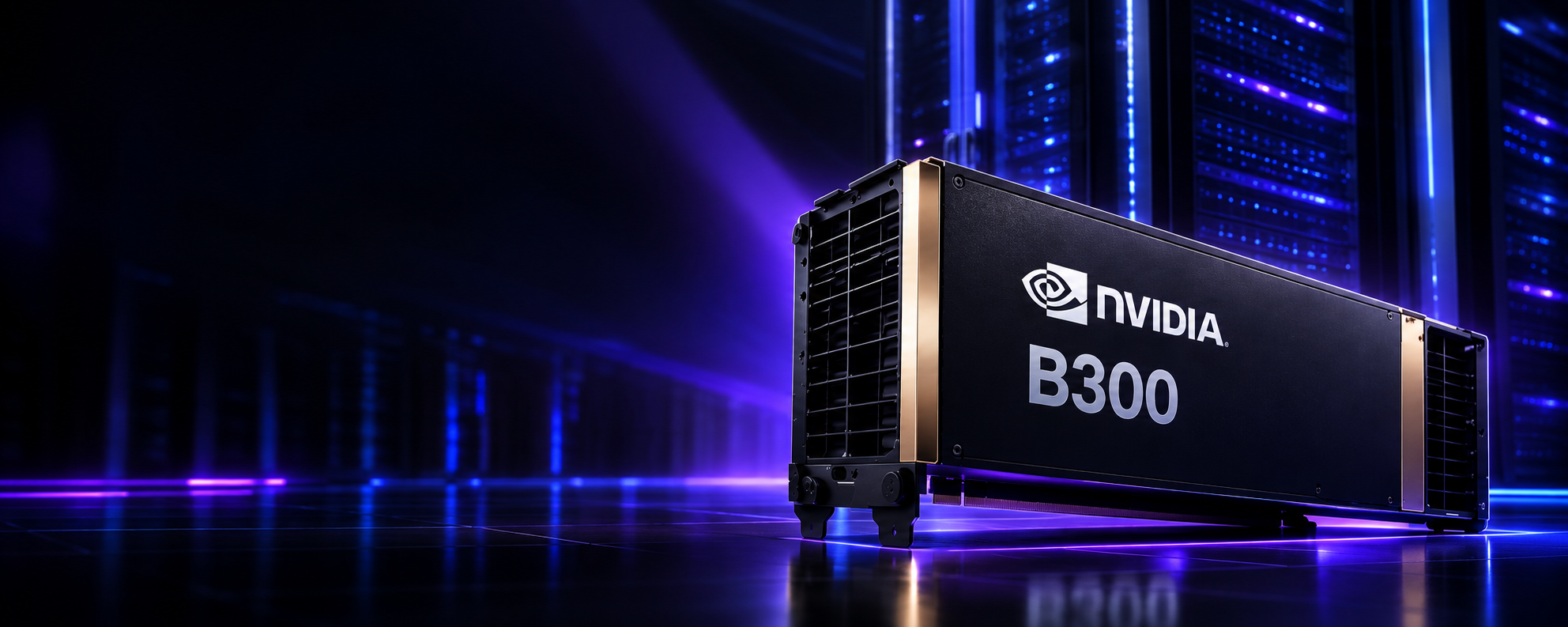
Training and inference workloads run on NVIDIA A100 and H100 clusters via Cyfuture GPU-as-a-Service. On-demand, reserved, and spot pricing supports all stages of the AI lifecycle — from experimentation to production at scale.
Indian & Global Data Centers
India-region deployments deliver 20–40% cost savings vs. US/EU equivalents, sub-20ms inference latency for APAC users, and full compliance with DPDP Act, RBI data localization guidelines, and ISO 27001 certifications. Global deployment options available for EMEA and North America.
Conversational AI Solutions
Production-ready AI chatbot and voicebot platforms built on fine-tuned LLMs, with enterprise integrations, multi-language support (including Hindi and regional Indian languages), and dedicated SLAs.
Enterprise Support
- Dedicated ML engineering and solutions architecture teams
- 99.9% uptime SLA with priority support tiers
- On-demand model fine-tuning and custom AI development services
- AI development services in India with on-site support available
Deploy AI applications on GPU-backed infrastructure — cloud, hybrid, or on-premise. India & global regions.
Start Building with Cyfuture AI →Frequently Asked Questions
AI software services are end-to-end professional offerings covering the full lifecycle of building, deploying, and operating AI-powered applications — including data engineering, model training, API integration, MLOps automation, and post-production monitoring.
The AI development lifecycle covers six stages: data collection and preprocessing, model development and training, validation and testing, deployment to cloud or edge, monitoring for drift and performance degradation, and continuous optimization through retraining and quantization.
AI app builders (no-code/low-code) let teams deploy AI-powered applications without writing model code — using pre-built connectors and templates. Custom AI development involves training or fine-tuning models on proprietary data for domain-specific use cases that require higher accuracy or unique capabilities not available off-the-shelf.
MLOps (Machine Learning Operations) combines ML development with DevOps practices — automating model training pipelines, version control, CI/CD for model releases, monitoring, and retraining. It reduces deployment time from months to days and is the primary differentiator between organizations that successfully productionize AI vs. those stuck in perpetual experimentation.
AI software services use three pricing models: subscription-based (fixed monthly fee for platform access), usage-based (per API call, per GPU-hour, or per token), and enterprise licensing (negotiated annual contracts with SLAs). Most managed AI services blend subscription plus usage-based billing.
NVIDIA H100 80GB SXM5 delivers the highest performance for large-scale LLM training. For mid-scale training (7B–30B parameter models) and fine-tuning, NVIDIA A100 40GB or 80GB provides strong performance at lower cost. Inference workloads at scale run efficiently on L40S and L4 GPUs.
Yes. India-based AI development services and GPU cloud infrastructure offer 20–40% cost savings over US/EU equivalents. Indian data centers — including Cyfuture’s — support DPDP Act and RBI data localization compliance, making them well-suited for BFSI, healthcare AI, and government workloads requiring in-country data processing.
Cloud AI deployment provides elastic GPU scaling, zero CapEx, and immediate access to latest hardware — best for variable workloads. On-premise AI requires significant upfront hardware investment but provides full data control, the lowest latency, and independence from cloud providers — required for air-gapped security environments and some regulated industries.
Common frameworks include PyTorch and TensorFlow for model training, Hugging Face Transformers for NLP and LLMs, ONNX for model portability across hardware, FastAPI for serving inference APIs, vLLM for high-throughput LLM inference, and Kubernetes with Docker for containerized production deployment at scale.
Using an AI app builder platform, basic AI-powered applications (chatbots, document analyzers, copilots) can be deployed in 1–5 days. Custom AI development with proprietary model training typically takes 4–16 weeks depending on data availability, model complexity, and integration scope. Fine-tuning a pre-trained LLM on domain data typically takes 1–3 weeks.
Enterprise AI deployments require SOC 2 Type II, ISO 27001, and relevant data protection law compliance (GDPR, DPDP Act, HIPAA). Technical security measures include PII masking in training data, role-based access control, encrypted model storage, audit logging of inference requests, and adversarial input filtering at the API gateway layer.
Edge AI runs trained, quantized AI models on local devices or on-premise servers rather than in the cloud. This enables real-time inference with sub-5ms latency, offline operation independent of internet connectivity, and reduced data egress costs — critical for manufacturing quality inspection, retail IoT, and autonomous systems where cloud round-trip latency is unacceptable.
Need a custom AI development roadmap or GPU infrastructure assessment for your enterprise?
Talk to an AI Infrastructure Expert →