

 IND
IND UAE
UAE SA
SA


-->
Your monitoring dashboard just lit up with 847 alerts — and it's 2:47 AM. That's the IT operations reality most enterprises still live in: reactive, alert-flooded, and dependent on engineers being woken up for incidents that a machine could have resolved in seconds.
AI agents for IT operations are changing this equation fundamentally. Unlike traditional monitoring tools that generate noise, autonomous AI agents don't just alert you — they detect the anomaly, trace it to the root cause, execute the remediation runbook, and close the ticket, all before your on-call engineer has finished reading the notification. This is the promise of AIOps, and in 2026, it's no longer a promise — it's a production reality for the world's most operationally sophisticated enterprises.
What Are AI Agents in IT Operations?
The term "AI agent" gets used loosely. In the context of IT operations, an AI agent is a specific thing: an autonomous software system that perceives its environment (your infrastructure), makes decisions based on what it observes, and takes actions — without being explicitly instructed for each step.
Think of it as the difference between a fire alarm and a fire suppression system. A traditional monitoring tool is the alarm — it tells you something is wrong. An AI agent is the suppression system — it detects the fire, identifies what's burning, activates the right suppression mechanism for that specific fire type, and reports what it did, all in one continuous loop.
AI Agent in ITOps = An autonomous system that continuously monitors infrastructure telemetry, detects incidents using ML models, determines root cause through correlation analysis, and executes or recommends remediation — closing the loop from detection to resolution without manual intervention for routine incidents.
In practice, AI agents for IT operations operate across three layers:
- Observability layer — ingesting logs, metrics, traces, events, and topology data from across your stack
- Intelligence layer — applying anomaly detection, correlation engines, and causal reasoning to understand what's happening and why
- Action layer — executing runbooks, creating tickets, triggering scaling events, rolling back deployments, or escalating to humans with full context
This is how enterprise AI agents are reshaping IT operations — not by replacing engineers, but by handling the 70% of incidents that are routine, repetitive, and fully automatable, so engineers can focus on the 30% that genuinely require human judgment.
The Problem with Traditional IT Monitoring
Before understanding why AI agents matter, you need to feel the pain they're solving. Modern enterprise IT environments are staggeringly complex: a mid-size company might have 500+ microservices, multiple cloud providers, Kubernetes clusters, legacy on-premise systems, and third-party SaaS integrations — all generating telemetry simultaneously.
Traditional monitoring tools were designed for a simpler world. They work on static thresholds: if CPU utilisation exceeds 90%, trigger alert. In a dynamic environment, this generates enormous noise. CPU spikes are normal during batch jobs. Memory pressure happens every morning when users log in. These alerts train operations teams to ignore alerts — until they can't.
⚠️ Traditional Monitoring Failures
- Alert storms — thousands of correlated alerts from a single underlying issue flood dashboards
- False positive fatigue — teams learn to ignore alerts, masking genuine critical incidents
- Reactive posture — monitoring finds problems only after they've already impacted users
- Siloed data — infrastructure, application, and network metrics in separate tools with no correlation
- Manual triage — engineers spend hours determining root cause manually from disconnected data sources
- Slow MTTR — average incident resolution times measured in hours, not minutes
✅ What AI Agents Fix
- Intelligent noise suppression — correlates related alerts into a single incident event
- Dynamic baselines — learns normal behaviour and only alerts on genuine anomalies
- Predictive detection — identifies degradation patterns before they cause user-facing impact
- Unified observability — correlates signals across logs, metrics, traces, and topology simultaneously
- Automated root cause analysis — identifies causation, not just correlation, in seconds
- Autonomous remediation — executes runbooks immediately, not after 45-minute on-call response
The business cost of slow incident response is not abstract. A 2025 Gartner study found that unplanned IT downtime costs enterprises an average of $5,600 per minute. For Indian BFSI companies, where UPI and banking service availability is mission-critical, the reputational cost of a 20-minute outage can far exceed the direct revenue loss. AI-driven IT operations agents directly address this exposure.
How AI Agents Detect and Respond to Incidents
The incident lifecycle in an AI-powered ITOps environment looks fundamentally different from the traditional break-fix model. Here's exactly what happens from the moment something starts to go wrong:
Continuous Telemetry Ingestion
AI agents ingest real-time data streams from every layer of your stack: application logs (structured and unstructured), infrastructure metrics (CPU, memory, disk I/O, network), distributed traces, Kubernetes events, cloud provider APIs, and topology graphs showing service dependencies. Modern AIOps platforms process millions of data points per second — a scale no human operations team can match.
Anomaly Detection Against Dynamic Baselines
Unlike static threshold alerts, AI agents build dynamic baselines for every metric — accounting for time-of-day patterns, day-of-week variations, release cycles, and seasonal load. A CPU spike at 11 AM on a Monday during a marketing campaign is normal; the same spike at 3 AM on a Sunday is anomalous. The model understands the difference because it's learned your environment's specific patterns over weeks of observation.
Signal Correlation & Noise Suppression
When a database node fails, it can trigger hundreds of downstream alerts: connection timeouts, failed health checks, queue backlogs, application errors — all pointing to the same root cause. AI correlation engines group these into a single incident event, suppress the noise, and surface one alert with a clear narrative: "Database primary node unresponsive; 47 downstream services affected." This is where alert storms become actionable incidents.
Root Cause Analysis (RCA)
The AI agent traces backward through the causal chain to identify the originating event. Using topology maps and dependency graphs, it can determine that the database failure was preceded by a disk I/O saturation event 4 minutes earlier, which itself was triggered by a runaway batch job that a developer deployed 12 minutes ago. This RCA — which might take a senior engineer 2 hours to reconstruct manually — happens in seconds.
Automated Remediation or Escalation
Based on incident classification and organisational runbooks, the AI agent either acts autonomously (restarts the service, scales the cluster, rolls back the deployment, clears the queue) or escalates to the appropriate on-call engineer with a pre-populated incident summary, RCA, affected services list, and recommended actions. Either way, the response begins in seconds — not after a 30-minute on-call response cycle.
Post-Incident Learning & Runbook Improvement
After resolution, the AI agent updates its models: was the RCA correct? Did the remediation work? Were there signals it missed? This continuous feedback loop is why AIOps systems get meaningfully better over time — and why the return on investment compounds the longer you run them. Fine-tuned AI models on your organisation's specific incident history produce dramatically better RCA accuracy than generic out-of-the-box models.
AIOps Architecture: What's Under the Hood
Understanding the architectural components helps you evaluate vendors and make informed build-vs-buy decisions. A production-grade AIOps platform consists of several distinct layers:
| Architecture Layer | Key Technologies | Function |
|---|---|---|
| Data Collection | OpenTelemetry, Prometheus, Fluentd, Datadog agents | Ingest logs, metrics, traces from all infrastructure layers |
| Stream Processing | Apache Kafka, Apache Flink, AWS Kinesis | Real-time ingestion and normalisation at millions of events/sec |
| Anomaly Detection | Isolation Forest, LSTM autoencoders, Prophet, custom models | Dynamic baseline deviation detection per metric/service |
| Correlation Engine | Graph neural networks, topology-aware clustering | Groups related alerts into single incident events |
| Root Cause AI | Causal inference models, LLM-based log analysis | Identifies originating fault in causal chain |
| Orchestration | Ansible, Terraform, Kubernetes operators, custom runbooks | Executes remediation actions against live infrastructure |
| ITSM Integration | ServiceNow, Jira Service Management, PagerDuty APIs | Auto-creates, updates, and closes tickets with full context |
Deploy AI Agents That Detect, Diagnose & Resolve IT Incidents Automatically
Cyfuture AI's enterprise AI agents integrate with your existing ITSM tools, CRM, and infrastructure APIs to automate incident response end-to-end — 24/7, without human intervention for routine incidents. Multi-agent frameworks, sub-100ms response times, 99.9% uptime SLA.
Core Capabilities of AI Agents in IT Operations
Modern AIOps agents aren't single-purpose tools — they cover the full operational lifecycle. Here are the capabilities that matter most in enterprise deployments:
Intelligent Log Analysis
AI agents parse millions of log lines per second using NLP and LLM-based models to identify error patterns, correlate log events across services, and extract meaningful signals from unstructured text. What took an engineer hours to grep through, an AI agent does continuously and in real time.
Predictive Failure Detection
By analysing trends in metrics like memory growth, connection pool saturation, and disk I/O patterns, AI agents predict failures 15–60 minutes before they occur — enabling proactive remediation before users are impacted. This shifts IT operations from reactive to genuinely preventive.
Automated Ticket Management
AI agents auto-generate incident tickets in ServiceNow or Jira with pre-populated RCA, severity classification, affected services, and recommended runbook links. They update ticket status automatically as remediation progresses and close tickets on resolution — eliminating manual ITSM overhead entirely for routine incidents.
Runbook Automation
AI agents execute pre-approved remediation runbooks autonomously — service restarts, disk space cleanup, SSL certificate renewal, horizontal pod scaling, circuit breaker activation. For incidents outside pre-approved runbooks, they present the most likely fix to the on-call engineer with one-click execution.
Topology-Aware Impact Analysis
Understanding service dependency graphs, AI agents can instantly calculate the blast radius of any incident — which downstream services are affected, which customers are impacted, and what the business impact of continued degradation will be. This context is critical for correct severity classification and escalation decisions.
Change Correlation
AI agents correlate incidents with recent changes — code deployments, configuration updates, infrastructure modifications. The ability to say "this incident started 4 minutes after deployment #4821" with 94% confidence dramatically accelerates RCA and makes rollback decisions data-driven rather than instinct-driven.
Multi-Cloud & Hybrid Visibility
Enterprise environments span AWS, GCP, Azure, and on-premise infrastructure simultaneously. AI agents provide unified observability across all environments — correlating a database issue in AWS with a network configuration change on-premise, something that siloed monitoring tools simply cannot do.
Natural Language Incident Summaries
LLM-powered AIOps agents generate plain-English incident summaries for non-technical stakeholders: "Payment service degraded for 12 minutes due to database connection pool exhaustion. Root cause: overnight batch job deployed at 01:23 held connections open indefinitely. Resolved by batch job restart at 02:47." This level of communication transparency transforms incident management culture.
Industry Use Cases: AI Agents Transforming IT Operations
The value of AIOps is best understood through specific, sector-level examples. Here's where AI-driven incident detection and response is delivering measurable results in Indian and global enterprises:
Real-Time Payment System Monitoring & Fraud-Adjacent Incident Response
Indian banks processing UPI transactions at 500+ transactions per second use AI agents to monitor payment gateway health, detect micro-latency anomalies that indicate pending failures, and auto-scale infrastructure during peak load events (salary credit days, festive season spikes). When a payment processing node degrades, the AI agent detects the anomaly within seconds, reroutes traffic to healthy nodes, and notifies the operations team — all before the first failed transaction. With Cyfuture AI's enterprise AI agents, BFSI firms can deploy these agents on DPDP-compliant Indian infrastructure, satisfying RBI cloud guidelines.
Sale Event Infrastructure Scaling & Checkout Reliability
During Big Billion Days or Republic Day sales, e-commerce platforms face 50–100x normal traffic spikes within minutes. AI agents monitor predictive signals — cart addition rates, session concurrency, CDN hit ratios — and pre-emptively scale compute, database read replicas, and cache layers before the load arrives. They also detect and resolve checkout service degradation in real time, where every second of downtime translates directly to lost revenue. Integrating with AI inferencing services enables real-time recommendation models to remain online even during traffic surges.
Clinical System Uptime & Medical Data Pipeline Reliability
Hospital management systems, PACS imaging platforms, and telemedicine services require extremely high availability — downtime in clinical systems has direct patient safety implications. AI agents monitor these systems with fine-grained SLA tracking, predict maintenance windows for scheduled interventions, and ensure medical data pipelines (HL7/FHIR integration streams) remain operational. For healthcare AI workloads like radiology inference models running on GPU cloud infrastructure, AI operations agents ensure the GPU instances remain healthy and inference latency stays within clinical SLAs.
Network Operations Centre (NOC) Automation
Telecom NOCs traditionally employed large teams of engineers watching dashboards 24/7 to detect network degradation events. AI agents now handle first-level triage autonomously — correlating alarms across network elements, identifying root nodes in degradation chains, and initiating automated recovery procedures for common failure patterns. Indian telcos managing 5G rollouts use AI operations agents to monitor new network elements as they come online, identifying configuration errors and interference patterns faster than any manual process.
Public Digital Infrastructure Reliability
India's digital public infrastructure — DigiYatra, ONDC, Aadhaar authentication, CoWIN — serves hundreds of millions of citizens and requires near-perfect availability. AI agents deployed on Cyfuture AI's sovereign agent infrastructure monitor these platforms for performance degradation, DDoS patterns, and integration failures with downstream government systems. The combination of AI-driven detection and automated response runbooks is essential when manual escalation chains are too slow for the scale of impact.
Multi-Tenant Platform Reliability Engineering
SaaS companies operating multi-tenant platforms use AI agents to isolate noisy-tenant incidents, monitor per-tenant SLA compliance, and detect when one tenant's workload is affecting others. AI-driven change management — correlating deployments with performance regressions across tenants — replaces the manual post-deployment monitoring that has historically been a major source of engineer burnout. Teams building on AI IDE Lab and similar developer platforms depend on reliable underlying infrastructure that AI ops agents help maintain.
AIOps vs Traditional ITSM: A Head-to-Head Comparison
If your organisation is evaluating whether to invest in AIOps platforms, this comparison gives you the decision framework to make the case internally:
| Dimension | Traditional ITSM / Monitoring | AI Agents (AIOps) |
|---|---|---|
| Detection method | Static thresholds, manual rules | Dynamic ML baselines, anomaly detection |
| Alert volume | High — thousands of raw alerts per incident | Low — correlated to single incident events |
| Root cause analysis | Manual — hours of engineer investigation | Automated — seconds, with causal chain |
| Mean Time to Detect (MTTD) | 5–30 minutes (after threshold breach) | Seconds to minutes (predictive) |
| Mean Time to Resolve (MTTR) | 30 minutes – several hours | Minutes for automatable incidents |
| Incident ticket quality | Manual fields, incomplete data | Auto-populated with RCA, severity, impact |
| Predictive capability | None — reactive only | 15–60 min advance warning on common failures |
| Scale handling | Requires more people as systems grow | Scales automatically with infrastructure |
| Engineer workload | High — manual triage, alert fatigue | Low — focused on complex investigations |
| Cost trajectory | Linear with headcount growth | Decreasing cost per incident at scale |
How to Implement AI Agents in Your IT Operations
AIOps implementation is a journey, not a switch. Organisations that succeed treat it as a phased capability build — starting with observability foundations and progressively adding intelligence and automation layers. Here's the proven approach:
Phase 1: Unify Observability (Weeks 1–8)
You cannot apply AI to data you don't have. Before deploying AI agents, ensure you have comprehensive telemetry collection: structured logging across all services, metrics exported to a central time-series database, distributed tracing instrumented throughout your application stack, and topology/service dependency maps up to date. The OpenTelemetry standard is the right foundation — it provides vendor-neutral instrumentation that any AIOps platform can consume.
AIOps quality is directly proportional to observability quality. An AI agent cannot detect what it cannot see. Invest in comprehensive, consistent telemetry collection before you invest in AI intelligence layers — this foundation determines your ceiling.
Phase 2: Establish Baselines (Weeks 4–12)
AI anomaly detection models need time to learn your environment's normal behaviour. During this phase, run your AIOps platform in observation mode — collecting data, building baselines, and tuning sensitivity parameters. Expect a high false-positive rate initially; this reduces dramatically as the model learns your specific patterns. Most platforms require 2–4 weeks of data before anomaly detection becomes reliable.
Phase 3: Automate Alert Correlation (Weeks 8–16)
Before automating remediation, automate your signal-to-incident pipeline. Configure the correlation engine to group related alerts into single incident events. Validate RCA accuracy against your historical incidents. This phase alone typically reduces alert volume by 60–80% and significantly improves on-call engineer quality of life — which builds internal confidence for the next phase.
Phase 4: Runbook Automation (Weeks 12–24)
Start with your top 10 highest-frequency, lowest-risk incidents — service restarts, disk cleanup, cache flushes. Automate these with human approval gates initially. As confidence grows, promote selected runbooks to fully autonomous execution. The AI agents platform from Cyfuture AI includes pre-built runbook templates for common infrastructure incident types.
Phase 5: Continuous Improvement Loop (Ongoing)
Review monthly: what was the containment rate? Where did AI agents fail or escalate incorrectly? Use this data to refine models, expand runbook coverage, and tune escalation thresholds. The compounding improvement over 12–18 months is what delivers transformational ROI.
| Implementation Phase | Duration | Key Outcome | Success Metric |
|---|---|---|---|
| Unified Observability | 8 weeks | 100% telemetry coverage across stack | All services instrumented with logs, metrics, traces |
| Baseline Learning | 4–12 weeks | Dynamic baselines established per service | False positive rate < 20% |
| Alert Correlation | 8–16 weeks | Alert storm elimination | Alert volume reduction > 60% |
| Runbook Automation | 12–24 weeks | Autonomous resolution for top incidents | Auto-resolution rate > 40% |
| Predictive Operations | 6–18 months | Proactive failure prevention | MTTR reduced > 60% vs baseline |
The GPU Infrastructure Powering Enterprise AIOps
Modern AIOps platforms — particularly those using large language models for log analysis, NLP-based alert summarisation, and real-time anomaly detection at scale — require serious compute infrastructure. This is where the choice of underlying cloud infrastructure directly affects your AIOps platform's performance.
Consider what's running inside a production-grade AIOps platform:
- Anomaly detection models running continuously on streaming telemetry data — often LSTM or Transformer-based models that benefit significantly from GPU acceleration
- LLM-based log analysis — parsing and classifying unstructured log entries using fine-tuned language models requires GPU inference for low-latency results
- Real-time correlation engines — graph neural networks processing topology and dependency data for blast radius analysis
- Natural language generation — producing human-readable incident summaries and RCA reports from structured data
For enterprises building custom AIOps models — fine-tuning an anomaly detection model on their specific infrastructure's telemetry, or training an LLM on their historical incident corpus — Cyfuture AI's fine-tuning service provides managed model training pipelines on Indian GPU infrastructure. The result: models that understand your specific environment, not generic training data.
Automate Your Entire IT Incident Lifecycle with Cyfuture AI Agents
From first alert to closed ticket — Cyfuture AI's autonomous agents handle detection, root cause analysis, runbook execution, and ITSM updates without waking your engineers for routine incidents. Deploy in days, not months. Pay only for actual compute time, reducing costs by up to 70%.
Challenges in Deploying AI Agents for IT Operations
AIOps delivers real value, but honest practitioners acknowledge the implementation challenges. Here's what enterprises actually run into — and how to mitigate them:
| Challenge | Why It Happens | Mitigation Approach |
|---|---|---|
| Data quality & coverage gaps | Legacy systems lack instrumentation; inconsistent log formats across teams | Adopt OpenTelemetry as a standard; implement an observability maturity model before AIOps deployment |
| Model cold-start period | AI models need 2–4 weeks to learn baseline behaviour before reliable anomaly detection | Run in shadow mode initially; set expectations with stakeholders for ramp-up timeline |
| Alert tuning complexity | Environment-specific patterns require manual tuning; generic thresholds produce false positives | Invest in dedicated AIOps tuning resources during first 90 days; track false positive rates weekly |
| Runbook maintenance | Infrastructure changes make runbooks stale; automated actions against changed environments can cause damage | Version-control all runbooks; require periodic review gates; test runbooks in staging before production |
| Organisational resistance | Operations engineers fear job displacement; culture of manual heroics resists automation | Position AI agents as "tier-0 support" that handles toil, freeing engineers for higher-value work; share MTTR improvement data early |
| Integration complexity | Legacy ITSM tools and on-premise monitoring systems may not expose APIs for AI agent integration | Prioritise API-first ITSM vendors; use middleware integration layers for legacy systems; phased migration approach |
| Compliance & data sovereignty | IT telemetry data from BFSI/healthcare may contain personal data subject to DPDP Act restrictions | Deploy AIOps on Indian GPU cloud infrastructure; ensure data processing agreements; use India-hosted GPU compute for AI agent inference |
Enterprises that skip the observability foundation phase and jump directly to AI automation create systems that automate the wrong responses. AI agents are only as good as the data they observe. Organisations that invest 2–3 months in telemetry quality before adding AI intelligence consistently report better AIOps outcomes than those who rush to automation on incomplete data.
Frequently Asked Questions
Straight answers to what enterprise IT teams, architects, and operations managers ask most about AI agents in IT operations.
AI agents in IT operations are autonomous software systems that monitor infrastructure, detect anomalies, diagnose root causes, and execute remediation actions — without waiting for human intervention. They work continuously across logs, metrics, traces, and event streams to identify and resolve incidents faster than any manual process. Unlike traditional monitoring tools that simply generate alerts, AI agents close the loop from detection to resolution for routine and repeatable incidents.
AI agents detect IT incidents by continuously analysing telemetry data — logs, metrics, traces, and event streams — using anomaly detection models, correlation engines, and pattern recognition algorithms. They build dynamic baselines for every monitored service and metric, accounting for time-of-day patterns and seasonal variation. When data deviates from learned baselines, the agent raises an alert, correlates it with related signals across the stack, classifies the incident type, identifies root cause, and either executes remediation or escalates with full context to the appropriate engineer.
Traditional IT monitoring generates alerts based on static thresholds — if CPU > 90%, alert. AIOps uses machine learning to understand dynamic baselines, correlate signals across multiple systems, suppress noise (false positives), and identify the root cause automatically. The key difference: traditional monitoring tells you something broke; AIOps tells you what broke, why it broke, what else is affected, and often fixes it — all without a human in the loop for routine incidents.
No — AI agents augment IT operations teams, they don't replace them. They handle the high-volume, repetitive tasks: alert triage, log analysis, runbook execution, and tier-1 incident resolution (typically 60–70% of total incident volume). This frees engineers for strategic work — architecture decisions, security planning, complex incident investigations, and the judgment calls that genuinely require human expertise. The organisations with the best outcomes treat AI agents as a force multiplier, not a headcount substitute.
AI agents can automatically resolve a wide range of routine incidents: service restarts after crash detection, disk space cleanup, certificate renewal, compute scaling during load spikes, restarting stuck batch jobs, rolling back failed deployments, reconfiguring network routes around failed nodes, clearing stuck database connections, and flushing corrupted cache entries. Complex incidents requiring infrastructure architecture changes, business decisions, or novel failure patterns that fall outside learned runbooks still require human involvement — the AI agent escalates these with full context and recommended actions.
AI agents integrate with ITSM tools via APIs and webhooks. When an incident is detected and classified, the agent automatically creates a ticket in ServiceNow or Jira Service Management, populates it with root cause analysis, severity classification, affected services list, and recommended runbook links. It updates ticket status automatically as remediation progresses and closes it on resolution — with a full audit trail. For enterprises using PagerDuty or Opsgenie for on-call routing, AI agents can also trigger the appropriate escalation with incident context pre-attached.
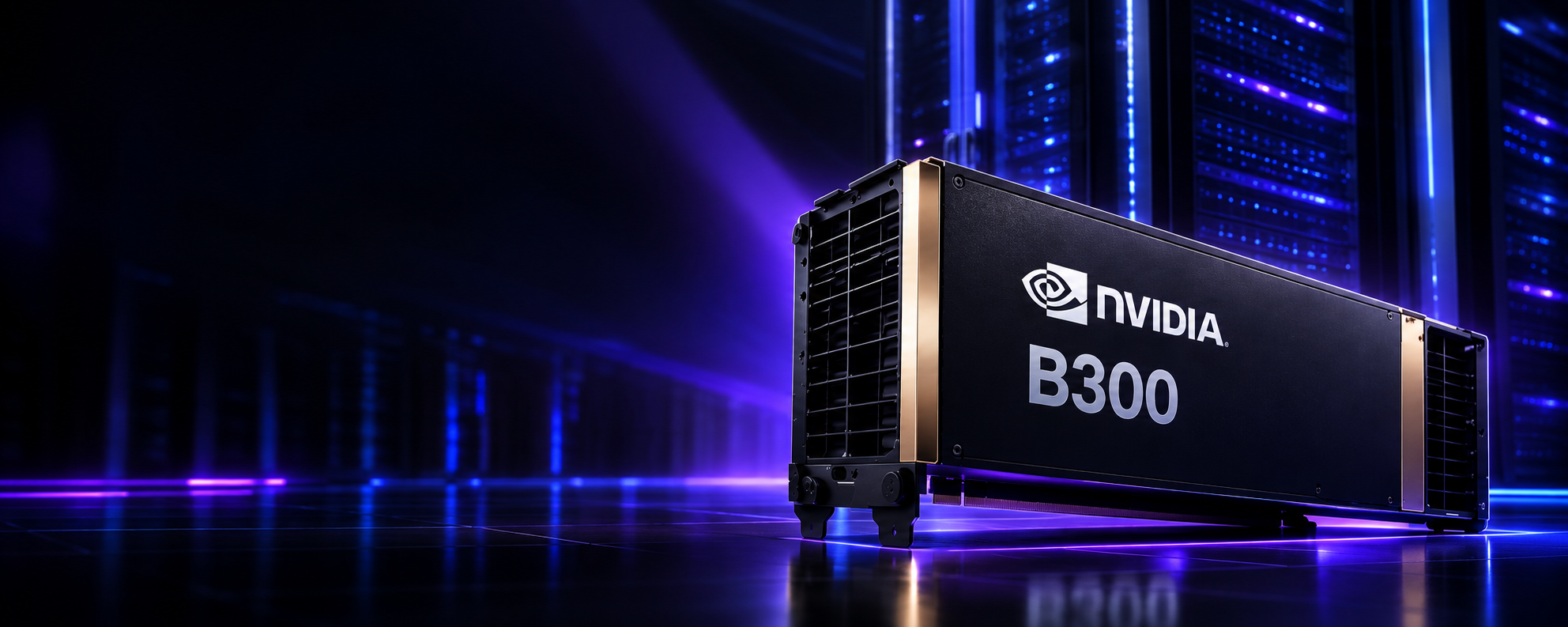
Enterprise AIOps platforms that use large language models for log analysis, real-time anomaly detection at scale, and natural language incident summarisation require GPU-accelerated inference. NVIDIA A100 or H100 GPUs are standard for production AIOps workloads, and L40S GPUs offer an excellent cost-to-performance ratio for inference-heavy deployments. Cyfuture AI's GPU cloud provides on-demand GPU instances from Indian data centres starting at ₹39/hr, enabling DPDP-compliant, low-latency AIOps deployments for Indian enterprises that cannot use foreign-jurisdiction infrastructure.
Yes, and the case is particularly compelling. Indian enterprises — especially in BFSI, telecom, and e-commerce — operate at high transaction volumes with strict SLA requirements and increasing regulatory scrutiny under the DPDP Act 2023. AIOps deployed on India-hosted infrastructure (such as Cyfuture AI's GPU cloud in Mumbai, Noida, and Chennai) satisfies data residency requirements while delivering the MTTR reductions and operational efficiency gains that make the ROI case straightforward. The combination of high incident frequency and compliance requirements makes India one of the highest-value AIOps markets globally.
Meghali writes about AI agents, AIOps, and enterprise IT automation for Cyfuture AI. She specialises in making complex infrastructure topics — autonomous incident response, multi-agent frameworks, and AI-driven IT operations — accessible and actionable for IT leaders, operations engineers, and enterprise decision-makers evaluating intelligent automation solutions.