

 IND
IND UAE
UAE SA
SA


The open-source AI ecosystem had a genuinely disruptive moment when DeepSeek dropped its R1 model in early 2025. The AI community — accustomed to Meta's Llama family holding the crown for open-weight models — suddenly had a serious new contender. Benchmarks circulated, headlines ran, and a lot of engineering teams found themselves asking the same question: which one do we actually deploy?
The honest answer is: it depends entirely on your use case. DeepSeek R1 and Llama 3.1 are both exceptional models, but they were built with different priorities, and choosing the wrong one can mean months of re-engineering later. This guide gives you the complete picture — architecture, benchmarks, GPU requirements, deployment tooling, licensing, and a clear decision framework — so you can make the right call before you spin up your first instance.
DeepSeek R1 & Llama 3.1 — At a Glance
Before we get into the weeds, here's a side-by-side snapshot of both models to orient the comparison.
DeepSeek R1 is the specialist — extraordinary at reasoning, math, and code. Llama 3.1 is the generalist — reliable, broadly capable, and backed by the deepest open-source tooling ecosystem. Both are excellent; the right one depends on what you're building.
Architecture & Design Philosophy
Understanding why these models behave the way they do starts with understanding how they were built. The architectural decisions made by DeepSeek AI and Meta reflect completely different philosophies about what a capable AI model should optimise for.
DeepSeek R1: Reasoning Through Reinforcement Learning
DeepSeek R1 was trained using a technique called Group Relative Policy Optimisation (GRPO) — a reinforcement learning approach where the model learns by comparing the quality of multiple responses to the same prompt and being rewarded for producing more accurate, logically coherent answers. This is fundamentally different from standard supervised fine-tuning. You can explore DeepSeek R1 on Cyfuture AI to see deployment options.
The practical result is a model that has been trained to think through problems before answering. DeepSeek R1 generates internal chain-of-thought reasoning steps (which you can observe in the output) before committing to a final answer. This makes it dramatically more reliable on tasks where step-by-step reasoning matters — mathematical proofs, algorithmic problem-solving, multi-hop question answering, and structured analysis.
DeepSeek R1 also employs a Mixture of Experts (MoE) architecture in its larger variants. Rather than activating all 671 billion parameters on every inference pass, the model routes each token through a subset of "expert" subnetworks. This means the 671B model effectively behaves like a much smaller active parameter count during inference — making it more efficient than the raw parameter count suggests.
Llama 3.1: Scale and Breadth Over Specialisation
Meta's approach with Llama 3.1 was different: train a highly capable generalist model on an enormous, diverse corpus (15 trillion tokens across 8 languages), then fine-tune it carefully for instruction following, safety, and tool use. Llama 3.1 uses a standard dense transformer architecture — every parameter is active on every token — which makes it more predictable to deploy and optimise.
Llama 3.1 introduced 128K context window support, which was a significant upgrade from prior Llama versions. This makes it well-suited for long-document RAG pipelines, extended conversations, and complex agentic workflows that require keeping a lot of information in context simultaneously.
The model was also trained with explicit tool use capabilities baked in — it can reliably call functions, use web search APIs, and handle agentic task loops without additional fine-tuning, which is why it became the backbone of many enterprise LLM application stacks almost immediately after release.
| Architectural Factor | DeepSeek R1 | Llama 3.1 |
|---|---|---|
| Architecture type | Mixture of Experts (MoE) for large variants | Dense Transformer |
| Training approach | Reinforcement learning (GRPO) + SFT | Supervised fine-tuning + RLHF |
| Chain-of-thought | Native, explicit CoT | Prompt-dependent |
| Context window | 128K tokens (R1 full model) | 128K tokens |
| Active parameters (at inference) | ~37B active (out of 671B total) for MoE variants | 100% active (dense) |
| Tool use / function calling | Possible, but not primary strength | Native, well-tested |
| Multilingual capability | Strong in English, Chinese, technical domains | 8 languages with high coverage |
| Primary training objective | Maximise reasoning accuracy | Maximise instruction-following breadth |
Benchmark Performance: Head-to-Head
Benchmarks are never the whole story, but they're the most honest starting point for a comparison. Here's how DeepSeek R1 and Llama 3.1 405B — the two flagship versions of each family — compare across the most widely cited AI evaluation benchmarks.
A few things stand out from this data. DeepSeek R1's lead on mathematical and reasoning benchmarks — MATH-500, AIME 2024, GPQA — is not marginal; it's substantial, often exceeding Llama 3.1 by 20 to 50 percentage points on the most challenging tasks. On more general capability benchmarks like MMLU and HumanEval, the gap narrows significantly. And on instruction-following quality (MT-Bench), Llama 3.1 actually edges ahead — reflecting its training on conversational alignment.
These benchmarks compare the flagship 671B and 405B variants. When comparing the more practically deployable 70B versions — which most teams will actually run — the performance gap shrinks further on general tasks. Always test on your own data before committing to either model for production.
How Do They Compare to GPT-4o?
| Benchmark | DeepSeek R1 | Llama 3.1 405B | GPT-4o |
|---|---|---|---|
| MATH-500 | 97.3% | 73.8% | 76.6% |
| MMLU | 90.8% | 88.6% | 88.7% |
| HumanEval | 92.3% | 89.0% | 90.2% |
| GPQA | 71.5% | 51.1% | 53.6% |
| AIME 2024 | 79.8% | 24.0% | 9.3% |
This table is what caused so much excitement when DeepSeek R1 launched. On reasoning-heavy benchmarks, a fully open-source model was outperforming or matching the most capable proprietary model in the world — and could be self-hosted on GPU cloud infrastructure for a fraction of the API cost. For teams doing serious mathematical or scientific computing work, DeepSeek R1 genuinely changed the calculus.
Run DeepSeek R1 or Llama 3.1 on India's Fastest GPU Cloud
Both models available on H100 SXM5 and A100 80GB instances — India-hosted, DPDP-compliant, with vLLM pre-configured. Spin up in under 60 seconds, no procurement required.
Model Sizes, Memory & Hardware Requirements
Choosing the right model variant matters as much as choosing the right model family. A 70B Llama 3.1 and a 7B Llama 3.1 are fundamentally different propositions — in quality, in cost, and in the GPU infrastructure you'll need to run them.
| Model | Size | VRAM Required (FP16) | Recommended GPU | Inference Speed |
|---|---|---|---|---|
| DeepSeek R1 | 1.5B / 7B | 3 GB / 14 GB | RTX 4090 / L40S | Fast — single GPU |
| DeepSeek R1 | 14B / 32B | 28 GB / 64 GB | A100 40GB / A100 80GB | Good — single GPU |
| DeepSeek R1 | 70B | ~140 GB | 2× A100 80GB or H100 | Moderate — multi-GPU |
| DeepSeek R1 | 671B | ~1.3 TB | 8–16× H100 SXM5 | Requires cluster |
| Llama 3.1 | 8B | 16 GB | RTX 4090 / L40S | Fast — single GPU |
| Llama 3.1 | 70B | ~140 GB | 2× A100 80GB or H100 | Moderate — multi-GPU |
| Llama 3.1 | 405B | ~810 GB | 8–10× H100 SXM5 | Requires cluster |
A few practical notes worth highlighting here. First, quantisation dramatically changes the memory picture — running either model in 4-bit GGUF/AWQ format roughly cuts VRAM requirements by 75%, at the cost of modest quality degradation. For many inference use cases, a 4-bit 70B model on a single A100 80GB is a genuinely compelling option. Second, DeepSeek R1's MoE architecture means the 671B model is not as frightening to run as the raw number suggests — it activates a much smaller parameter subset per token, making throughput far better than a dense 671B model would be.
For production inference at reasonable cost, the 70B variants of both models on a single H100 80GB (or two A100 80GBs) hit the best quality-to-cost ratio. Teams starting out should experiment with the 7B/8B variants on an L40S instance before committing to larger GPU allocations.
Deployment, Tooling & Ecosystem
The model itself is only part of the story. What surrounds it — the inference engines, fine-tuning frameworks, community support, and integration libraries — determines how fast you can actually ship production applications. This is an area where the two models have meaningfully different situations.
Llama 3.1: The Most Mature Open-Source Ecosystem
Llama 3.1 benefits from being Meta's flagship open model and inheriting the enormous Llama ecosystem built since the original Llama release. Every major inference framework has first-class Llama support: vLLM, Ollama, llama.cpp, TGI (Text Generation Inference), TensorRT-LLM, and more. Integration libraries like LangChain, LlamaIndex, and Haystack all have native Llama 3 support. You'll find production-ready quantised versions (GGUF, GPTQ, AWQ) for almost every size variant on Hugging Face, maintained by a large community. Teams evaluating compact, efficient open models should also consider Microsoft's Phi-3 family, which punches well above its weight class for smaller deployments.
Fine-tuning resources are abundant — LoRA and QLoRA implementations are well-documented for Llama 3.1, and frameworks like Axolotl, Unsloth, and TRL all support it out of the box. The community around Llama is simply larger, and that matters when something breaks at 2 AM.
DeepSeek R1: Growing Fast, but Starting From Behind
DeepSeek R1 entered the ecosystem later and with less community infrastructure, but the adoption curve has been steep. vLLM added DeepSeek support quickly after launch. Ollama supports the distilled variants (the 7B, 8B, 14B versions built on top of Llama and Qwen architectures). llama.cpp has GGUF support for most sizes.
The main ecosystem gaps are in fine-tuning tooling (less community documentation for domain-specific fine-tuning of R1), enterprise MLOps integrations, and production monitoring setups. Teams adopting DeepSeek R1 today should expect to solve some novel infrastructure problems — which is fine for a well-staffed ML engineering team, but riskier for a leaner operation.
| Deployment Factor | DeepSeek R1 | Llama 3.1 |
|---|---|---|
| vLLM support | Yes | Yes — mature, highly optimised |
| Ollama support | Yes (distilled variants) | Yes — all sizes |
| llama.cpp / GGUF | Yes | Yes — extensive quants available |
| LangChain integration | Via API wrapper | Native, well-documented |
| LoRA / fine-tuning docs | Limited community docs | Extensive — Axolotl, Unsloth, TRL |
| Hugging Face model cards | Growing | Comprehensive — 3,000+ derivatives |
| Function calling | Limited native support | Native, production-ready |
| Agentic framework support | Emerging | LangGraph, AutoGen, CrewAI |
Licensing: What You Can Actually Do With Each
For enterprise use, the license determines whether legal can sign off on deployment. This is an area where the two models differ in a way that genuinely matters for some organisations.
🟣 DeepSeek R1 — MIT License
- Free commercial use with no usage caps
- Modify, redistribute, and sublicense without royalties
- No restriction on company size or monthly active users
- Can be incorporated into proprietary products
- No requirement to open-source derivatives
- One of the most permissive licenses in software — full stop
🔵 Llama 3.1 — Meta Llama 3 Community License
- Free commercial use for most organisations
- Restriction: platforms with >700M monthly active users require a separate Meta license
- Derivatives and fine-tunes must include the Llama license and credit Meta
- Cannot use outputs to train models that compete with Meta's Llama family
- Commercially viable for nearly all enterprises — but read the full terms
- More permissive than GPT-4's API terms, but less permissive than MIT
For the vast majority of enterprise deployments, both licenses are commercially viable. The MIT license on DeepSeek R1 is technically cleaner and gives legal teams less to review. Llama 3.1's restrictions only become relevant at hyperscale consumer platforms or when building competing foundational models — scenarios that don't apply to most enterprise teams.
Use Case Fit — Which Model for Which Job?
This is really the heart of the decision. Here's a breakdown of the most common enterprise AI use cases and which model is the better fit for each — along with the reasoning behind the recommendation.
Mathematical Reasoning & Scientific Computing
If your application involves anything where a model needs to work through problems step by step — financial modelling, quantitative analysis, engineering calculations, scientific simulation assistance, or STEM tutoring — DeepSeek R1 is the clear winner. The 20–50 point gap on MATH-500 and AIME benchmarks is not a marginal advantage; it's a qualitatively different capability. Teams building AI copilots for data science, actuarial work, or research computing should seriously evaluate R1 first.
Advanced Code Generation & Debugging
For complex code generation tasks — writing algorithms from scratch, explaining and debugging intricate codebases, generating test suites, or converting between programming languages — DeepSeek R1's reasoning capabilities give it a meaningful edge. It's particularly good at generating correct code on the first attempt for challenging problems, rather than producing syntactically valid but logically flawed solutions. Teams building developer tooling, code review AI, or automated engineering assistants should benchmark R1 seriously.
RAG Pipelines & Enterprise Knowledge Bases
For retrieval-augmented generation applications — internal knowledge bases, customer-facing Q&A systems, document search and summarisation — Llama 3.1 is the more practical choice. Its native tool use, consistent instruction-following, and deep LangChain/LlamaIndex integration make building robust RAG pipelines faster and more maintainable. Llama 3.1's 128K context window handles long documents well, and the model's instruction-following reliability means your prompt templates behave predictably in production. For teams building LLM-powered enterprise applications, Llama 3.1 remains the default recommendation.
Conversational AI & Customer Support Automation
For customer-facing chatbots, virtual assistants, and support automation, Llama 3.1 handles the nuances of natural conversation better. Its RLHF training specifically optimises for helpful, safe, and appropriately toned responses — which matter enormously when the model is talking to real customers. DeepSeek R1's reasoning-first design can produce verbose chain-of-thought outputs that are inappropriate for conversational contexts unless you carefully prompt-engineer around them. Teams building AI voicebots or chat-based customer service tools should default to Llama 3.1.
Agentic AI Workflows & Multi-Step Task Automation
For AI agents that need to use tools, call APIs, plan multi-step tasks, and recover gracefully from errors, Llama 3.1's native function-calling support and agentic framework compatibility (LangGraph, AutoGen, CrewAI) make it the more mature choice today. DeepSeek R1 can be prompted to perform agentic tasks, but the tooling ecosystem for building reliable agentic systems around it is still developing. If you're building autonomous agents that manage workflows, interact with external services, or run extended reasoning loops, Llama 3.1 reduces your implementation risk significantly.
Legal & Financial Document Analysis
For structured analysis tasks that require careful reasoning — contract clause analysis, regulatory compliance checking, financial ratio analysis, risk modelling — DeepSeek R1's analytical depth is genuinely valuable. The model excels at tasks where an incorrect inference has real consequences and where being able to show its reasoning chain improves trust in the output. Indian enterprises in BFSI evaluating AI for internal compliance or risk analysis workflows should benchmark R1 carefully on their domain-specific tasks. Pair it with India-hosted GPU infrastructure to meet DPDP data residency requirements.
Domain-Specific Fine-Tuning
When you need to fine-tune a base model on proprietary data — medical records, legal documents, company knowledge bases, e-commerce catalogues — Llama 3.1's superior fine-tuning ecosystem (Axolotl, Unsloth, well-documented LoRA recipes) reduces time-to-deployment significantly. DeepSeek R1 fine-tuning is possible but less documented, and its MoE architecture adds complexity to the fine-tuning process. For teams planning significant customisation work, Llama 3.1 is the pragmatic choice today.
Running Either Model on GPU Cloud
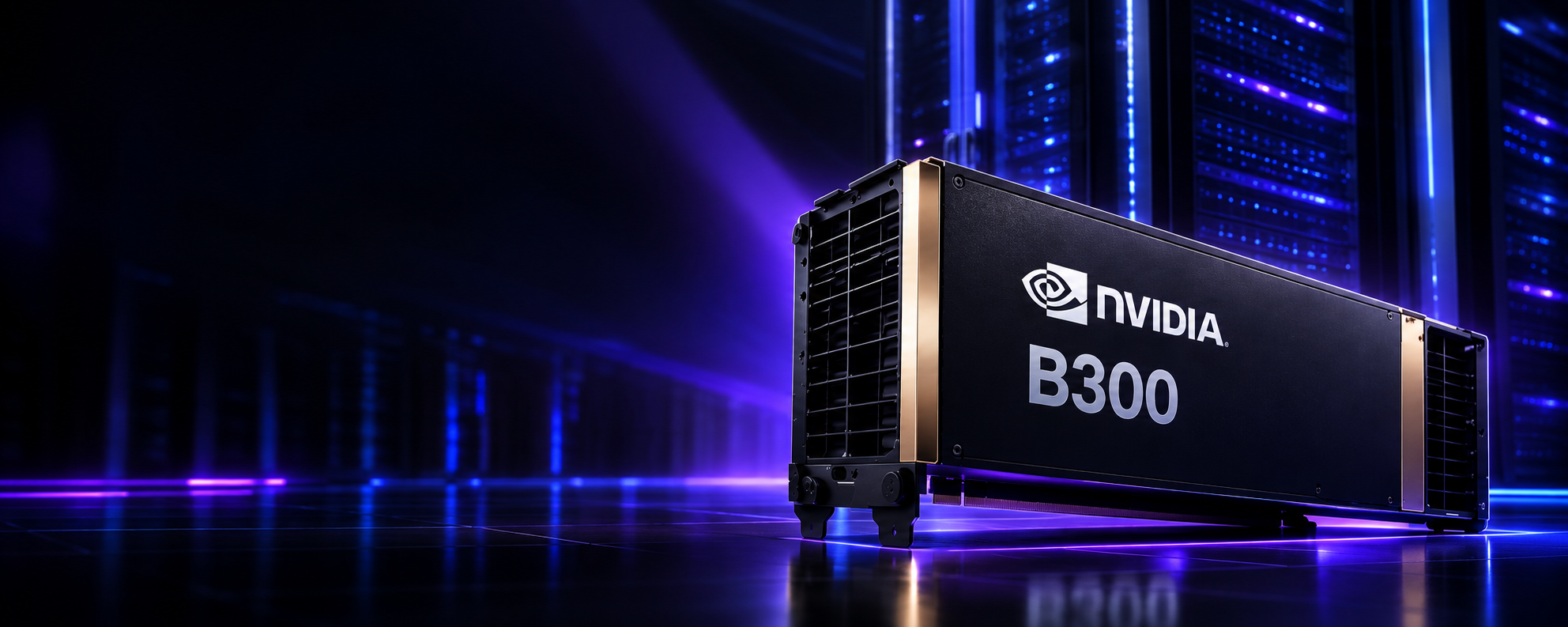
Whether you choose DeepSeek R1 or Llama 3.1, one thing is clear: the larger, more capable variants of both models require serious GPU infrastructure. A 70B model in FP16 needs roughly 140GB of VRAM — that's two A100 80GB GPUs or a single H100 SXM5. The flagship 671B DeepSeek R1 or 405B Llama 3.1 require multi-node GPU clusters.
For Indian enterprises, there's an additional constraint that matters deeply: the DPDP Act 2023. If you're processing personal data of Indian users — customer interactions, employee records, financial transactions — that data must be processed on India-hosted infrastructure. Most GPU cloud providers globally don't have India-based data centres with the right compliance documentation. This is exactly where Cyfuture AI's GPU cloud fills a critical gap.
Recommended Inference Setup on Cyfuture AI
For teams deploying either model on Cyfuture AI's GPU cluster infrastructure, the recommended setup is to use vLLM as the inference engine — it supports both DeepSeek R1 and Llama 3.1 with PagedAttention, continuous batching, and tensor parallelism for multi-GPU setups. For smaller variants (7B–32B), Ollama provides a simpler deployment path with good performance. Pre-built Docker images for both vLLM and Ollama setups are available on Cyfuture AI instances, reducing setup time from hours to minutes.
vLLM for Production Inference
Best throughput for high-concurrency API deployments. Supports both models, tensor parallelism for multi-GPU, and OpenAI-compatible API — so existing tooling works without changes.
Ollama for Dev & Prototyping
One-command model serving with a clean REST API. Ideal for local testing, POC development, and teams that need simplicity over maximum throughput.
TensorRT-LLM for Peak Speed
NVIDIA's inference engine for maximum throughput on H100 hardware. Requires more setup but delivers 2–4x better tokens/second compared to standard vLLM for latency-sensitive applications.
India Data Residency
Both models can be fully self-hosted on Cyfuture AI's India-based data centres (Jaipur, Noida, Bangalore) — satisfying DPDP Act requirements for enterprises handling Indian user data.
Need Help Choosing & Deploying the Right LLM for Your Stack?
From single-GPU inference instances to 64-GPU InfiniBand clusters — Cyfuture AI's GPU engineers help Indian enterprises deploy DeepSeek R1, Llama 3.1, and other large language models at production scale, with full DPDP compliance and 24/7 support.
Final Verdict: Which Should You Choose?
After going through all of this, the decision framework is actually fairly clean. Here it is in plain language.
🟣 Choose DeepSeek R1 When
- Your core use case involves mathematical reasoning, scientific computing, or complex logical analysis
- You're building code generation or advanced debugging tools where correctness matters more than latency
- You need the most permissive open-source license (MIT) for maximum legal simplicity
- Your team is comfortable with a newer, less mature ecosystem and can handle some infrastructure problem-solving
- You want frontier-level reasoning performance without paying GPT-4 API prices
- Your BFSI or research use case requires deep analytical reasoning with explainable chain-of-thought outputs
🔵 Choose Llama 3.1 When
- You're building RAG pipelines, chatbots, virtual assistants, or customer-facing conversational AI
- Your application requires robust tool use and agentic capabilities out of the box
- You need fine-tuning on proprietary domain data and want mature, well-documented tooling
- Your team is smaller and can't afford to debug novel infrastructure problems in production
- You're building on top of LangChain, LlamaIndex, or CrewAI — where Llama's ecosystem gives you a head start
- You need multilingual support across 8 languages with consistent quality
Many mature AI engineering teams use both. They run Llama 3.1 as their primary production model for conversational, RAG, and agentic workflows — and deploy DeepSeek R1 for specialised reasoning-intensive tasks (financial analysis modules, code review pipelines, mathematical verification). This routing pattern — send most queries to Llama, escalate analytically demanding ones to DeepSeek — often delivers the best combination of cost efficiency and output quality.
Frequently Asked Questions
Straight answers to the questions AI teams and enterprise buyers ask most often when comparing these two models.
DeepSeek R1 is purpose-built for structured reasoning, mathematical problem-solving, and multi-step logic. It uses a reinforcement learning training approach that produces explicit chain-of-thought reasoning, making it exceptional at analytical tasks. Llama 3.1 is a generalist model trained on 15 trillion tokens across a diverse corpus — optimised for instruction-following, conversational quality, RAG pipelines, tool use, and multilingual applications. If your primary use case is reasoning-heavy (complex math, code generation, logical analysis), R1 has a significant benchmark advantage. For diverse enterprise applications — chatbots, RAG, agentic workflows, fine-tuning — Llama 3.1 is the more mature, better-supported choice.
For enterprises in regulated industries — BFSI, healthcare, HR — where DPDP Act 2023 data residency requirements apply, both models can be self-hosted on India-based GPU cloud infrastructure like Cyfuture AI. In terms of deployment maturity, Llama 3.1 has the edge: broader tooling support, more fine-tuning resources, and a larger community for troubleshooting. DeepSeek R1 is the better choice for specialised analytical applications. The key infrastructure requirement is the same for both: A100 80GB or H100 SXM5 GPUs for the 70B+ variants. Cyfuture AI's India-hosted GPU cloud handles both models with DPDP-compliant data residency.
The 7B/8B variants of both models run comfortably on a 24–48GB GPU (RTX 4090 or L40S). The 70B variants require approximately 140GB in FP16 — two A100 80GB GPUs or a single H100 SXM5 80GB. Quantised versions (4-bit AWQ/GGUF) cut memory requirements by roughly 75% at modest quality cost — a 70B model quantised to 4-bit runs on a single A100 80GB. The flagship 671B DeepSeek R1 and 405B Llama 3.1 require multi-node H100 clusters with 8–16 GPUs respectively.
On specific mathematical and logical reasoning benchmarks — MATH-500, AIME 2024, GPQA — DeepSeek R1 significantly outperforms GPT-4o. On MATH-500, R1 scores 97.3% versus GPT-4o's 76.6%. On AIME 2024, R1 reaches 79.8% while GPT-4o achieves only 9.3%. On broader general capability benchmarks like MMLU, the models are comparable. The key difference is that DeepSeek R1 is fully open-source and self-hostable — you get near-frontier reasoning performance without API dependency, API costs, or the privacy concerns of sending your data to a third-party endpoint.
Yes. Both DeepSeek R1 and Llama 3.1 (all size variants) can be deployed on Cyfuture AI's GPU cloud using H100 SXM5, A100 80GB, or L40S instances. Cyfuture AI provides pre-configured vLLM and Ollama environments that make deployment straightforward. For the 70B variants, the H100 80GB single-instance setup delivers excellent inference throughput. For multi-node cluster deployments of the flagship 671B or 405B models, Cyfuture AI's InfiniBand-connected GPU clusters handle the job. All deployment options include India data residency for DPDP compliance.
DeepSeek R1 uses the MIT License — the most permissive widely-used open-source license. It allows unlimited commercial use, modification, redistribution, and incorporation into proprietary products with no usage caps and no restrictions on company size. Llama 3.1 uses Meta's custom Llama 3 Community License, which permits commercial use for most organisations but restricts platforms with over 700 million monthly active users and prohibits using outputs to train competing foundational models. For the vast majority of enterprise deployments, both licenses are commercially viable. DeepSeek's MIT license is simpler for legal teams to review.
For Llama 3.1, fine-tuning is well-documented using tools like Axolotl, Unsloth, and HuggingFace TRL. LoRA and QLoRA are the recommended approaches — they allow fine-tuning of 70B models on 2–4× A100 80GB GPUs. For DeepSeek R1, fine-tuning documentation is less mature, but the distilled variants (built on Llama and Qwen base architectures) can be fine-tuned using the same Llama toolchain. The full 671B MoE DeepSeek R1 model is generally not fine-tuned by external teams — instead, the smaller distilled variants are used. For India-based teams, both fine-tuning workflows can be run on Cyfuture AI's A100 or H100 GPU instances with full data residency control.
Meghali is a tech-savvy content writer with expertise in AI, Cloud Computing, App Development, and Emerging Technologies. She excels at translating complex technical concepts into clear, engaging, and actionable content for developers, businesses, and tech enthusiasts. Meghali is passionate about helping readers stay informed and make the most of cutting-edge digital solutions.