

 IND
IND UAE
UAE SA
SA


Here is the simplest possible framing of why GPU as a Service exists:
Building AI requires enormous computing power. That computing power lives inside a chip called a GPU. GPUs that can handle serious AI workloads cost anywhere from Rs 40 lakh (A100) to Rs 3 crore or more (an H100 server). They take months to procure and require a data centre to house. For most teams, companies, and institutions, owning this hardware is simply not viable.
So the industry built a solution: cloud GPU infrastructure you rent by the hour. You get the power. Someone else owns the hardware, runs the data centre, keeps the drivers updated, and replaces failed components at 3 AM. You pay only for what you use.
That is GPU as a Service. Let's go deeper.
What Is GPU as a Service?
GPU as a Service (GPUaaS) is a cloud computing model that gives you on-demand access to high-performance GPU hardware over the internet, on a pay-per-use basis. You don't own the hardware — you rent it for exactly as long as you need it and pay only for the time used.
Think of GPU as a Service like a professional recording studio. A musician doesn't need to build and own a studio to record an album — they book one by the hour, use world-class equipment, and walk away when they're done. The studio handles the maintenance, the acoustics, the equipment upgrades. The musician just creates. GPU as a Service works exactly the same way: you get access to world-class hardware when you need it, you pay only while you're using it, and the cloud provider handles everything else.
GPUaaS is part of the broader Infrastructure as a Service (IaaS) category, sitting alongside compute, storage, and networking in the cloud stack. What makes it distinct is the specific hardware it delivers — GPUs, which are fundamentally different from the general-purpose compute servers that make up most cloud infrastructure.
GPU as a Service = on-demand, pay-per-use access to high-performance GPU hardware over the internet. No ownership, no maintenance, no upfront investment. You consume GPU compute the same way you consume electricity — pay for what you use, at the scale you need, when you need it.
Why GPUs — Not CPUs — Power AI
To understand why GPU as a Service exists as a distinct market, you need to understand why AI requires GPUs specifically and can't just run efficiently on regular server CPUs.
Here's the key difference in one sentence: CPUs are built to do one thing at a time very fast; GPUs are built to do millions of things simultaneously.
A modern server CPU has 8 to 64 cores. Each core is extremely powerful — designed for complex, sequential logic, branching decisions, and general-purpose computation. A CPU is like a team of 64 PhDs, each one brilliant, each capable of solving an enormously complex problem on their own.
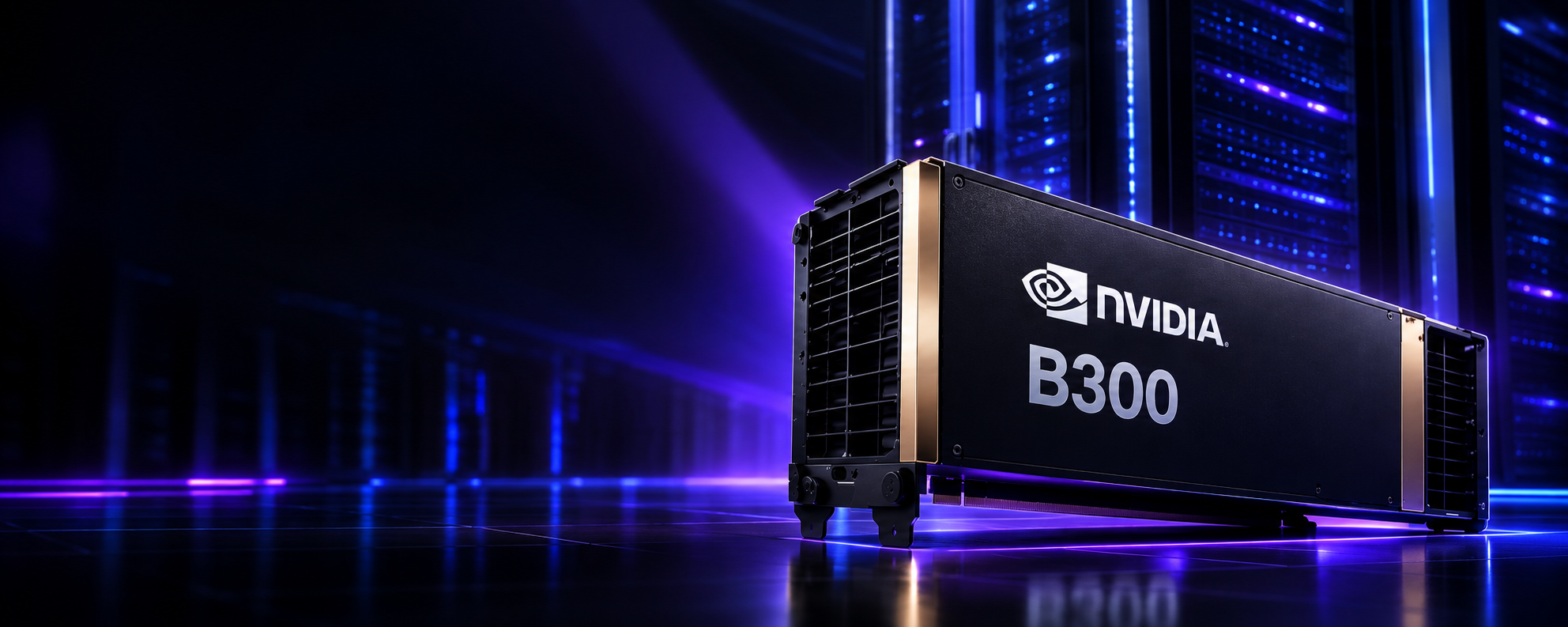
An NVIDIA H100 GPU has 16,896 CUDA cores. Each individual core is simpler than a CPU core — but together, they can execute nearly 17,000 operations simultaneously. The H100 is not a team of PhDs. It's a factory floor with 17,000 workers, each performing simple additions and multiplications in parallel.
And here's the thing: training a neural network is not one enormously complex sequential problem. It's billions of simple multiplications happening simultaneously. That's exactly what a GPU factory floor is built to do — and exactly why a GPU completes a training job in hours that would take a CPU weeks.
| Dimension | CPU (Server) | GPU (H100) | Why It Matters for AI |
|---|---|---|---|
| Core count | 8–64 cores | 16,896 CUDA cores | More parallel operations per second = faster AI training |
| Memory bandwidth | 50–100 GB/s | 3,350 GB/s (HBM3) | Faster data movement = less time waiting, more time computing |
| Matrix multiply throughput | ~10 TFLOPS (FP32) | ~3,958 TFLOPS (FP8 sparse) | Matrix multiplication is the core operation in every neural network |
| AI training for a 7B model | Weeks to months | Hours to days | Speed of iteration is competitive advantage in AI development |
| Cost-per-result for AI | Very high (time × cost) | Much lower per-inference | Economics only work at scale if inference is GPU-powered |
How GPU as a Service Works Step by Step
From the user's side, GPUaaS feels effortless. From an engineering standpoint, there's a sophisticated layer of infrastructure making it work. Here's both perspectives.
Your Experience as the User
Select your GPU and configuration
Log into the GPU cloud platform and choose your GPU model (H100, A100, L40S), how many GPUs you need (1 to 64+), your operating system, and the software environment you want pre-installed — PyTorch, TensorFlow, vLLM, or a custom Docker image.
Launch your instance
Click launch. The platform allocates physical GPU hardware from its data centre, provisions it with your chosen OS and drivers, and connects it to the network. This entire process takes 30–60 seconds for most configurations.
Connect and run your workload
Access your instance via SSH, a Jupyter notebook interface, or the platform's web terminal. Upload your data and code, or pull from a connected storage bucket. Run your training script, inference server, or rendering job exactly as you would on a local machine — because from your code's perspective, it is just a machine with GPUs attached.
Pay for exactly what you used
Your usage is metered to the minute. When your job completes, stop the instance and stop paying. Your training run that took 18 hours costs 18 hours of GPU time — nothing more, nothing less. The hardware is returned to the shared pool and allocated to the next customer.
What the Provider Does Behind the Scenes
While you focus on your workload, the provider is managing an enormous amount of infrastructure complexity: GPU-optimised data centre facilities with specialised power and cooling (each H100 server draws approximately 10 kilowatts), high-speed networking between GPU nodes (NVLink at 900 GB/s within a node, InfiniBand HDR at 200 Gb/s between nodes), hardware monitoring and automatic replacement for failed components, driver and firmware updates applied without customer downtime, and security isolation between customer workloads using virtualisation or dedicated instance allocation.
Types of Cloud GPUs Available
The GPU you choose for your workload matters significantly — each generation and model has different strengths. Here is a practical guide to the main GPU types available in cloud in 2026.
| GPU | Generation | VRAM | Best Workload | Relative Cost |
|---|---|---|---|---|
| NVIDIA V100 | Volta (2017) | 32 GB HBM2 | Light inference, embeddings, NLP, RAG pipelines | Entry level |
| NVIDIA A100 | Ampere (2020) | 40 GB / 80 GB HBM2e | Fine-tuning, 7B–30B inference, research, regulated deployments | Mid-range |
| NVIDIA L40S | Ada Lovelace (2023) | 48 GB GDDR6 | Image/video generation, 7B inference, hybrid AI+graphics | Best value |
| NVIDIA H100 | Hopper (2022) | 80 GB HBM3 | LLM training, 70B+ inference, multi-node distributed training | Premium |
For most teams: start with L40S for inference (best value-per-FLOP), use A100 for fine-tuning and mid-sized model work, and step up to H100 only when training large models or running 70B+ inference. Don't pay H100 prices for workloads that run equally well on A100 — the 2× cost difference compounds quickly at scale.
8 Key Benefits of GPU as a Service
No Capital Expenditure
A single H100 server costs over Rs 3 crore to buy. GPUaaS converts that upfront hardware cost into a flexible per-hour operating expense. Your capital stays available for product development, hiring, and growth — not server room equipment.
Start in 60 Seconds
Procuring hardware takes 3–6 months in India. Spinning up a GPU cloud instance takes 60 seconds. For teams moving fast, this speed advantage is the difference between testing an idea this week and testing it next quarter.
Scale Instantly, in Any Direction
Run 1 GPU for daily inference. Scale to 32 GPUs for a weekend training run. Scale back Monday morning. Hardware ownership locks you to fixed capacity; GPUaaS gives you infinite flexibility in both directions without procurement delays.
Always Access the Newest Hardware
GPU generations advance every 12–18 months. With GPUaaS, you access H100s today and H200s tomorrow without owning — and therefore not being stuck with — the previous generation. You rent the best tool for the job, always.
Zero Infrastructure Burden
Hardware failures, CUDA driver updates, cooling problems, firmware patches — the provider handles all of it. Your ML engineers focus 100% on the model, not on why the server won't boot at 2 AM before a product launch.
Pay Only for Active Compute
On-premise GPU servers typically run at 30–40% utilisation — you're paying full cost for hardware sitting idle 60–70% of the time. With GPUaaS, you pay only for the hours the GPU is actively processing your workload. Nothing more.
Pre-Configured Environments
Launch with PyTorch 2.3, TensorFlow, CUDA 12, cuDNN, and vLLM already installed and configured correctly. No dependency management, no driver compatibility debugging. A new ML engineer can be running experiments in under 10 minutes.
India Data Residency
For enterprises subject to India's DPDP Act, choosing an India-hosted GPU provider isn't just a performance decision — it's a legal requirement. Cyfuture AI operates data centres in Mumbai, Noida, and Chennai with full DPDP compliance documentation.
Cloud GPU vs Buying Your Own GPU Server
The build-vs-buy question is one every AI team eventually faces. Here is an honest comparison.
✅ Cloud GPU (GPUaaS) Advantages
- Zero upfront hardware cost
- Running instance in 60 seconds
- Scale up or down without procurement
- Always access the latest GPU generation
- No maintenance, power, or cooling costs
- Pay only for hours actively used
- No stranded asset risk if workload changes
🏢 On-Premise Advantages
- Lower per-hour cost at sustained 24/7 load
- Full data sovereignty control
- No third-party dependency for production uptime
- No egress costs for large data transfers
- Can be cost-effective for very stable, known workloads
On-premise makes financial sense only when your GPU utilisation is consistently above 70–75% running 24/7, and your workloads are stable enough that you know what hardware you need for 3+ years. For every other scenario — which describes the vast majority of AI teams — GPUaaS delivers better economics, faster velocity, and less operational complexity.
The GPU as a Service Market Landscape
If you're evaluating GPU cloud for the first time, the market can feel overwhelming. There are dozens of providers, wildly varying price points, and a lot of marketing noise. Here's a clear, honest map of who the players actually are and how the market is structured in 2026.
How the Market Breaks Down
The GPU cloud market broadly splits into three tiers — and understanding which tier fits your needs will save you a lot of evaluation time.
Hyperscalers — AWS, Google Cloud, and Microsoft Azure — offer GPU instances alongside their full cloud ecosystem. If you're already deeply embedded in AWS or GCP (your storage is there, your Kubernetes clusters are there, your team knows the tooling), sticking with the hyperscaler makes integration simpler. The trade-off is cost: hyperscaler GPU pricing in India runs 37–54% higher than purpose-built GPU cloud providers for equivalent hardware. Their support model is also primarily self-service, which matters when something breaks during a critical training run.
GPU-native cloud providers — companies like Cyfuture AI, CoreWeave, and Lambda Labs — are built specifically for GPU workloads. Because GPU compute is their entire product rather than one of hundreds of services, they tend to offer better pricing, more GPU model options, higher availability without waitlists, and support teams who actually understand distributed training and CUDA debugging. For pure GPU workloads, this tier almost always wins on price and engineering quality.
Specialised regional providers — like Cyfuture AI for India — add a third dimension: data residency and regulatory compliance for specific markets. If your users are in India and you're subject to the DPDP Act, a US-based GPU cloud provider creates a legal compliance problem regardless of how good their hardware is. India-hosted providers solve the compliance layer while matching or beating hyperscaler prices.
| Provider Type | Best For | Pricing vs Baseline | India Data Residency |
|---|---|---|---|
| Hyperscalers (AWS, GCP, Azure) | Teams already in their ecosystem, global scale needs | 37–54% higher | Partial — check DPDP status |
| GPU-native cloud (CoreWeave, Lambda) | US/EU teams needing pure GPU performance at lower cost | 20–40% lower than hyperscalers | No India presence |
| India-hosted GPU cloud (Cyfuture AI) | Indian enterprises, DPDP-regulated workloads, latency-sensitive apps | 37–54% lower than AWS/GCP | Full — Mumbai, Noida, Chennai |
What's Driving Market Growth in 2026
The GPU cloud market isn't just growing — it's being reshaped by a few specific forces that are worth understanding if you're making a longer-term infrastructure decision.
Inference has overtaken training as the dominant workload. Two years ago, most GPU cloud demand came from teams training large models. Today, with hundreds of AI products in production, serving live inference is where the bulk of GPU-hours are spent. This shift favours providers with cost-efficient, low-latency inference instances over raw training throughput — and it's why the L40S has become one of the most popular GPUs in the cloud market.
Data sovereignty laws are creating local GPU markets. India's DPDP Act, the EU AI Act, and various national data localisation requirements are forcing enterprises to keep sensitive data within specific geographies. This is a structural driver for India-hosted GPU cloud that isn't going away — it will only intensify as enforcement ramps up.
GPU scarcity has made capacity planning a competitive advantage. H100s remain supply-constrained. Teams that secured reserved capacity early are paying significantly less than spot-market rates. In 2026, whether your GPU cloud provider can actually deliver the GPUs you need — without waitlists — matters as much as the headline price.
For Indian teams building AI products in 2026, the practical choice comes down to one question: does your workload involve user data subject to Indian privacy regulations? If yes, the market choice is clear — India-hosted GPU cloud is the only compliant path. If no, GPU-native cloud providers offer the best price-performance ratio globally, with hyperscalers making sense only when deep ecosystem integration justifies the premium.
Pricing Models Explained — What You Actually Pay
GPU cloud pricing looks simple on the surface — a number per GPU per hour — but there's a lot more to it than the headline rate. Understanding the full cost picture is what separates teams that manage GPU bills well from those that get unpleasant surprises at month end.
The Four Pricing Models
Most GPU cloud providers offer four ways to pay, and each one suits a different usage pattern. The smartest teams use a deliberate mix of all four rather than defaulting to on-demand for everything.
On-demand is the most flexible model — you spin up an instance, use it, stop it, and pay for exactly the hours consumed. There's no commitment, no minimum, no contract. It's the right choice when you're still figuring out your workload, running one-off experiments, or dealing with variable, unpredictable compute needs. The trade-off is that on-demand is the most expensive per-hour option. Think of it like booking a hotel the night before — maximum flexibility, maximum price.
Reserved instances work like a fixed lease. You commit to using a specific GPU configuration for 1 to 12 months in exchange for a 30–50% discount and a guarantee that the capacity will be available when you need it. Reserved pricing makes sense once your workload is predictable — for example, a production inference server that runs constantly or a weekly retraining job on a fixed schedule. The savings at scale are significant: a team running 4×A100 instances 24/7 saves roughly Rs 7–8 lakh per month on reserved vs on-demand pricing.
Spot instances are the sleeper feature that many teams underuse. Providers sell unused GPU capacity at steep discounts — up to 70% off on-demand rates — with the caveat that the instance can be interrupted with short notice if that capacity is needed elsewhere. For training jobs that checkpoint their state regularly (which all well-designed training pipelines should), spot instances are a powerful cost tool. You restart from the last checkpoint if interrupted and lose perhaps 15–20 minutes of work — a reasonable trade for 70% cost savings on a multi-day training run.
Dedicated instances give you an entire physical server allocated exclusively to your workload, with no virtualisation overhead and no neighbouring tenants. This matters most for compliance-sensitive workloads in BFSI and healthcare where audit requirements demand proof of hardware isolation, and for maximum-performance scenarios where even shared NUMA node effects are unacceptable. Dedicated is priced at a premium, but for regulated enterprises, the compliance and performance benefits justify it.
| Model | Commitment | Savings | Best Workload | Analogy |
|---|---|---|---|---|
| On-Demand | None | — | Experiments, variable loads | Hotel (book per night) |
| Reserved | 1–12 months | 30–50% | Production inference, stable workloads | Apartment lease (fixed term) |
| Spot | None (interruptible) | Up to 70% | Batch training, fault-tolerant jobs | Standby flight (cheaper, not guaranteed) |
| Dedicated | Custom | Premium pricing | Regulated industries, compliance | Private villa (yours exclusively) |
Cyfuture AI On-Demand Pricing (India)
GPU cloud pricing in India is significantly more affordable than equivalent capacity on global hyperscalers. Here are the on-demand rates on Cyfuture AI — India's leading GPU cloud platform.
The Hidden Costs Nobody Talks About
The per-GPU hourly rate is only part of what you'll actually pay. Three costs frequently catch new GPU cloud users off guard.
Data egress fees are charged when you move data out of a cloud region. If your training dataset lives in a US-hosted S3 bucket and your GPU is in a US data centre, fine — it's the same region. But if you're an Indian team using a US-based GPU provider and transferring a 2 TB dataset each training cycle, you're adding Rs 8,000–15,000 per job in transfer fees. India-hosted providers like Cyfuture AI eliminate this entirely for data that stays within India.
Idle instance costs are the single most common source of budget overruns. A GPU instance you forgot to stop after a training job runs at full cost whether it's doing useful work or not. An 8×H100 cluster left running idle overnight costs Rs 14,000+ for zero output. Set up auto-stop rules and budget alerts before anything else.
Storage and snapshot costs add up when you're managing large model checkpoints and training datasets. Always understand the provider's storage pricing alongside compute pricing — they're separate line items that compound at scale.
True GPU cloud cost = (GPU hours × per-GPU rate) + data egress fees + idle time + storage costs. For Indian teams on India-hosted infrastructure, egress fees and cross-border latency costs drop to zero — which often makes the effective total cost advantage over hyperscalers larger than the headline rate difference alone suggests.
Top 5 GPUaaS Providers in 2026
The GPU cloud market has grown crowded fast — but not all providers are built for the same customer. Here is an honest, side-by-side look at the five providers most relevant to teams evaluating GPU as a Service in 2026, with their real strengths and honest trade-offs.
Cyfuture AI is India's most complete GPU cloud platform, operating data centres in Mumbai, Noida, and Chennai. It is the only major provider that combines H100/A100/L40S on-demand availability with 100% India data residency, full DPDP Act compliance, and pricing that runs 37–54% below AWS and GCP equivalents. For Indian AI teams, BFSI companies, healthtech startups, and any enterprise subject to Indian data sovereignty laws, Cyfuture AI is the default choice — not because of marketing, but because no other provider satisfies the compliance + price + latency combination simultaneously.
AWS offers GPU instances through its P4d (A100) and P5 (H100) instance families, alongside the world's broadest cloud services ecosystem. If your team already runs its data pipelines, storage, and Kubernetes clusters on AWS, using their GPU instances minimises integration friction. The trade-off is significant: AWS GPU pricing in the Mumbai region runs ~$5.40/hr for H100 — roughly 2× Cyfuture AI's rate. Data egress fees compound this further for large dataset transfers. AWS also frequently has waitlists for H100 capacity in Indian regions, and their support model is primarily self-service unless you're on an enterprise support contract.
GCP offers A100 and H100 instances alongside its Vertex AI platform and TPU pods — making it a natural choice for teams whose ML workflow is built around Google's tools (BigQuery, Vertex, AutoML). The pricing story is similar to AWS: ~$4.80/hr for H100 in Mumbai, plus egress fees. GCP has historically had tighter H100 availability than AWS, and waitlists for on-demand capacity are common in the India region. Like AWS, GCP does not automatically satisfy India DPDP requirements, and their standard support tiers are primarily self-service.
CoreWeave has built the largest H100 fleet outside the major hyperscalers and has become the go-to GPU cloud for serious AI infrastructure teams in the US and Europe. Their Kubernetes-native architecture, InfiniBand-connected clusters, and deep GPU engineering expertise make them a strong alternative to hyperscalers for pure GPU workloads. The significant limitation for Indian teams: CoreWeave has no India data centres. All compute is US/EU-based, which creates latency, egress cost, and DPDP compliance problems for Indian enterprises with user data obligations.
Lambda Labs carved out a strong niche as the ML researcher's GPU cloud — clean developer experience, competitive pricing, strong framework support (PyTorch, Hugging Face, CUDA pre-installed), and an active community. They offer H100 and A100 instances at pricing competitive with CoreWeave. Their limitations mirror CoreWeave's: no India presence means latency and DPDP issues for Indian teams. They also have less enterprise tooling than CoreWeave — no dedicated instance SLAs, fewer cluster networking options. Good for individuals and small teams; less suited to regulated enterprise deployments.
For Indian teams, the provider decision is clearer than it looks: Cyfuture AI wins on the combination of price, DPDP compliance, latency, and local support that no other provider on this list matches for India-based workloads. For US/EU teams without India compliance requirements, CoreWeave and Lambda Labs offer excellent GPU-native alternatives to hyperscaler pricing. AWS and GCP make sense primarily when deep ecosystem integration justifies the 50% pricing premium.
How to Choose a GPU Cloud Service
Once you understand what GPUaaS is and how pricing works, the remaining question is: which provider should you actually use? This is worth thinking through carefully — switching GPU cloud providers mid-project is painful, and the wrong choice creates compounding costs and friction for your team.
Here are the questions that matter most, in the order you should ask them.
Start with the non-negotiables
The first filter is compliance. Before you evaluate a single GPU benchmark or price point, ask: does my workload involve personal data of Indian users? If yes, you are subject to the DPDP Act 2023, which requires that data be processed on India-hosted infrastructure. This single question eliminates most foreign GPU cloud providers from consideration for a regulated Indian enterprise. Don't evaluate pricing until you've confirmed the provider can actually satisfy your legal obligations.
The second non-negotiable is GPU availability. Some providers list H100 instances on their website but have 4–6 week waitlists for actual on-demand access. Before committing to a provider, verify that the specific GPU model you need is genuinely available without a queue. Ask the sales team directly. This problem is more common than providers will proactively tell you.
Then look at the real cost picture
Once you've passed the compliance and availability gates, build a realistic cost estimate. Take your expected GPU-hours per month, multiply by the on-demand rate, then add egress costs for your typical data volumes and an honest estimate of your idle time (most teams overestimate their utilisation). Compare this total across two or three providers — not just the headline rate.
If you have stable, predictable workloads, ask about reserved pricing immediately. The 30–50% discount on a 3–month or 6-month commitment pays back quickly, and the capacity guarantee is itself valuable when GPU supply is tight.
Evaluate the engineering support quality
This is the factor most teams underweight until something goes wrong. When your multi-node training job crashes at 2 AM with a cryptic NCCL error after 22 hours of a 24-hour run, the difference between a support engineer who actually understands distributed GPU training and a tier-1 support agent reading from a troubleshooting script is enormous.
Ask providers concretely: who answers after-hours support calls? What is their SLA response time for P1 issues? Do their engineers have hands-on GPU infrastructure experience? For Cyfuture AI, the answer is India-based GPU engineers available 24/7 — not a global ticketing queue routed overnight to a different timezone.
Check the software and integration story
A good GPU cloud provider doesn't just give you raw compute — they reduce the time between "I have an instance" and "my workload is running." Look for: pre-built Docker images for the specific framework versions you use, native Kubernetes support if you run orchestrated workloads, straightforward SSH and API access, and documentation that reflects real-world usage rather than just getting-started tutorials.
Think about where you'll be in 12 months
Your usage pattern today is not your usage pattern next year. If you're currently running experiments on a single A100, but your roadmap involves production multi-node training clusters in 6 months, make sure the provider can actually serve you at that scale — with InfiniBand-connected clusters, dedicated instance options, and enterprise SLAs. Migrating GPU providers at scale is expensive. Choose a provider you can grow into, not just one that works for your current smallest workload.
Try a GPU Instance Free — No Credit Card Required
Sign up for Cyfuture AI and launch your first GPU instance in under 60 seconds. H100, A100, and L40S available on-demand, India-hosted, DPDP-compliant, and 37–54% cheaper than AWS/GCP.
Who Should Use GPU as a Service?
GPU as a Service is not just for large enterprises or deep-pocketed startups. Here is who benefits most — and how.
AI/ML startups and teams building their first production models. GPUaaS lets you iterate fast without hardware bottlenecks. The ability to run 10 training experiments in parallel over a weekend — then scale back on Monday — is a genuine competitive advantage in the product development race.
Enterprise product teams adding AI capabilities to existing products. Fine-tuning a foundation model on your proprietary data requires substantial GPU compute for a finite period, followed by lighter ongoing inference. GPUaaS perfectly matches this "burst then sustain" usage pattern.
Research institutions and universities that need HPC-grade compute for finite research projects. Rather than budgeting crores for permanent infrastructure, institutions can access world-class GPUs for the duration of a research cycle and pay only for the compute consumed.
Media, animation, and VFX studios that have seasonal or project-driven compute needs. A studio rendering a feature film has enormous compute requirements for 3 months and near-zero requirements afterwards. GPUaaS scales with the project timeline, not a fixed infrastructure budget.
BFSI enterprises running fraud detection, credit scoring, or risk modelling at scale. Variable transaction volumes, regulatory compliance requirements (DPDP Act), and the need for sub-100ms inference latency all point to India-hosted GPU cloud as the optimal infrastructure.
How to Get Started with Cloud GPUs
Getting started with GPU as a Service is straightforward. Here is the practical path from zero to a running workload.
Set up a budget alert before your first long training run. It's very easy to forget a running GPU instance — an 8×H100 cluster left idle overnight costs Rs 14,000+ for doing nothing. Most platforms support auto-stop on idle and budget threshold alerts. Configure both before you launch anything significant.
India's Most Trusted GPU Cloud — Start in 60 Seconds
H100, A100, and L40S instances available on-demand. No hardware procurement, no waiting lists, no hyperscaler pricing. Cyfuture AI is the GPU cloud infrastructure India's fastest-growing AI teams run on.
Frequently Asked Questions
GPU as a Service means renting powerful GPU hardware over the internet instead of buying it. You pay only for the GPU time you use — similar to paying for electricity rather than building your own power plant. You get the computing power for your AI, rendering, or simulation workloads; the cloud provider handles the hardware, cooling, maintenance, and uptime. No upfront investment, no hardware management, instant scalability.
CPUs have 8–64 cores designed for sequential, complex logic tasks. GPUs have thousands of simpler cores (the NVIDIA H100 has 16,896) that run massive parallel computations simultaneously. Training a neural network involves billions of matrix multiplications happening in parallel — exactly the task GPUs are architected to handle. A GPU completes the same training job in hours that would take a CPU weeks, at a fraction of the cost-per-result.
Use V100 for light, cost-sensitive workloads like embeddings and RAG. Use L40S for inference, image/video generation, and 7B–13B model serving — it offers the best price-to-performance ratio for these tasks. Use A100 for fine-tuning foundation models, 13B–30B inference, and enterprise workloads requiring large VRAM (80 GB). Use H100 for training large models from scratch (7B+), running 70B+ parameter models, and multi-node distributed training where maximum throughput matters.
Sign up on a GPU cloud platform (Cyfuture AI for Indian teams), select your GPU model and quantity, choose a pre-configured software environment (PyTorch, TensorFlow, or a custom Docker image), and click launch. Most platforms provide SSH access to a fully configured running GPU instance within 60 seconds. From there, it's identical to working on a powerful local machine — upload your code and data, run your workload, stop the instance when done.
Yes, with the right provider. Enterprise-grade GPUaaS platforms like Cyfuture AI offer dedicated instances (physical hardware used exclusively by your workload), private networking with VPC isolation, end-to-end encryption for data at rest and in transit, and full audit logging. For Indian enterprises with regulatory obligations, Cyfuture AI provides Data Processing Agreements and DPDP Act compliance documentation required for BFSI, healthcare, and HR workloads.
The GPUaaS market splits into three tiers. Hyperscalers (AWS, GCP, Azure) offer GPU instances within their broader cloud ecosystems at a price premium of 37–54% above purpose-built providers. GPU-native cloud providers like CoreWeave and Lambda Labs offer better pricing and GPU-specific tooling but are US/EU-centric with no India presence. India-hosted providers like Cyfuture AI deliver the best combination for Indian teams: lower pricing than hyperscalers, full DPDP Act compliance, and lower latency from Mumbai, Noida, and Chennai data centres. In 2025, data sovereignty regulations and GPU scarcity are the two forces reshaping which tier wins in regulated markets like India.
On-demand lets you pay per hour with no commitment — maximum flexibility, highest per-hour cost. Think of it like booking a hotel room the night before. Reserved instances require a 1–12 month commitment in exchange for 30–50% discounts and guaranteed capacity — like signing an apartment lease. Spot instances use unused cloud capacity at up to 70% off, but can be interrupted with short notice — like a standby flight ticket. Dedicated instances give you an entire physical server exclusively, at a premium, ideal for compliance-sensitive workloads. Most mature teams use a deliberate mix: reserved for steady production load, on-demand for variable needs, and spot for batch training jobs with checkpointing.
Work through these questions in order: (1) Does your workload involve personal data of Indian users? If yes, you need an India-hosted provider with DPDP compliance — this filters out most foreign options. (2) Is the GPU model you need actually available on-demand without a waitlist? Verify directly before committing. (3) What is the true total cost — GPU rate plus egress fees plus realistic idle time plus storage? (4) What is the support model — GPU engineers available 24/7 or a self-service ticket queue? (5) Can the provider scale with you from 1 GPU today to 32-GPU InfiniBand clusters in 12 months? For Indian teams, Cyfuture AI satisfies all five criteria.
Meghali writes about AI infrastructure, GPU computing, and cloud technology for Cyfuture AI. She specialises in making complex technical concepts accessible for developers, product teams, and business decision-makers entering the AI space.