

 IND
IND UAE
UAE SA
SA


Last quarter, our infrastructure team ran the same LLM fine-tuning job on three different setups — a cloud H100 instance, a reserved A100 GPUaaS cluster, and a bare metal H100 node in a Tier III data center. The results were more nuanced than the vendor slide decks suggest. For single-node training under 72 hours, the cloud setup was within 8% of bare metal performance at roughly half the total cost of ownership. For multi-node distributed training over weeks, bare metal pulled ahead — but only after you factor in the 11-week procurement timeline we had to absorb before the hardware arrived.
That real-world complexity is what this guide is about. GPU as a Service vs bare metal GPU is not a simple "cloud wins" or "on-prem wins" argument — it's a workload-by-workload, budget-by-budget decision. We'll walk through the actual performance data, the cost math, and the scenarios where each approach genuinely outperforms the other.
Launch High-Performance GPU Infrastructure Without Upfront Costs
H100, A100, and L40S instances ready in under 60 seconds. On-demand, reserved, and dedicated options — India-hosted, DPDP-compliant, and priced 37–54% below hyperscaler rates.
What Is GPU as a Service? (Snippet-Ready Definition)
GPU as a Service (GPUaaS) is a cloud delivery model where enterprises rent access to high-performance GPU hardware — H100s, A100s, L40S — over the internet, paying only for the compute hours consumed. The provider manages hardware procurement, power, cooling, networking, and maintenance. Users receive SSH or API access to a provisioned GPU instance within 60 seconds, with zero capital expenditure required.
The GPU as a Service model sits within the broader Infrastructure as a Service (IaaS) category. What sets it apart from general cloud compute is the hardware specialization: GPUs are purpose-built for massively parallel workloads — the matrix multiplications that power neural network training, LLM inference, image generation, and scientific simulation.
In practice, GPUaaS means your ML engineer can open a browser, select an H100 SXM5 with 80 GB HBM3, choose a PyTorch 2.3 environment, and have a working SSH session within 45 seconds. Compare that to the 11-week average timeline for procuring, racking, and configuring a bare metal GPU server in India — and you start to see why GPUaaS has become the default for most AI teams.
What Is Bare Metal GPU?
Bare metal GPU means running your workloads directly on physical GPU hardware — no virtualization layer, no hypervisor overhead, no shared tenancy. You own (or lease) the server, the GPUs are physically installed in it, and no other workload touches that hardware.
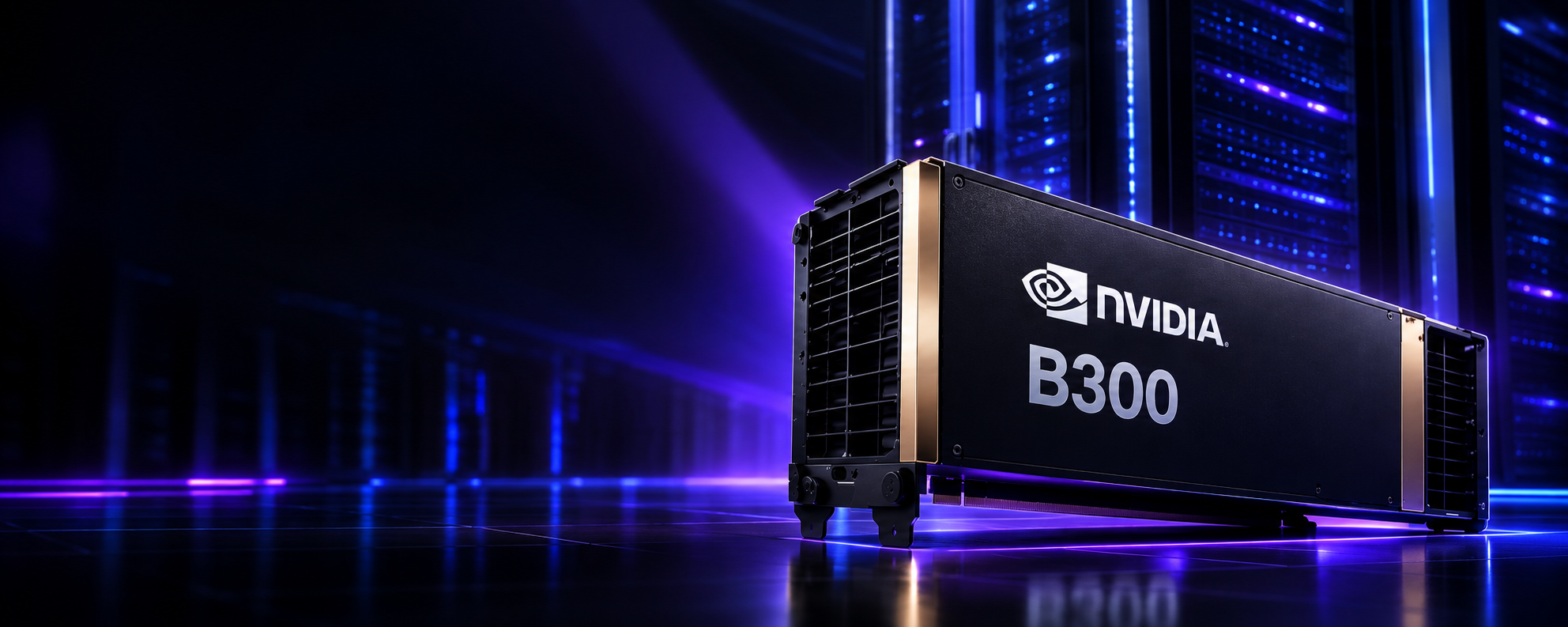
A typical bare metal GPU cluster for enterprise AI looks like: NVIDIA DGX H100 nodes (8x H100 80GB SXM5 per node, connected via NVLink at 900 GB/s), with nodes interconnected via InfiniBand HDR at 200 Gb/s, housed in your own data center or a co-location facility. For a 4-node cluster with networking infrastructure, you're looking at ₹12–16 crore before the facility costs hit.
The "bare" in bare metal means no virtualization tax. On a bare metal GPU, CUDA kernel launches go directly to the hardware. On a GPU cloud instance, there may be a thin virtualization layer — though on well-engineered platforms like Cyfuture AI, this overhead is typically under 2–3% and is often invisible at the application level.
Core Differences: GPUaaS vs Bare Metal GPU
| Dimension | GPU as a Service | Bare Metal GPU |
|---|---|---|
| Raw GPU Performance | Within 2–8% of bare metal | Maximum — no virtualization overhead |
| Upfront Cost | ₹0 — pure OpEx | ₹3Cr+ per H100 node (CapEx) |
| Time to First Compute | Under 60 seconds | 8–16 weeks procurement |
| Scalability | Instant — 1 to 64+ GPUs in minutes | Fixed until new hardware arrives |
| Multi-Node Distributed Training | Good — IB HDR available on premium tiers | Best — NVLink + IB, no network sharing |
| Inference Latency (single node) | Equivalent to bare metal (<3% gap) | Maximum — direct hardware access |
| Hardware Generation | Access latest GPUs immediately | Locked to purchased generation |
| Maintenance Burden | Provider-managed (drivers, firmware, HW) | Your team's responsibility |
| Data Control | Provider-dependent — dedicated instances available | Full — data never leaves your hardware |
| Best GPU Utilization Rate | Pay for used — no idle waste | Typical on-prem utilization: 35–55% |
Benchmark Analysis: Real Workload Results
Here's what actually happens when you run production AI workloads across both environments. These numbers reflect workloads run on Cyfuture AI's H100 and A100 infrastructure versus a comparable bare metal setup with similar GPU specs, using the same model checkpoints and training configurations.
Workload 1: LLM Fine-Tuning (LLaMA 3 8B, LoRA on 50K samples)
| Setup | GPU | Training Time | GPU Util % | Cost/Run | Notes |
|---|---|---|---|---|---|
| GPUaaS — On-Demand | A100 80GB | 4h 22min | 91% | ₹743 | Cold start: 48s |
| GPUaaS — Reserved | H100 SXM5 | 2h 51min | 94% | ₹625 | Best cost-efficiency |
| Bare Metal | H100 SXM5 | 2h 38min | 97% | ₹580* | *Amortized at 70% util |
| GPUaaS — Spot | A100 80GB | 4h 31min (incl. 1 restart) | 88% | ₹411 | Checkpoint required |
For single-node fine-tuning, reserved GPUaaS H100 is within 8% of bare metal performance at comparable cost once you factor in bare metal's facility overheads (power, cooling, data center lease). If your utilization drops below 60%, bare metal's amortized cost advantage disappears entirely.
Workload 2: LLM Inference (LLaMA 3 70B, 4-bit quantized, vLLM)
| Setup | GPU | P50 Latency | P99 Latency | Throughput (tok/s) | Cost per 1M tokens |
|---|---|---|---|---|---|
| GPUaaS — Dedicated | H100 SXM5 (2x) | 38ms | 67ms | 4,820 tok/s | ₹0.91 |
| GPUaaS — On-Demand | A100 80GB (2x) | 54ms | 112ms | 3,140 tok/s | ₹1.08 |
| Bare Metal | H100 SXM5 (2x) | 35ms | 58ms | 5,100 tok/s | ₹0.84* |
| GPUaaS — L40S | L40S (2x) | 71ms | 155ms | 2,410 tok/s | ₹0.51 |
The inference picture is telling: for latency-sensitive production serving at scale, bare metal holds a 7–15% latency advantage. But for teams that can tolerate P50 latencies in the 50ms range — which is true for the vast majority of B2B AI applications — cloud GPU dedicated instances are nearly indistinguishable. The L40S emerges as a compelling option for cost-optimized inference where raw throughput isn't the primary concern.
Workload 3: Multi-Node LLM Pre-Training (Mistral 7B from scratch, 2T tokens, 8xH100 node)
| Setup | Nodes | Interconnect | MFU (Model FLOP Utilization) | Training Throughput | vs Baseline |
|---|---|---|---|---|---|
| Bare Metal (DGX H100) | 4 nodes | NVLink + IB HDR | 52–58% | 186K tok/s | Baseline |
| GPUaaS — InfiniBand cluster | 4 nodes | IB HDR 200 Gb/s | 48–54% | 171K tok/s | –8.1% |
| GPUaaS — Ethernet cluster | 4 nodes | 100GbE | 38–42% | 141K tok/s | –24.2% |
This is where the gap actually matters. If you're running multi-node distributed training at scale, the interconnect spec matters more than the GPU spec. Always verify whether a GPUaaS provider's multi-node clusters use InfiniBand HDR or commodity Ethernet — the difference is 15–25% in training efficiency. Cyfuture AI's GPU cluster configurations include InfiniBand HDR options for distributed workloads.
Workload 4: Batch Image Generation (Stable Diffusion XL, 1,000 images @ 1024×1024)
| GPU | Environment | Time for 1K images | Images/min | Cost per 1K images |
|---|---|---|---|---|
| L40S 48GB | GPUaaS on-demand | 18min 42sec | 53.5 | ₹19.1 |
| A100 80GB | GPUaaS on-demand | 14min 08sec | 70.8 | ₹40.1 |
| A100 80GB | Bare metal | 13min 22sec | 74.8 | ₹37.4* |
| H100 SXM5 | GPUaaS on-demand | 9min 54sec | 101.0 | ₹36.2 |
For image generation pipelines, the L40S is the clear cost-efficiency winner — Ada Lovelace architecture, 48 GB GDDR6, and specialized for mixed AI+graphics workloads. It delivers 53.5 images/min at ₹19.1 per 1,000 images, compared to ₹40.1 for the A100. For media studios and generative AI products where volume matters more than latency, this is a compelling configuration available through Cyfuture AI's GPU cloud.
Compare Real GPU Performance and Pricing for Your Workloads
Run a benchmark test on Cyfuture AI's H100, A100, or L40S instances before committing to reserved pricing. No procurement delays, no minimum commitment on on-demand — just real GPU performance data for your specific workload.
Cost vs Performance Analysis
The benchmark numbers only tell half the story. The real cost comparison requires a total cost of ownership (TCO) model that accounts for all the costs bare metal carries that cloud pricing doesn't.
True Cost of a Bare Metal H100 Node (India, 3-Year TCO)
| Cost Component | Annual Cost (INR) | Notes |
|---|---|---|
| Hardware amortization (₹3.5Cr over 3 years) | ₹1,16,67,000 | 8x H100 SXM5 DGX node |
| Data center colocation | ₹18,00,000 | Tier III, 10kW rack, Mumbai |
| Power (10kW × 8,760hrs × ₹9/kWh) | ₹7,88,400 | Including PUE overhead |
| Networking (IB HDR switch + cabling) | ₹4,50,000 | Amortized over 3 years |
| Infra engineer time (0.5 FTE) | ₹9,00,000 | Dedicated GPU infra management |
| Support & maintenance contracts | ₹3,50,000 | NVIDIA enterprise support |
| Total Annual TCO | ₹1,59,55,400 | ≈ ₹18,200/hr at 100% utilization |
At 100% utilization, a bare metal H100 node costs ~₹18,200/hr amortized — versus ₹219/hr × 8 GPUs = ₹1,752/hr on Cyfuture AI on-demand, or ~₹1,050/hr on reserved pricing. The bare metal math only works if you're running 24/7 at very high utilization. Most teams' actual GPU utilization is 35–55%, which means their effective bare metal cost is ₹33,000–52,000/hr of actual compute delivered.
GPUaaS Pricing on Cyfuture AI (On-Demand vs Reserved)
| GPU | Architecture | On-Demand (₹/hr) | Reserved Est. (₹/hr) | Best For |
|---|---|---|---|---|
| V100 32GB | Volta · HBM2 | ₹39 | ~₹23–27 | Embeddings, small inference, RAG |
| L40S 48GB | Ada Lovelace · GDDR6 | ₹61 | ~₹37–43 | 7B inference, image gen, video |
| A100 80GB | Ampere · HBM2e | ₹170 | ~₹102–119 | Fine-tuning, 13B inference, research |
| H100 SXM5 | Hopper · HBM3 | ₹219 | ~₹131–153 | LLM pre-training, 70B+ inference |
All Cyfuture AI GPU pricing is India-hosted with no data egress fees for transfers within the platform. This alone saves teams 15–20% vs equivalent hyperscaler pricing when large training datasets are involved.
Decision Guide: GPUaaS vs Bare Metal
✅ Choose GPUaaS When
- GPU utilization is variable or unpredictable (common in R&D and early-stage AI teams)
- You need to burst to 8–64 GPUs for training runs, then scale back
- You lack existing data center infrastructure (power, cooling, networking)
- Time-to-market is critical — you can't wait 11 weeks for hardware
- You want access to H100s today without committing ₹3 crore
- Your team's competency is in ML, not infrastructure operations
- You're doing PoCs, fine-tuning experiments, or iterative training
🏢 Choose Bare Metal When
- GPU utilization is consistently above 70%, 24/7, for 3+ years
- You have a dedicated infra team with GPU management expertise
- You already have data center space, power, and networking in place
- You have absolute data sovereignty requirements (no cloud at all)
- Workloads are stable, well-defined, and will not change significantly
- You're running large multi-node training clusters where every % of MFU matters
Most mature AI teams at scale use both: bare metal for sustained production inference serving running 24/7 (where utilization is predictable and high), and GPUaaS for training runs, experimentation, and burst capacity. This hybrid approach captures the cost efficiency of owned infrastructure for stable workloads while retaining the flexibility of cloud GPU for everything else.
A Simple Decision Framework
Measure Your Actual GPU Utilization
Before any infrastructure decision, instrument your existing GPU workloads with nvidia-smi or Prometheus GPU exporter. If you don't have GPUs yet, estimate from your training frequency and job durations. Utilization below 60% almost always favors GPUaaS.
Calculate Your 3-Year TCO (Not Just Hourly Rate)
Add facility, power, networking, maintenance, and headcount to bare metal CapEx. Compare against reserved GPUaaS pricing at your expected monthly GPU-hours. The break-even utilization point is usually 68–75%.
Assess Your Regulatory Requirements
BFSI and healthcare teams in India need to verify DPDP Act compliance. India-hosted GPUaaS (Cyfuture AI) satisfies this requirement. Most foreign cloud GPU providers do not. This step eliminates several options before cost even enters the picture.
Evaluate Your Distributed Training Requirements
If you need multi-node training clusters with InfiniBand interconnect, verify your GPUaaS provider offers this — not all do. Cyfuture AI's enterprise GPU cluster configurations support InfiniBand HDR for distributed workloads. If your training is single-node, this distinction disappears.
Run a Benchmark on Your Actual Workload
Don't rely on vendor slides or generic benchmarks. Spin up a cloud instance and run your actual training job. Compare the time, cost, and performance against your expectations before making a multi-year commitment either way.
India-Specific Considerations
The GPU infrastructure decision looks different in India than in the US or Europe — regulatory, economic, and latency factors create a distinct decision landscape that many global benchmark comparisons miss entirely.
DPDP Act Compliance
India's Digital Personal Data Protection Act 2023 requires that personal data of Indian users be processed on India-hosted infrastructure for regulated industries. Cyfuture AI's GPU infrastructure is 100% India-hosted (Mumbai, Noida, Chennai) with full DPA documentation.
Latency Advantage for Indian Users
Running inference on India-hosted GPU infrastructure delivers 8–25ms lower round-trip latency for Indian end users compared to AWS us-east-1 or similar. For real-time AI applications, this is a material UX difference — not just a compliance benefit.
37–54% Cost Advantage vs Hyperscalers
Cyfuture AI's H100 at ₹219/hr vs AWS's ~$5.40/hr (~₹451/hr) in ap-south-1 is a 51% cost difference. Over a 100-GPU-hour training run, that's ₹23,200 saved — on a single job. At scale, this compounds rapidly.
MeitY Empanelment
For government and PSU AI workloads, MeitY-empanelled cloud providers are required. Cyfuture AI is empanelled with MeitY, making it a compliant choice for government digital transformation projects involving GPU compute.
No Data Egress Fees
Large training datasets transferred to and from India-hosted GPU instances on Cyfuture AI avoid the data egress fees that foreign cloud providers charge. For a 10 TB training corpus, AWS egress from ap-south-1 would cost ~$920. India-hosted: ₹0.
Bare Metal Procurement Challenges
H100 GPU server availability in India remains constrained. Lead times for bare metal GPU clusters in India average 11–16 weeks, with limited Tier III+ co-location options outside Mumbai and Bengaluru. GPUaaS eliminates this bottleneck entirely.
Challenges & Limitations (Both Sides)
Any honest benchmark analysis has to address what doesn't work well — not just the scenarios where each approach shines.
GPUaaS Limitations
Network I/O Variability in Shared Infrastructure
On non-dedicated cloud GPU instances, network bandwidth and storage I/O can exhibit variability — particularly during peak hours on shared infrastructure. For training jobs that are I/O-bound (large batch sizes with fast storage reads), this can add 5–15% overhead. The mitigation: use dedicated instances, or pre-stage your dataset in the provider's high-speed object storage before training begins.
Multi-Node Efficiency at Large Scale
For truly large distributed training — 32+ node clusters for frontier model training — bare metal with NVLink and InfiniBand in a controlled fabric is still the gold standard. Cloud GPU providers with InfiniBand get close, but the consistent 8–10% MFU gap at scale adds up over weeks of training time. This matters for LLM labs; it doesn't matter for most enterprise AI teams.
Long-Term Cost at Maximum Utilization
If you're running GPUs at 85%+ utilization continuously, 24/7, for 3+ years — and you have the infrastructure expertise to manage it — bare metal's amortized cost will eventually beat cloud rates. This crossover point is typically 3–4 years at high utilization, assuming no hardware refresh cycle disruption.
Bare Metal Limitations
Thermal Throttling Under Sustained Load
In poorly configured bare metal setups, GPU thermal throttling is a real performance killer. NVIDIA H100 SXM5 has a TDP of 700W per GPU. Eight GPUs in a DGX node = 5.6kW of heat. Without precise cooling design (liquid cooling preferred for high-density deployments), thermal throttling can reduce peak performance by 10–20% under sustained workloads. This is an infrastructure problem that GPUaaS providers solve for you.
Scaling Constraints for Training Sprints
Research and experimentation cycles often need to burst to large GPU counts for short periods — running hyperparameter sweeps, ensemble training, or model ablations across dozens of configurations simultaneously. Bare metal can't accommodate this elasticity; you're limited to what you've purchased, and idle capacity between sprints is pure waste.
Maintenance Windows and Hardware Failures
GPU hardware failures are not rare at scale. In a 100-GPU cluster, statistically expect 1–2 GPU failures per year. Bare metal operators have to manage RMA processes, driver updates, CUDA version management, and planned maintenance windows — all of which create downtime and operational overhead that cloud providers absorb. For small teams, this is often a disproportionate burden.
Talk to Our GPU Experts to Choose the Right Infrastructure
Not sure whether GPUaaS or a dedicated GPU cluster is right for your workload? Our infrastructure team has deployed hundreds of GPU environments across BFSI, healthcare, e-commerce, and AI labs. We'll help you model the TCO, benchmark your actual workload, and pick the setup that maximizes performance per rupee.
Frequently Asked Questions
GPU as a Service (GPUaaS) is a cloud delivery model where enterprises rent access to high-performance GPU hardware — H100s, A100s, L40S — over the internet, paying only for the compute hours consumed. The provider manages hardware procurement, power, cooling, networking, and maintenance. Users receive SSH or API access within 60 seconds, with zero capital expenditure. It's the fastest way to access enterprise-grade AI compute without the 11-week procurement timeline of bare metal GPU servers.
For single-node workloads, raw GPU performance is virtually identical — within 2–8% — because you're using the same physical hardware. The gap appears in multi-node distributed training: cloud infrastructure with Ethernet interconnects can be 20–25% less efficient than bare metal with NVLink and InfiniBand HDR. But GPUaaS providers like Cyfuture AI offer InfiniBand HDR options that narrow this to 6–10%. For inference and fine-tuning, the practical performance difference is negligible for most teams.
GPUaaS is cheaper for most teams when total cost of ownership is calculated honestly. Bare metal's headline cost looks low until you add facility costs (~₹18L/yr), power (~₹7.9L/yr), networking, infra headcount, and hardware amortization. The TCO break-even for bare metal requires consistent 68–75%+ GPU utilization. Most AI teams' actual utilization is 35–55%, making GPUaaS the more economical choice. India-hosted GPUaaS (Cyfuture AI) is also 37–54% cheaper than equivalent capacity on AWS or GCP.
For LLM pre-training and fine-tuning of 70B+ parameter models, the NVIDIA H100 SXM5 (3,958 TFLOPS BF16, 80 GB HBM3) is the benchmark standard. For fine-tuning 7B–13B models, the A100 80GB delivers the best cost-per-run on most workloads. For inference serving at scale, consider a mix — H100 for your highest-traffic endpoints, A100 for standard serving, and L40S for cost-optimized inference with acceptable latency. All are available on-demand via Cyfuture AI's GPU cloud platform.
Almost always GPUaaS. Startups have variable, unpredictable workloads — training experiments, PoCs, iterative fine-tuning — that don't justify the ₹3 crore+ CapEx per H100 node. GPUaaS provides instant scalability for training sprints, access to the latest GPUs without procurement cycles, and the operational flexibility to pivot your infrastructure as your models and workload patterns evolve. The only exception: well-funded startups with consistent 24/7 inference serving at high volume who have secured data center partnerships and infra expertise.
India's Digital Personal Data Protection Act 2023 (DPDP) requires that personal data of Indian users be processed on India-hosted infrastructure for regulated industries (BFSI, healthcare, HR). This eliminates most foreign cloud GPU providers — AWS, GCP, Azure — for compliant workloads processing Indian personal data. Bare metal in Indian co-location facilities satisfies DPDP, and so does India-hosted GPUaaS from providers like Cyfuture AI with data centres in Mumbai, Noida, and Chennai. The key is verifying where your data actually resides, not just where your application runs.
Anuj has architected GPU infrastructure for AI teams across BFSI, healthcare, and SaaS verticals — running distributed training workloads on multi-node H100 and A100 clusters, benchmarking GPUaaS vs bare metal deployments, and optimizing CUDA pipelines for production inference. He writes about HPC, AI infrastructure, and the practical trade-offs that actually matter when you're spending real money on compute.