


 IND
IND UAE
UAE SA
SA


NVIDIA B300 GPU Demand in India: The Enterprise AI Infrastructure Gap
The NVIDIA B300 GPU price in India has become one of the most searched queries among CTOs, AI engineers, and infrastructure teams in 2026. India's AI investment cycle is accelerating — the IndiaAI Mission committed ₹10,371 crore to sovereign AI compute, enterprise LLM deployments are scaling fast, and the NVIDIA B300 (Blackwell Ultra) now sits at the top of the performance pyramid for training and inference workloads alike.
But there's a gap between what organizations want and what they can actually afford to own. The B300 isn't a GPU you walk into a store and buy. It's a data center component sold into full systems through NVIDIA's partner network — at prices that make most procurement teams stop and rethink the whole approach.
This article gives you the actual numbers: what a B300 costs to purchase, what it costs to rent through a cloud provider, what the purchase price doesn't include, and how to decide which model makes sense for your organization's specific workload and financial situation.
What Is the NVIDIA B300 GPU?
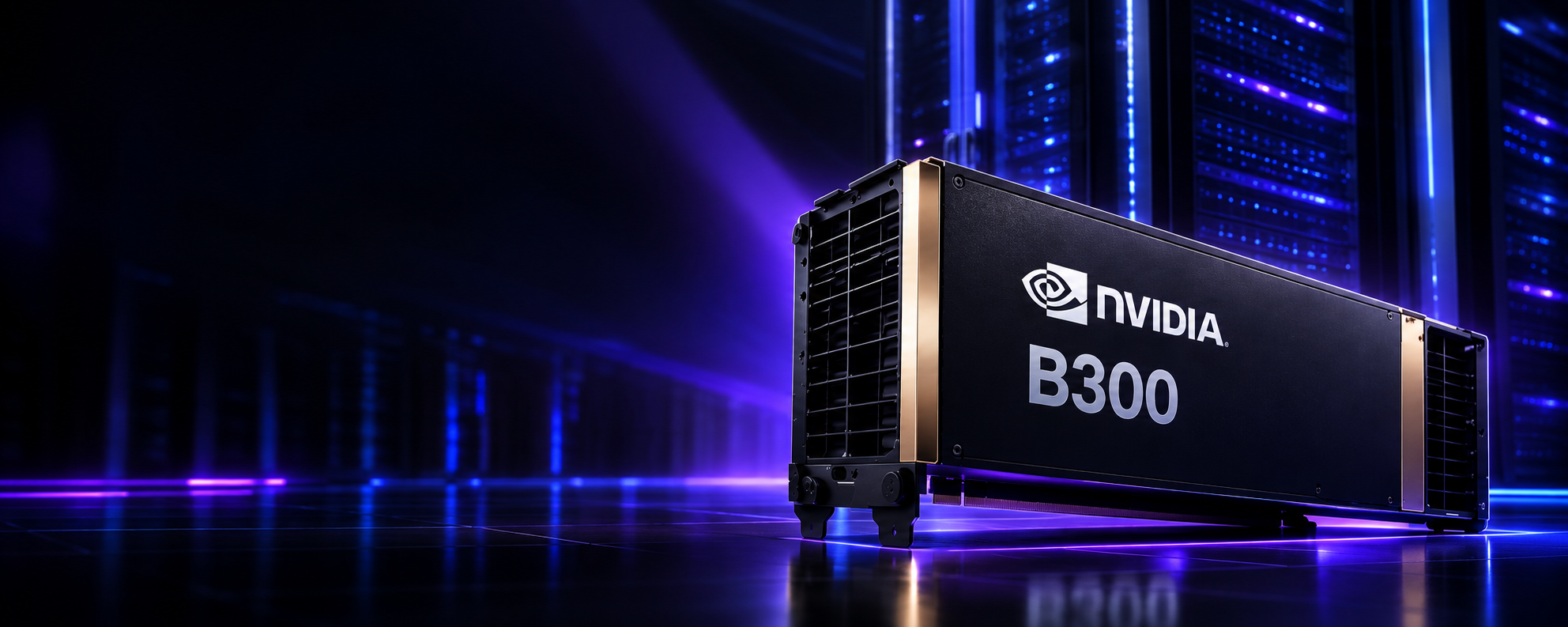
The NVIDIA B300 — officially designated Blackwell Ultra — is NVIDIA's follow-on to the B200. Announced at GTC 2025 and entering production through the second half of 2025, it reached broad cloud availability in 2026. The defining change from B200 isn't raw compute — it's memory capacity.
Where the B200 used 8-high HBM3e stacks to deliver 192 GB per GPU, the B300 moves to 12-high stacks for 288 GB per GPU. That 50% capacity increase isn't just a spec sheet improvement. For teams running 200B+ parameter LLMs, MoE architectures, or long-context inference at 1M+ tokens, it's the difference between fitting a full model on a single GPU versus sharding it across multiple nodes — adding latency, coordination overhead, and cost.
The B300 uses the same dual-reticle design as the B200 — two dies connected by a 10 TB/s on-package interface — with 160 Streaming Multiprocessors across 8 GPCs and 5th-generation Tensor Cores that introduce native FP4 (NVFP4) precision. FP4 enables 2× the throughput of FP8 for inference workloads without meaningful accuracy loss on modern transformer architectures.
The B300 isn't a full architectural redesign — it's a targeted upgrade where NVIDIA identified the binding constraint on real production workloads: memory capacity. Every other component (compute units, interconnect, TDP) is similar to the B200. The 12-high HBM3e stack is the engineering change that unlocks trillion-parameter model inference on a single GPU without model sharding.
NVIDIA B300 GPU — Full Technical Specifications
These specifications are based on confirmed NVIDIA data and industry reporting as of August 2026. The B300 SXM (server form factor) is the relevant configuration for enterprise AI deployments.
| Specification | NVIDIA B300 (Blackwell Ultra) | vs NVIDIA B200 | vs NVIDIA H100 |
|---|---|---|---|
| Architecture | Blackwell Ultra (dual-reticle) | Blackwell (dual-reticle) | Hopper (single-die) |
| Transistors | 208 billion | 208 billion | 80 billion |
| CUDA Cores | 20,480 | 20,480 | 16,896 |
| Streaming Multiprocessors | 160 SMs (8 GPCs × 20) | 160 SMs | 132 SMs |
| Tensor Cores | 5th Gen (FP4 / FP8 / FP16 / BF16) | 5th Gen | 4th Gen (FP8 / FP16) |
| HBM Memory | 288 GB HBM3e (12-high stacks) | 192 GB HBM3e (8-high) | 80 GB HBM3 |
| Memory Bandwidth | 8 TB/s | 8 TB/s | 3.35 TB/s |
| FP4 Performance | ~15 PFLOPS | ~9 PFLOPS | Not supported |
| FP8 Performance | ~8 PFLOPS | ~9 PFLOPS | ~3.9 PFLOPS |
| FP16 / BF16 Performance | ~5,000 TFLOPS | ~5,000 TFLOPS | ~1,979 TFLOPS |
| NVLink Version | NVLink 5 — 1.8 TB/s bidirectional | NVLink 4 — 900 GB/s | NVLink 4 — 900 GB/s |
| PCIe | PCIe Gen 6 — 256 GB/s (H2D) | PCIe Gen 5 | PCIe Gen 5 |
| TDP | 1,400 W (SXM form factor) | 1,200 W | 700 W |
| Cooling Required | Direct Liquid Cooling (DLC) mandatory | DLC mandatory | Air or liquid |
| NVL72 Aggregate Bandwidth | 14.4 TB/s (72-GPU rack) | 14.4 TB/s (GB200) | N/A |
The B300's standout number isn't compute throughput — B200 and B300 have near-identical FP8/FP16 performance. The real advantage is 288 GB of KV cache capacity. For long-context inference (1M+ tokens), MoE model serving, and trillion-parameter training, the B300 eliminates memory constraints that force multi-GPU sharding on any other available GPU. That's where cost-per-token math changes materially for production deployments.
NVIDIA B300 GPU Price in India
There is no official MSRP for the NVIDIA B300. It doesn't sell through retail channels. The B300 is a data center component sold through NVIDIA's OEM partner network (Dell, HPE, Lenovo, Supermicro, and others) as part of complete server systems. Here are the actual price points as of August 2026:
| Configuration | USD Price | INR Equivalent (≈₹84/USD) | Notes |
|---|---|---|---|
| Single B300 GPU (standalone) | ~$53,000 | ~₹44.5 Lakh | Industry reporting (July 2026). Not available retail — sold through partners into systems. |
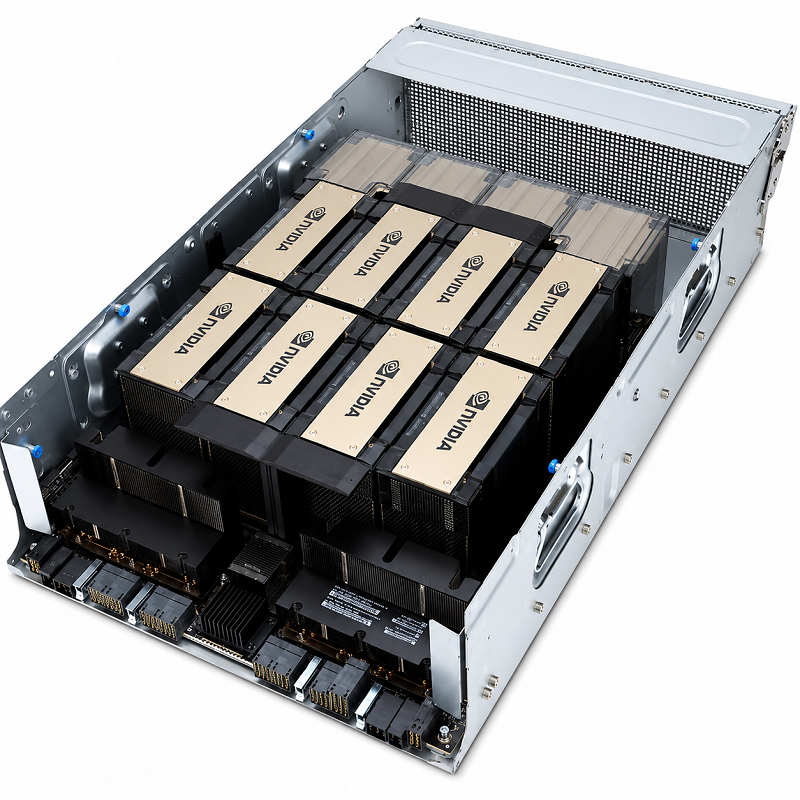
| DGX B300 (8-GPU system) | $400,000–$500,000 | ₹3.36–₹4.2 Crore | Includes NVLink fabric, system memory, networking, and NVIDIA AI software stack. |
| HGX B300 baseboard (8 GPUs) | $300,000–$350,000 | ₹2.52–₹2.94 Crore | Baseboard only — needs server chassis, networking, storage separately. |
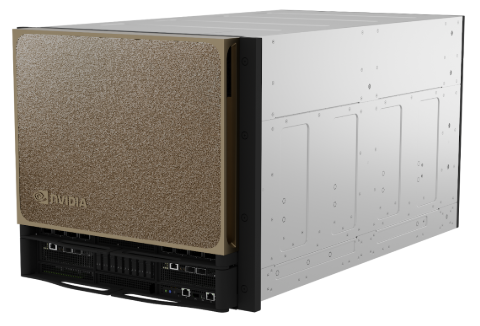
| GB300 NVL72 rack (72 GPUs) | $3M–$4M (estimated) | ₹25.2–₹33.6 Crore | 72 B300 GPUs with full NVLink fabric and liquid-cooled rack. No official price published. |
India-specific cost factors that push these numbers significantly higher:
- Import duties and customs: GPU servers attract Basic Customs Duty (BCD) of 7.5–10% plus IGST of 18%, adding 25–30% to landed cost.
- Freight and insurance: International freight and insurance for large server hardware typically adds 3–5% to invoice value.
- Currency risk: GPU procurement happens in USD. A 5% INR depreciation between PO and delivery adds a meaningful delta on an already large purchase.
- Supply constraints: B300 allocation is primarily directed to major cloud providers and hyperscalers. Enterprise purchasers in India face 3–9 month lead times and often pay premium prices through partners.
A DGX B300 at $400,000 becomes approximately ₹4.2 Crore at base exchange rate. Add 28–30% for import duties, GST, freight, and insurance — the landed cost in India approaches ₹5.3–₹5.5 Crore before any infrastructure investment. And that's assuming you can get allocation within your procurement window.
Hidden Costs of Buying NVIDIA B300 GPUs
The GPU system price is only the start. Every production-ready B300 deployment carries substantial additional CapEx and OpEx that rarely appears in the initial budget proposal.
Liquid Cooling Infrastructure
The B300 draws up to 1,400W per GPU — a full 8-GPU node at nearly 11 kW, a GB300 NVL72 rack at 30–60 kW. Direct Liquid Cooling (DLC) is mandatory. Retrofitting a standard data center costs ₹1.5–₹4 Crore per rack. Building from scratch: significantly higher.
High-Speed Networking
Distributed training and inference across B300 GPUs requires InfiniBand networking (NVIDIA Quantum-X800, 400 Gb/s or 800 Gb/s). The networking layer alone for an 8-GPU cluster can cost ₹50 Lakh–₹1.5 Crore, depending on switch topology and scale.
Parallel Storage
High-throughput training workloads require fast parallel storage — NVMe SSDs or all-flash arrays capable of feeding GPUs without becoming the bottleneck. Budget ₹30–₹80 Lakh for a production-grade storage layer for a single DGX node.
Rack Space and Power
Dedicated rack space, redundant power feeds, UPS, and high-density PDUs. In a Tier III Indian colocation facility, a dedicated cage with sufficient power runs ₹8–₹20 Lakh/month — a recurring cost that doesn't appear in the GPU purchase price.
NVIDIA Hardware Support
NVIDIA enterprise hardware support (NBD or 4-hour response) runs 8–12% of hardware value per year. On a ₹4.5 Crore system, that's ₹36–₹54 Lakh annually — in perpetuity, every year you own the hardware.
GPU Infrastructure Team
Operating a B300 cluster in-house requires dedicated GPU infrastructure engineers — a scarce skillset commanding ₹30–₹60 Lakh/year per person in India. Most production deployments need 2–3 engineers for provisioning, monitoring, maintenance, and incident response.
Software and MLOps Stack
NVIDIA AI Enterprise licensing, orchestration (Kubernetes + GPU operators), monitoring, model serving infrastructure, and your MLOps platform add ₹20–₹60 Lakh/year ongoing software cost depending on stack choices and team size.
Hardware Obsolescence
NVIDIA's GPU generation cycle runs 12–18 months. A B300 cluster purchased in 2026 may face meaningful performance disadvantages against the next generation by late 2027 — while you continue paying maintenance and carrying the asset on the balance sheet.
| Cost Category | Type | Estimate — 1× DGX B300 Node (India) |
|---|---|---|
| DGX B300 system (landed in India) | CapEx | ₹5.3–₹5.5 Crore |
| Liquid cooling infrastructure | CapEx | ₹1.5–₹4 Crore |
| Networking (InfiniBand) | CapEx | ₹50 Lakh–₹1.5 Crore |
| Storage (NVMe / parallel) | CapEx | ₹30–₹80 Lakh |
| Rack, power, UPS | CapEx | ₹20–₹60 Lakh |
| Total initial CapEx (est.) | CapEx | ₹7.5–₹12 Crore |
| Colocation / data center rent | OpEx / year | ₹96 Lakh–₹2.4 Crore |
| Hardware support (NVIDIA) | OpEx / year | ₹36–₹54 Lakh |
| Software / MLOps stack | OpEx / year | ₹20–₹60 Lakh |
| Infrastructure team (2 engineers) | OpEx / year | ₹60 Lakh–₹1.2 Crore |
| Total annual OpEx (est.) | OpEx / year | ₹2.1–₹4.1 Crore / year |
Renting vs Buying NVIDIA B300 GPUs
The decision isn't simply about GPU price. It's about total cost of ownership against the pace of your AI development, the predictability of your compute demand, and what your capital is better deployed doing elsewhere.
| Factor | Buying (Own Infrastructure) | Renting (GPU as a Service) |
|---|---|---|
| Initial Investment | ₹7.5–₹12 Crore for a single 8-GPU node | Zero CapEx — pay per GPU-hour or monthly |
| Deployment Time | 3–9 months (procurement, delivery, installation) | Hours to days — provisioned on demand |
| Maintenance | In-house team + NVIDIA support contract | Fully managed by provider |
| Liquid Cooling | Build or retrofit at ₹1.5–₹4 Crore | Included in service — operational already |
| Scalability | Stepwise CapEx — add a DGX node at ₹7.5+ Crore per increment | Add or remove GPUs in minutes |
| Hardware Upgrades | New purchase required for next GPU generation | Provider upgrades fleet; access next-gen without repurchase |
| Cash Flow | Large upfront outlay, strains balance sheet | Operational expense — predictable monthly billing in INR |
| GPU Utilization | You pay for 100% even if utilization is 50–65% | Pay only for hours actually used |
| DPDP Act Compliance | Your responsibility to architect and audit | Built into India-hosted providers by architecture |
| Flexibility | Locked to owned hardware for 3–5 year asset life | Switch workloads, GPU types, or scale to zero anytime |
| Break-even Horizon | 3–4 years at sustained high utilization (>80%) | No break-even needed — OpEx model |
✓ When Buying Makes Sense
- Sustained utilization above 80% for 3+ years — only then does ownership math favor buying
- Regulatory requirements for physical hardware control that no cloud provider can satisfy
- Classified or true air-gapped workloads where network connectivity is a genuine security constraint
- You already operate a liquid-cooled data center with available capacity and a GPU ops team in place
→ When Renting Makes More Sense
- Variable or project-based workloads — training runs end, inference demand fluctuates
- You need access in weeks, not months — capital procurement takes 3–9 months in India
- You don't have a GPU infrastructure team and don't want to build one
- CapEx is better deployed in product or research than in hardware that depreciates
- You want next-gen GPU access without a new ₹8+ Crore purchase every 18 months
NVIDIA B300 Cloud Pricing
Cloud pricing for the B300 varies by provider, billing model, region, and commitment level. These are real market rates as of August 2026:
| Billing Model | Typical Rate | Best For | Notes |
|---|---|---|---|
| On-Demand (hourly) | $7.39–$9.00 / GPU-hour | Short training runs, experiments, burst workloads | No commitment. Subject to availability. Highest per-hour rate. |
| Reserved (1 year) | 30–50% below on-demand | Production inference with predictable demand | Commitment required upfront; significant savings for steady-state workloads. |
| Monthly (INR billed) | Contact provider for INR rates | Indian enterprises wanting INR billing | Cyfuture AI offers INR pricing, GST-compliant invoices, no forex risk. |
| Bare Metal (dedicated node) | Custom enterprise pricing | BFSI, healthcare, regulated workloads | Full node dedicated to one tenant; highest security; minimum 1-month commitment. |
| Spot / Preemptible | 60–75% below on-demand | Fault-tolerant training with checkpointing | Can be preempted; not suited for real-time inference. |
At $8/GPU-hour, a single B300 runs ~$192/day or ~$5,760/month. At 100% utilization, a $53,000 GPU pays off in under a year on paper — but ownership carries ₹1.5–₹4 Crore in liquid cooling plus ₹2–₹4 Crore/year in OpEx, and utilization is never 100%. At realistic enterprise utilization of 60–70%, cloud rental delivers equivalent compute access without the stranded-asset risk, the procurement timeline, or the infrastructure complexity.
Who Should Rent NVIDIA B300 GPUs?
The rental model isn't only for startups who can't afford to buy. Some of the most sophisticated AI teams rent rather than own — because the economics of ownership only favor buying under very specific, sustained conditions.
AI Startups and Scale-ups
Capital is scarce and demand is lumpy — training runs happen in bursts, not 24/7. Renting means you pay for compute when you need it and scale to zero between experiments. A Series A startup spending ₹80 Lakh/month on GPU cloud accesses the same hardware as a frontier AI lab at a fraction of what it would take to buy and operate even one DGX node.
SaaS Platforms Shipping AI Features
Product companies adding AI features — copilots, summarization, classification, recommendation — need inference infrastructure that scales with user growth. Renting lets you match infrastructure cost to revenue, which is critical before you have predictable AI revenue to justify owned infrastructure.
Research Labs and Universities
Academic institutions and R&D labs run grant-funded or project-based compute. Renting aligns infrastructure cost with project duration — no stranded asset at project end, and no need to compete internally for shared GPU time between research groups.
BFSI and FinTech
Banks and financial services firms have strict data localisation requirements under RBI guidelines and the DPDP Act. India-hosted GPU cloud from providers like Cyfuture AI satisfies data residency without the ₹8–12 Crore CapEx of building owned GPU infrastructure inside their own data centers.
Healthcare and Diagnostics
Medical imaging AI, genomics, and clinical decision support run computationally intensive but episodic workloads. Renting B300 GPUs for diagnostic model training and periodic inference runs is significantly cheaper than maintaining owned infrastructure that may sit idle between projects.
Enterprises Evaluating Before Committing
Even organizations planning to eventually build private GPU infrastructure benefit from renting first. Real usage data on your actual workloads — model types, batch sizes, utilization patterns, required GPU memory — is far more valuable for capacity planning than vendor projections. Rent for 3–6 months, profile your needs, then spec the right infrastructure if the economics justify it.
Access NVIDIA B300 GPU Power Without the ₹8 Crore CapEx
Cyfuture AI offers enterprise-ready NVIDIA B300 GPU Cloud from India-based liquid-cooled data centers. INR billing, DPDP Act compliance, no forex risk, no hardware procurement headaches. Deploy in hours, not months.
Why Enterprises Prefer GPU as a Service
The shift toward GPU as a Service among Indian enterprises isn't driven by a lack of capital — it's driven by a recognition that GPU infrastructure is moving too fast to make 3-year ownership decisions rationally. Here's what drives the preference in practice:
Why Choose Cyfuture AI for NVIDIA B300 GPU Cloud
There are multiple routes to B300 compute in India. What Cyfuture AI offers is distinct from generic hyperscalers and most GPU cloud providers in ways that matter specifically for Indian enterprise deployments.
India-Hosted NVIDIA B300 GPU Cloud
Cyfuture AI's NVIDIA B300 GPU servers run from Tier III+ data centers in Noida, Jaipur, and Raipur. Your data never crosses international borders — satisfying DPDP Act 2023 data localisation requirements by architecture, not by contract workaround.
Liquid-Cooled AI Data Centers
The B300 mandates direct liquid cooling. Cyfuture AI's Liquid-Cooled AI Data Center infrastructure is already operational — you don't pay the ₹1.5–₹4 Crore cooling retrofit cost; it's included in the service by default.
Bare Metal + Cloud Flexibility
Choose between shared GPU cloud instances (on-demand, hourly), dedicated bare-metal GPU servers (physical isolation for regulatory requirements), or reserved capacity with monthly rate discounts. Each model serves different workload and compliance needs.
INR Billing — No Forex Risk
All billing in Indian Rupees with GST-compliant invoices. No USD invoice, no currency conversion overhead, no forex exposure on multi-month GPU commitments. Simplifies procurement and accounting for Indian enterprises significantly.
ISO 27001:2022 + SOC 2 Type II
Cyfuture AI infrastructure is ISO 27001:2022 certified and SOC 2 Type II attested — the certifications that BFSI, healthcare, and government procurement teams require before any cloud provider can handle sensitive AI workloads.
Expert Deployment Support
Cyfuture AI's technical team assists with GPU cluster configuration, CUDA and driver setup, NCCL tuning for multi-GPU distributed workloads, and ongoing infrastructure monitoring. You get compute and operational expertise — not just raw capacity.
Decision Framework: Buy or Rent NVIDIA B300 GPUs?
NVIDIA B300 GPU Price in India — Without the CapEx
Looking for NVIDIA B300 GPU access in India without investing in expensive hardware? Cyfuture AI offers enterprise-ready NVIDIA B300 GPU Cloud with flexible hourly and monthly billing, liquid-cooled AI infrastructure, dedicated GPU servers, and expert deployment support. Get the performance you need without the upfront capital investment — deployed in hours, billed in INR.
Frequently Asked Questions
A single NVIDIA B300 GPU costs approximately $53,000 (~₹44.5 Lakh) based on July 2026 industry reporting. The B300 is not sold as a standalone retail product — it's sold through NVIDIA's OEM partner network as part of complete systems. A DGX B300 (8-GPU system) costs $400,000–$500,000 (~₹3.36–₹4.2 Crore) at US base price. After Indian import duties (BCD 7.5–10%), IGST (18%), freight, and insurance, the landed cost approaches ₹5.3–₹5.5 Crore for a single DGX node — before infrastructure, power, and networking costs.
Global on-demand rates for NVIDIA B300 GPU cloud start from approximately $7.39/GPU/hour as of August 2026, with a market median around $7.60/GPU/hour across providers. Reserved (committed) billing typically offers 30–50% discounts. India-hosted providers like Cyfuture AI offer competitive pricing in INR with no forex risk, GST-compliant invoices, and enterprise SLAs. Contact Cyfuture AI for current INR pricing on monthly and bare-metal configurations.
The NVIDIA B300 ships with 288 GB of HBM3e memory per GPU — 50% more than the B200's 192 GB, roughly double the H200's 141 GB, and 3.6× the H100's 80 GB. This is achieved through 12-high HBM3e stacking (up from 8-high in the B200). Memory bandwidth reaches 8 TB/s per GPU. In an 8-GPU HGX B300 node, total memory reaches 2.3 TB. A GB300 NVL72 rack (72 GPUs) provides up to 20.7 TB of total HBM3e across the rack.
The B300 (Blackwell Ultra) differs from the B200 primarily in memory capacity. Both use the same dual-reticle die design with 208 billion transistors, 160 SMs, and 5th-gen Tensor Cores. The B300 increases HBM3e from 192 GB (B200, 8-high stacks) to 288 GB (12-high stacks). FP8/FP16 throughput is near-identical. The B300's FP4 throughput is higher (~15 PFLOPS vs ~9 PFLOPS for B200). The B300 also uses PCIe Gen 6 and draws 1,400W (vs 1,200W for B200). For most workloads, the practical difference is the 50% memory increase — enabling larger models without sharding.
Yes — the B300 mandates direct liquid cooling (DLC). At 1,400W TDP per GPU, a full 8-GPU DGX B300 node draws nearly 11 kW. A GB300 NVL72 rack at 72 GPUs operates at 30–60 kW per rack. Standard air-cooled data centers cannot support this power density. Retrofitting for DLC costs ₹1.5–₹4 Crore per rack. India-hosted cloud providers like Cyfuture AI have this infrastructure already operational — it's included in the service, not an add-on.
The B300 is purpose-built for memory-constrained workloads: (1) Trillion-parameter LLM training and fine-tuning — 288 GB eliminates aggressive model sharding; (2) Long-context inference — KV cache fits entirely on-GPU at 1M+ token contexts; (3) MoE model serving — large expert counts fit in single-node memory; (4) High-concurrency inference APIs — more KV cache means more simultaneous user sessions per GPU; (5) Scientific computing and genomics where working sets exceed H100/H200 memory limits. Workloads with smaller model sizes don't benefit proportionally — in those cases, the B200 is typically more cost-effective.
Yes. GPU as a Service providers in India — including Cyfuture AI — offer NVIDIA B300 GPU cloud access on hourly and monthly billing with no minimum commitment on on-demand plans. This means access to the same hardware frontier AI labs use, without the ₹5+ Crore hardware purchase, ₹1.5–₹4 Crore liquid cooling build-out, or the 3–9 month procurement timeline. You can provision a B300 instance in hours and pay only for what you use.
A DGX B300 is NVIDIA's complete 8-GPU AI server system — 8 B300 SXM GPUs on a single HGX baseboard, with integrated NVLink fabric, system memory, networking, storage, and NVIDIA's AI software stack. US pricing runs $400,000–$500,000. After import duties, IGST, freight, and insurance, the landed cost in India reaches approximately ₹5.3–₹5.5 Crore for the hardware alone — before infrastructure, colocation, networking, and support costs.
Yes. Cyfuture AI's entire GPU cloud infrastructure — including NVIDIA B300 GPU servers — runs from data centers in Noida, Jaipur, and Raipur. All data processed through Cyfuture AI's cloud remains in India, satisfying DPDP Act 2023 data localisation requirements by architecture. The infrastructure is ISO 27001:2022 certified and SOC 2 Type II attested. Enterprise customers on annual plans receive Data Processing Agreements as standard. For BFSI customers, the architecture aligns with RBI's 2023 cloud adoption framework.
The GB300 NVL72 is NVIDIA's rack-scale AI system — 72 B300 GPUs in a single liquid-cooled rack, all connected via NVSwitch 3.0 for 14.4 TB/s aggregate NVLink bandwidth. Every GPU communicates with every other GPU at full NVLink speed. This enables workloads that can't run on an 8-GPU node. A DGX B300 is an 8-GPU compute node — the building block. An NVL72 is a 72-GPU rack acting as one large compute unit. Estimated cost: $3–4 million (~₹25–₹33 Crore). The only practical access route for most organizations is through a GPU cloud provider.
The NVIDIA B300 uses NVLink 5, delivering 1.8 TB/s of bidirectional GPU-to-GPU bandwidth per GPU — 2× the NVLink 4 bandwidth of the H100/H200 generation. In a GB300 NVL72 rack with 72 GPUs connected through NVSwitch 3.0, aggregate NVLink bandwidth reaches 14.4 TB/s. This high interconnect bandwidth enables efficient tensor parallelism, attention head splitting, and expert parallelism in MoE models across multiple GPUs within a node or across the rack.
For a single DGX B300 node in India: Year 1 — ₹9–16 Crore (hardware CapEx ~₹7.5–12 Crore + OpEx ~₹2–4 Crore). Years 2–3 — ₹2–4 Crore/year in OpEx (colocation, support, staff, software). 3-year total: approximately ₹13–24 Crore. At cloud rental rates with 70% average utilization, 3 years of equivalent compute on 8 GPUs runs approximately ₹2–3 Crore — a fraction of ownership cost at typical enterprise utilization rates. The math only reverses above ~80% sustained utilization over the full ownership period with careful TCO modeling.
India-hosted GPU cloud providers like Cyfuture AI bill directly in Indian Rupees with GST-compliant invoices. This eliminates the currency risk inherent in USD-billed services — significant for multi-month committed GPU contracts where INR/USD movement can add 3–8% to effective cost. INR billing also simplifies internal procurement processes, eliminates the need for USD purchasing authority, and makes GPU cloud spending visible and predictable alongside other operational expenses.