

 IND
IND UAE
UAE SA
SA



The Infrastructure Reality Nobody Budgets For
Generative AI is no longer experimental. In 2026, it has become a core business capability across media, eCommerce, gaming, healthcare, architecture, and enterprise marketing. The models exist. The APIs are mature. The challenge now is infrastructure — specifically, the GPU capacity to run these workloads at production scale without blowing past cost projections in month two.
Stable Diffusion and its architectural descendants require something a CPU cluster fundamentally cannot provide: massive parallel floating-point throughput, high-bandwidth memory, and the ability to sustain that performance across thousands of concurrent inference requests. Teams that architect around this reality produce scalable, cost-predictable pipelines. Teams that don't hit GPU capacity ceilings right when user demand peaks.
That's the gap GPU as a Service fills — not just compute access, but elastic GPU infrastructure that scales with your actual workload rather than your procurement timeline.
What is GPU as a Service?
GPU as a Service (GPUaaS) is a cloud-based infrastructure model that provides on-demand access to high-performance GPUs for AI training, inference, rendering, and generative AI workloads — without requiring physical GPU ownership or on-premises infrastructure management.
The operational model is straightforward: instead of procuring, racking, and maintaining GPU servers, you access GPU compute through an API or management console, pay for what you use, and scale horizontally when demand increases. The underlying hardware — H100s, H200s, A100s, or Blackwell-class GPUs — is managed by the provider.
What makes GPUaaS meaningfully different from generic cloud compute is the specialisation. These aren't CPU VMs with a discrete GPU tacked on. They're purpose-built GPU clusters with NVLink interconnects, high-bandwidth NVMe storage, InfiniBand networking for multi-GPU jobs, and driver stacks pre-tuned for AI workloads. The time from "I need GPU capacity" to "inference is running" collapses from weeks to minutes.
Why Stable Diffusion Requires GPU Infrastructure
Stable Diffusion performs billions of tensor operations per inference pass. The U-Net denoising backbone, VAE encoder/decoder, and CLIP text encoder all rely on dense matrix multiplications — the native domain of GPU hardware. A modern A100 delivers roughly 312 TFLOPS of FP16 throughput. A high-end CPU server delivers perhaps 2–4 TFLOPS. The gap isn't marginal; it's structural.
Beyond raw throughput, VRAM capacity determines what you can run and at what resolution. Base SDXL at 1024×1024 needs around 10–12GB during inference. Running with ControlNet, IP-Adapters, and high-res upscaling pushes that past 20GB. LoRA fine-tuning needs more. DreamBooth on a full model requires 40–80GB depending on resolution and batch size.
| AI Image Generation Requirement | Why GPU Architecture Matters | CPU Equivalent |
|---|---|---|
| Tensor Operations | GPUs run thousands of cores in parallel — direct match for matrix multiplications in neural networks | 20–50x slower; impractical for production |
| High VRAM Requirements | Large diffusion models require 24GB–80GB GPU memory — standard in enterprise GPU tiers | System RAM is slower and architecturally mismatched |
| Fast Inference Latency | H100 generates a 1024×1024 SDXL image in ~2–4 seconds; CPU takes 8–15 minutes | Unusable for real-time or interactive applications |
| Parallel Batch Processing | Multiple prompts processed simultaneously across GPU cores — linear throughput scaling | Sequential; no parallel batch gain |
| LoRA & DreamBooth Training | Fine-tuning requires gradient computation at scale — minimum 24GB VRAM for practical LoRA training | Days vs hours; economically unviable |
Diffusion pipeline memory requirements scale non-linearly with resolution and pipeline complexity. A team validating on a 10GB GPU in development hits VRAM walls immediately when adding ControlNet, higher resolutions, or concurrent user requests in production. Sizing GPU memory at the pipeline level — not the model level — is the most common infrastructure planning failure in generative AI deployments.
GPUaaS Architecture: Five-Layer Infrastructure Stack
A production GPUaaS deployment for AI image generation isn't a single machine — it's a layered infrastructure stack where each layer has distinct latency, cost, and scaling characteristics. Understanding these layers is what separates teams that architect for scale from those that retrofit it after the fact.
Deploy Stable Diffusion on Enterprise GPU Infrastructure
Access NVIDIA H100 and A100 GPU clusters optimised for diffusion model inference and training. India data centers, sub-20ms regional latency, INR billing. No hardware procurement, no lead times.
Why GPUaaS Adoption is Accelerating in 2026
The shift isn't primarily about cost, though cost matters. It's about the fundamental mismatch between AI infrastructure procurement timelines and AI product development cycles. Hardware lead times for enterprise GPU servers stretch 6–12 months. AI model iterations happen weekly. You can't architect a competitive AI product on a hardware procurement calendar.
Why GPUaaS Wins
- No procurement lag — GPU capacity in minutes, not months. Critical for teams iterating on model versions faster than hardware ships
- No stranded capital — GPUs depreciate quickly as new architectures launch. Blackwell made H100 feel dated within 18 months of release
- Elastic inference scaling — batch generation demand peaks handled by horizontal scaling, not over-provisioned static clusters
- Latest GPU access — H200s and B200s without $300K+ capital per node and the cluster engineering overhead that follows
- Operational offload — driver updates, CUDA version management, hardware failures handled by provider infrastructure teams
When On-Premises Makes Sense
- Sustained 24/7 utilisation above 80% — if you're consistently running near capacity, owned hardware economics eventually change
- Extreme data sovereignty — regulated industries with hard air-gap requirements may need physical control of hardware
- Custom inference hardware — specialised ASIC inference cards can't be provisioned via cloud APIs
- Multi-year stable workloads — at genuine hyperscale with truly stable workload profiles, a full 3-year TCO analysis is warranted before deciding
India's 19.6% CAGR reflects a structural reality: enterprises building AI-first products in a market where GPU hardware costs and import lead times are prohibitive. For Indian enterprises, GPUaaS isn't just convenient — it's the only economically viable path to production-scale GPU infrastructure. India-hosted providers like Cyfuture AI add data localisation compliance and sub-20ms latency for regional users, without the currency risk of USD-denominated international providers.
Key Benefits for AI Image Generation Workloads
Capital Cost Elimination
A single enterprise GPU server with 8× H100s runs $200K–$400K in hardware alone, plus networking, cooling, co-location, and dedicated GPU engineering headcount. GPUaaS converts that to an operational line item with no depreciation risk as hardware generations turn over every 18–24 months.
Elastic Inference Scaling
Stable Diffusion API demand follows traffic patterns — peaks at campaign launches, product updates, and batch generation jobs. GPUaaS scales horizontally for peaks without maintaining idle GPU capacity during the other 90% of the time. Right-sized burst capacity economics are material at any meaningful production scale.
Faster Deployment Cycles
New Stable Diffusion checkpoints, LoRA adapters, and pipeline configurations can reach production in the time it takes to push a container image — not the time it takes to provision hardware. Teams that optimise deployment velocity hold a structural product advantage over teams bottlenecked by infrastructure cycles.
Access to Current GPU Tiers
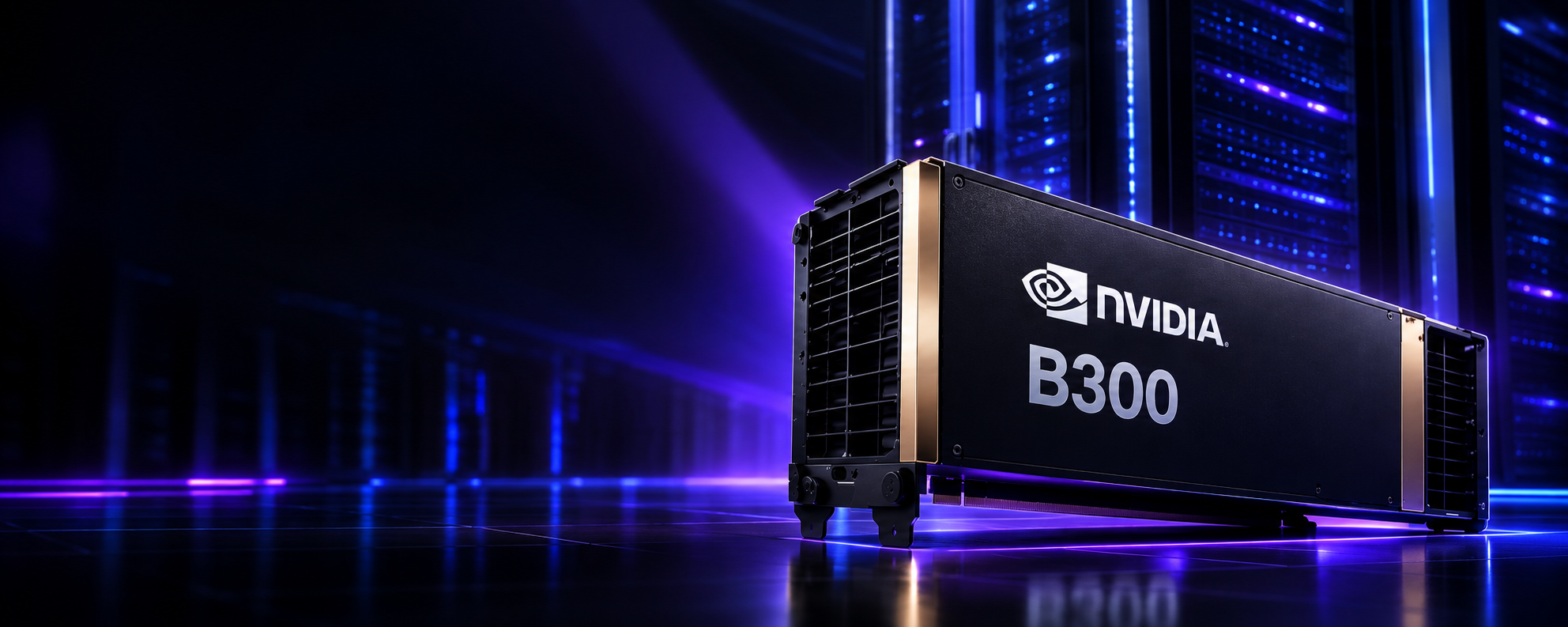
H100, H200, and Blackwell B200 GPUs are accessible on GPUaaS platforms without 6–12 month procurement cycles. H200's HBM3e memory bandwidth advantages are substantial for memory-bound diffusion inference — cloud access is the only practical upgrade path for most organisations.
Distributed AI Collaboration
Global development teams share a single GPU cluster — training jobs run in one region while inference serves users in another. Model weight synchronisation, shared experiment tracking, and centralised monitoring work across distributed teams on a single GPUaaS account with no physical infrastructure replication.
Infrastructure Operations Offload
CUDA driver management, hardware failure response, firmware updates, power and cooling optimisation — all handled by the provider. For AI teams whose core competency is models rather than hardware, this operational offload compounds over time. Every hour not spent on infrastructure maintenance is an hour spent on model quality.
Enterprise Use Cases: Where GPU Compute Actually Goes
| Industry | AI Image Generation Workload | GPU Utilisation Pattern | Key Infrastructure Requirement |
|---|---|---|---|
| eCommerce | Automated product renders, lifestyle scene generation, AI background replacement at catalogue scale | Burst-heavy — campaign launches drive 10–100x normal volume | Fast horizontal scaling; consistent style LoRAs per brand |
| Gaming | Procedural texture generation, character concept art, environment variants, UI asset generation | High sustained throughput during dev cycles; variable during live operations | Style-consistent models; fine-grained LoRA control per IP |
| Media & Entertainment | AI-assisted storyboarding, visual development, pre-visualisation | Project-gated bursts; multi-GPU required for high-res cinematic formats | 80GB+ VRAM for 4K generation; low inter-frame variance |
| Healthcare | Synthetic medical imaging for model training, radiology augmentation, patient education | Batch-dominant; audit trail requirements; data localisation mandatory | Compliance-grade infrastructure; India-hosted or on-premises only |
| Architecture & Design | Concept visualisation from sketches, material exploration, exterior/interior rendering | Moderate volume, high per-image quality; ControlNet-heavy pipelines | High VRAM per-job; ControlNet + IP-Adapter in same pipeline |
| Marketing & Advertising | Personalised creative at scale, A/B variant creation, regional campaign localisation | High concurrency with structured templates; low per-user latency needed | Fast P95 latency; multi-tenant isolation between brand accounts |
Healthcare imaging and BFSI customer data have explicit data localisation requirements under multiple regulatory frameworks. Using international GPU cloud providers creates compliance exposure that legal teams consistently flag as a blocker. India-hosted GPU infrastructure with DPDP-aligned data handling shapes provider selection before any technical evaluation begins — it's a requirement, not a preference.
GPU Architecture Tiers for Diffusion Model Workloads
Not every Stable Diffusion workload requires an H100. Matching GPU tier to workload profile is where infrastructure cost discipline happens — or where cost overruns begin.
- SDXL inference at scale
- LoRA fine-tuning (512–768px)
- Multi-ControlNet pipelines
- $1.80–$3.20/hr cloud rate
- High-throughput inference servers
- DreamBooth full-model training
- FP8 inference (2x throughput)
- $2.80–$6.88/hr cloud rate
- 4K resolution generation
- Video diffusion models
- Full-precision training runs
- Memory-bound workload winner
- Real-time video synthesis
- GB200 NVL72: 72-GPU NVLink domain
- FP4 inference support
- Enterprise-scale AI factories
The practical decision for most production deployments: A100 for cost-optimised batch inference and LoRA training at standard resolutions; H100 for interactive low-latency inference and DreamBooth; H200 when VRAM is the binding constraint — 4K generation, video diffusion, large ensemble pipelines. Blackwell is the right answer for frontier workloads and next-generation video generation models arriving through 2026–2027.
Inference is Reshaping GPU Economics
The GPU workload profile for generative AI has shifted fundamentally. The original GPUaaS value proposition was democratising training compute — teams that couldn't afford a dedicated cluster could rent one. That story is still valid but no longer the dominant narrative. The dominant narrative now is persistent inference infrastructure.
How Cyfuture AI Powers Generative AI Infrastructure
Cyfuture AI's GPU as a Service offering is built on purpose-built AI infrastructure in Indian data centers — not GPU capacity carved off general-purpose cloud compute. That distinction matters for AI workloads where memory bandwidth, NVLink topology, and storage throughput are the actual performance determinants.
High-Performance GPU Clusters with NVLink Interconnects
GPU nodes are configured for AI workloads — NVLink-connected multi-GPU setups for distributed training, high-bandwidth NVMe storage for fast model weight loading, and InfiniBand networking for multi-node jobs. Stable Diffusion inference clusters run on dedicated GPU pools, not shared compute, so VRAM allocation and memory bandwidth aren't contested by non-AI workloads on the same physical hardware.
Sub-20ms Latency for Indian and Regional Workloads
India-hosted inference delivers sub-20ms round-trip latency for Indian users versus 120–200ms routing through US-East data centers. For interactive image generation applications — where perceived responsiveness directly affects user experience — this latency difference is material. Cyfuture AI runs GPU infrastructure across Noida, Jaipur, and Raipur data centers, providing geographic redundancy within the regulatory boundary.
Flexible Deployment Across Training, Fine-Tuning, and Inference
The same platform supports Stable Diffusion inference, LoRA training, DreamBooth fine-tuning, and batch generation jobs — configurable through a unified API. Teams can run fine-tuning jobs overnight on committed GPU instances and on-demand inference during business hours, optimising cost across the full development and production lifecycle without managing separate infrastructure stacks.
DPDP Act Compliance and Data Localisation by Design
All GPU workloads run within Indian data centers. Training data, model weights, generated outputs, and inference logs never cross international data boundaries. For healthcare, BFSI, and government AI applications, this localisation is a compliance requirement. Cyfuture AI provides Data Processing Agreements and audit trails as standard on enterprise GPU plans, with ISO 27001:2022 certification and RBI cloud framework alignment for BFSI customers.
INR Billing — No Forex Exposure
USD-denominated GPU billing creates meaningful cost unpredictability for Indian enterprises on multi-month AI projects. INR billing with GST-compliant invoices eliminates currency risk and accounting overhead. For multi-year AI infrastructure commitments, this translates to genuine budget predictability that international providers structurally cannot offer.
The Future of GPUaaS and Generative AI Infrastructure
The next evolution isn't just better image generation. It's fundamentally different workload types that still depend on the same GPU infrastructure layer — with substantially higher compute demands and tighter latency requirements.
AI Video Synthesis at Scale
Video diffusion models require 10–100x the compute of image generation. Temporal coherence across frames adds memory and compute overhead that scales with video length. This is the next major GPU demand driver — already arriving in production for media and entertainment teams in 2026.
Multimodal Generation Pipelines
Image, audio, video, and 3D generation from unified multimodal prompts will run as interconnected pipelines rather than discrete models. Each modality adds GPU memory requirements. The infrastructure implication: VRAM per job increases, latency SLAs tighten, and orchestration complexity grows — all pointing toward managed GPUaaS over owned infrastructure.
Agentic AI with Visual Perception
AI agents that generate, evaluate, and iterate on visual content autonomously create continuous, low-latency GPU demand unlike today's batch or interactive models. An agent looping on image generation until quality criteria are met drives sustained GPU utilisation that infrastructure must handle without queuing delays accumulating across iterations.
Edge AI Inference
Quantised diffusion models running at the edge — in browsers via WebGPU, on mobile via CoreML — will reduce centralised GPU demand for standard resolutions. But higher-quality generation and training will remain centrally hosted. Edge inference expands the total addressable market rather than cannibalising cloud GPUaaS demand.
GPU as a Service is becoming foundational infrastructure for enterprise AI in the same way cloud object storage became foundational for web applications. The question isn't whether organisations will use GPUaaS — it's which provider, at what cost structure, and with what data governance model. For Indian enterprises, the combination of cost advantage, latency advantage, and regulatory alignment makes India-hosted GPUaaS the pragmatically correct default.
Build Your Generative AI Infrastructure on Enterprise-Grade GPU Cloud
Access high-performance GPU clusters optimised for Stable Diffusion, LoRA training, and multimodal AI workloads. DPDP-compliant India infrastructure, INR billing, and sub-20ms regional latency. Trusted by leading enterprises across eCommerce, media, healthcare, and BFSI.
Decision Framework: GPU Tier and Deployment Model
Frequently Asked Questions
GPU as a Service (GPUaaS) is a cloud model providing on-demand access to high-performance GPUs without physical hardware ownership. For AI image generation, you deploy your Stable Diffusion pipeline — model weights, LoRA adapters, ControlNet modules — onto cloud GPU instances via container or API, then send inference requests. The platform handles GPU allocation, driver management, and scaling. You pay per GPU-hour consumed or per inference request depending on the provider's billing model. Deployment time collapses from weeks of hardware procurement to minutes of container setup.
Stable Diffusion's denoising U-Net performs thousands of matrix multiplications per inference pass. GPUs have thousands of cores executing these operations in parallel — a structural match for this workload. CPUs are designed for serial execution with limited parallelism, making them 20–50x slower for the same diffusion inference. Beyond throughput, VRAM is a hard constraint: SDXL requires 10–24GB depending on pipeline configuration, which exceeds any practical CPU-based approach and makes GPU infrastructure non-negotiable for production deployments.
For production inference at scale: H100 SXM 80GB is the current standard — FP8 inference mode roughly doubles throughput versus FP16, and 80GB handles complex multi-ControlNet pipelines with headroom. For VRAM-intensive workloads like 4K generation or video diffusion: H200 141GB. For cost-optimised batch inference at standard resolutions: A100 80GB. For frontier multi-GPU or video synthesis workloads: Blackwell B200 or GB200 NVL systems. A100 remains the practical choice where cost per image matters more than latency.
NVIDIA H100 cloud on-demand rates range from $1.80–$6.88/hr depending on provider, region, and instance configuration. A100 80GB typically runs $1.80–$3.20/hr. Reserved or committed instance pricing reduces these by 30–50% for sustained workloads. India-based GPU cloud providers like Cyfuture AI offer INR billing with competitive per-GPU-hour rates that eliminate currency conversion overhead. At full H100 utilisation generating SDXL images, cost-per-image approaches $0.001 — far below any equivalent manual creative production cost.
LoRA fine-tuning on SDXL at 512px with batch size 1 requires approximately 16–24GB VRAM using 8-bit Adam optimizer. At 768px or with larger batch sizes, 40–80GB is practical for stable training. Full DreamBooth (fine-tuning base model weights, not just LoRA adapters) needs 40–80GB minimum for SDXL. For SDXL-based video diffusion fine-tuning, 80GB+ is the minimum viable configuration. H100 80GB handles most LoRA scenarios comfortably; H200 141GB is recommended for full DreamBooth at higher resolutions or large batch sizes.
Yes. All Cyfuture AI GPU infrastructure runs in Indian data centers across Noida, Jaipur, and Raipur. Training data, model weights, generated content, and inference logs never cross international boundaries. Cyfuture AI provides Data Processing Agreements and audit trails as standard on enterprise GPU plans, aligning with Digital Personal Data Protection Act 2023 requirements. The infrastructure is ISO 27001:2022 certified, and the architecture aligns with RBI's 2023 cloud adoption framework for BFSI customers with financial data in AI pipelines.
Four structural advantages compound over time: (1) Latency — sub-20ms for Indian users versus 120–200ms through international data centers, directly improving interactive AI quality; (2) Data localisation — DPDP Act compliance is automatic, not contractual workaround; (3) Cost — India-based infrastructure costs are meaningfully lower than US/EU equivalents, flowing through to per-GPU-hour pricing; (4) Currency — INR billing eliminates forex exposure on multi-year AI infrastructure commitments. For Indian enterprises, these advantages compound significantly across a 2–3 year infrastructure horizon.
On-premises makes economic sense only under specific conditions: sustained above-80% GPU utilisation 24/7, hardware requirements stable over a 3+ year depreciation window, and sufficient internal GPU engineering headcount. Most AI teams meet none of these — AI model iterations outpace hardware procurement, utilisation is bursty, and GPU engineering is a specialised function that compounds in cost. GPUaaS delivers hardware-generation flexibility (H200 and Blackwell without capital refresh), elastic scaling for bursty workloads, and operational overhead offload — all of which compound positively against owned infrastructure beyond the first year.
Related Articles