

 IND
IND UAE
UAE SA
SA


The Real Cost of Waiting for Hardware
You have a model to train. Your team is ready. The architecture is spec'd, the dataset is prepared, and your roadmap has a date. Then you look at the hardware procurement timeline — six to twelve months for an H100 server, ₹30–40 Lakhs per GPU before you have trained a single batch — and the whole plan stalls.
This is where most AI projects quietly fall behind. Not because the idea was wrong or the team was not capable, but because the infrastructure economics were never built for teams that need to move fast and validate before they commit. On-demand H100 GPU cloud solves this directly. You get enterprise-grade NVIDIA H100 compute provisioned in under 60 seconds, billed by the hour, with zero capital expenditure.
Watch: On-Demand H100 GPU Cloud — Cyfuture AI
What Is the NVIDIA H100 GPU?
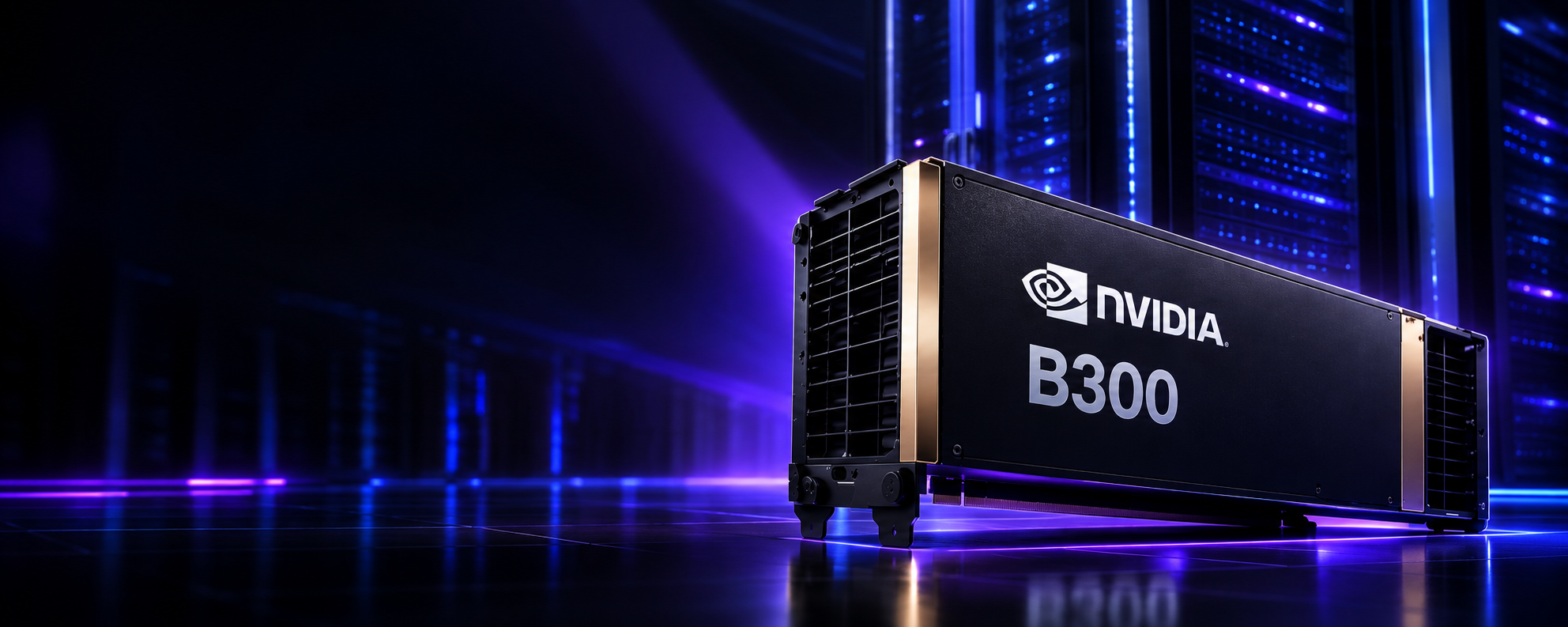
The NVIDIA H100 is the ninth-generation data center GPU, built on the Hopper architecture and released in 2022. By 2026 it has become the standard infrastructure for serious AI work — not because it is the newest chip available, but because it hits the right combination of memory, bandwidth, and AI-specific hardware features that modern workloads require.
The specifications that matter practically for teams using H100 cloud rentals:
The Transformer Engine performs per-layer statistical analysis to determine whether FP8 or BF16 precision is appropriate. For LLM training, where the workload is almost entirely attention mechanisms and matrix operations, this single feature delivers 2–3× throughput improvements compared to running the same code on an A100.
The H100 is not an incremental upgrade from the A100. For LLM training and high-throughput inference, it represents a generation shift. For smaller models (7B and below) and cost-sensitive inference, the A100 or L40S remain competitive. More on that in the use case section below.
What Is On-Demand GPU? (And What It Isn't)
On-demand GPU is a cloud compute model where you provision a GPU instance any time you need it, use it for as long as required, and release it when done. You pay only for the hours the instance is running. There is no upfront commitment, no minimum term, and no capacity reservation required.
| Model | Commitment | Pricing | Interruptible? | Best For |
|---|---|---|---|---|
| On-Demand | None | Standard hourly rate | No | Variable workloads, experiments, unpredictable demand |
| Reserved (1yr) | 12-month contract | ~40% below on-demand | No | Continuous production workloads with predictable usage |
| Reserved (3yr) | 36-month contract | ~55% below on-demand | No | Long-term AI platforms, enterprise commitments |
| Spot / Preemptible | None | Up to 70% below on-demand | Yes — 2 min warning | Fault-tolerant batch jobs, hyperparameter sweeps |
| Dedicated | Monthly fixed contract | Fixed monthly rate | No — exclusive access | Regulated industries (BFSI, healthcare) |
| Serverless GPU | None | Per compute-second | Auto-scaled to zero | Variable inference APIs, zero-idle-cost applications |
On-demand is not the cheapest model — reserved and spot instances offer significant discounts. But flexibility has real value for teams still validating their workload or iterating on models.
On-Demand H100 vs Buying: A Practical Comparison
The instinct to own hardware is understandable. But the actual economics of buying H100 hardware in India in 2026 are more complex than that framing suggests.
| Factor | On-Demand H100 (Cloud) | Buying H100 Hardware (India) |
|---|---|---|
| Upfront capital | Zero | ₹30–40L per GPU (PCIe) · ₹40–50L (SXM) |
| Time to first GPU job | Under 60 seconds | 6–12 months (procurement + delivery + setup) |
| Infrastructure cost | Included | ₹5–10L/yr (power, cooling, racks, networking) |
| Maintenance | Managed by provider | Your team's responsibility |
| Scaling to 8×H100 | Add instances in minutes | Another procurement cycle + ₹2–4 Cr |
| Hardware depreciation risk | Zero — you never own it | H100 is generation-old by 2028 |
| DPDP compliance docs | Provided by cloud vendor | Your team's responsibility to build |
The hidden expense that makes hardware ownership worse than it looks: most teams don't run GPUs at 80% utilisation. Typical enterprise AI workloads sit at 15–30% utilisation, meaning 70–85% of what you paid for sits idle. On-demand billing eliminates that waste completely.
Buy H100 hardware only when you can sustain 80%+ GPU utilisation for 18+ consecutive months, have in-house infrastructure engineers to manage it, and operate at a scale where CapEx is a smaller percentage of overall AI budget. Almost no team in their first three years meets all three criteria simultaneously.
On-Demand vs Reserved vs Spot: Picking the Right Model
Within the cloud GPU landscape, the choice between on-demand, reserved, and spot isn't a one-time decision — it's a strategy that evolves as your workload matures.
Start On-Demand: Validate Before Committing
Every workload should start on on-demand instances. You don't yet know how long your training runs will actually take, how much VRAM you need under real data conditions, or whether your architecture changes before production. A 100-hour training sprint at ₹219/hr costs ₹21,900 — far less than committing to a 3-month reserved instance and finding out your approach needs a rethink.
Move to Reserved When Demand Is Predictable
Once you have two or more consecutive months where GPU utilisation runs above 60% on a consistent schedule, reserved instances become the right choice. The 30–40% discount at that utilisation level translates directly to real savings — and you get guaranteed capacity, which matters when H100 availability is constrained. The break-even on reserved versus on-demand is approximately 730 hours of monthly usage.
Use Spot for Interruptible Workloads
Dataset preprocessing, hyperparameter sweeps, and offline batch inference are natural candidates for spot GPU instances — they can checkpoint and restart without losing work. At up to 70% below on-demand rates, spot instances dramatically extend your training budget. The discipline required: ensure your code saves checkpoints every 10–20 minutes and can resume from any checkpoint automatically.
Blend Models for Maximum Efficiency
The most cost-effective teams use a portfolio approach: reserved instances for baseline production load, on-demand for burst and training iterations, and spot for offline batch jobs. A well-architected blend typically achieves 35–50% savings versus running exclusively on-demand, without the rigidity of an all-reserved commitment.
H100 On-Demand Pricing in India (2026)
On Cyfuture AI, there are no foreign currency conversions, no hidden egress fees to Indian users, and no ambiguity about what you're paying for. Full details are at the Cyfuture AI pricing page.
| GPU | VRAM | On-Demand (₹/hr) | AWS Equivalent (est.) | Savings | Best On-Demand Use Case |
|---|---|---|---|---|---|
| H100 SXM5 | 80 GB HBM3 | ₹219/hr | ₹650–740/hr | ~65% | LLM training 13B+, fine-tuning, high-throughput inference |
| H100 PCIe | 80 GB HBM3 | ₹187/hr | ₹580–660/hr | ~65% | Large-scale inference, fine-tuning, moderate training runs |
| A100 80 GB | 80 GB HBM2e | ₹187/hr | ₹450–520/hr | ~57% | Deep learning training, stable production inference |
| A100 40 GB | 40 GB HBM2 | ₹170/hr | ₹380–430/hr | ~55% | Research, transformer training, smaller model fine-tuning |
| L40S | 48 GB GDDR6 | ₹61/hr | ₹180–230/hr | ~66% | Inference, generative AI apps, rendering, cost-sensitive workloads |
| V100 | 16–32 GB HBM2 | ₹39/hr | ₹140–180/hr | ~72% | Legacy ML pipelines, research, low-cost experimentation |
On Cyfuture AI, the on-demand hourly rate covers GPU compute, NVMe SSD storage, 10 GbE+ networking, pre-installed AI frameworks (PyTorch, TensorFlow, CUDA 12.x, vLLM, Hugging Face), and 24/7 India-based support. There are no separate charges for framework setup, instance termination, or inbound data transfer.
Real Cost Scenarios: What Teams Actually Pay
Abstract hourly rates only tell part of the story. Here is what on-demand H100 costs look like for three common patterns.
Start Your First H100 Job in Under 60 Seconds
NVIDIA H100 80 GB from ₹219/hr. Pre-installed PyTorch, vLLM, CUDA 12.x. Indian data centers. DPDP compliant. No procurement, no commitment, no minimum spend.
H100 Performance: Where It Pulls Ahead
The H100 is not an incremental improvement over the A100 — the performance gap is fundamental. Understanding where it outperforms previous generations helps you decide whether your workload actually needs it.
| Metric | H100 SXM5 | A100 SXM4 | V100 SXM2 | H100 Advantage |
|---|---|---|---|---|
| FP16 TFLOPS | 989 | 312 | 125 | 3.2× faster than A100 |
| FP8 TFLOPS | 3,958 | Not supported | Not supported | H100-exclusive capability |
| Memory Bandwidth | 3.35 TB/s | 2.0 TB/s | 0.9 TB/s | 1.7× vs A100 |
| LLM Inference Speed | Baseline | ~30× slower | ~60× slower | Defines real-time inference SLA |
| NVLink BW (per GPU) | 900 GB/s | 600 GB/s | 300 GB/s | Critical for multi-GPU scaling |
| Transformer Engine | Yes — FP8 dynamic precision | No | No | 2–3× LLM training throughput |
Training a 70B parameter model on an H100 cluster achieves 2–3× higher tokens-per-second compared to the same cluster on A100 hardware — not because the H100 runs faster in general, but because the Transformer Engine eliminates precision overhead that the A100 cannot.
When to Use an H100 (and When Not To)
Paying for H100 compute on workloads that an A100 or L40S can handle equally well is a common and avoidable expense. Here is a practical decision map.
H100 Is the Right Choice
- LLM training on 13B+ parameter models — the FP8 Transformer Engine delivers 2–3× throughput gains over A100
- Full fine-tuning of large foundation models (LLaMA 3, Mistral 70B, Falcon 180B) — HBM3 prevents memory bottlenecks on large batch sizes
- Real-time LLM inference APIs requiring P99 latency under 200ms — only H100 delivers consistent sub-200ms at high concurrency
- Multi-GPU NVLink clusters — NVLink 4.0 at 900 GB/s enables near-linear scaling across 8 GPUs
- Generative AI product APIs under production load (text, image, video, multimodal)
- Scientific HPC simulations requiring sustained FP64 throughput
Consider A100 or L40S Instead
- Fine-tuning models under 7B parameters — A100 40 GB handles this at 22% lower cost with comparable throughput
- Batch inference where latency doesn't matter — L40S at ₹61/hr delivers strong throughput at 28% of the H100 price
- LoRA/QLoRA fine-tuning of 7B models — quantisation reduces VRAM requirements below the H100 differentiator
- Initial prototyping and model exploration — validate on L40S or A100 first, then scale to H100 for full training
- Rendering and VFX workloads — L40S GDDR6 is architecturally better suited and significantly cheaper
GPU Workload Fit Guide — Select the right GPU, avoid overspending
| Workload | H100 80 GB · ₹219/hr | A100 80 GB · ₹187/hr | L40S 48 GB · ₹61/hr |
|---|---|---|---|
| LLM Training 70B+ Parameters | Best Choice | Marginal fit | Not recommended |
| Fine-Tuning 13B–70B Models | Best Choice | Good fit | Limited VRAM |
| Real-Time Inference API (<200ms) | Best Choice | Good fit | Good (lower cost) |
| Fine-Tuning <7B (LoRA / QLoRA) | Overkill | Best Value | Good fit |
| Rendering / VFX / Image Generation | Overkill | Not optimised | Best Value |
| Batch Offline Inference / Preprocessing | Expensive for batch | Good fit | Best Value |
Scaling Beyond a Single H100
One of the most underappreciated advantages of on-demand cloud GPUs is what happens when you need more than one. Scaling from a single H100 to an 8×H100 NVLink cluster takes minutes on Cyfuture AI. The same expansion in hardware terms takes months and costs ₹2–4 crore in additional procurement.
| Configuration | Interconnect | Best For | On-Demand Cost |
|---|---|---|---|
| 1×H100 | — | 7B–13B fine-tuning, moderate inference, experiments | ₹219/hr |
| 4×H100 NVLink | NVLink 4.0 — 900 GB/s | 13B–70B training, production inference clusters | ₹876/hr |
| 8×H100 NVLink | NVLink 4.0 — 900 GB/s | 70B+ training, full DGX-grade workloads | ₹1,752/hr |
| Multi-node (16+ H100) | InfiniBand HDR — 200 Gb/s | Foundation model training, HPC simulation clusters | Custom quote |
NVLink 4.0 at 900 GB/s bidirectional bandwidth enables 8×H100 clusters to achieve close to 8× the throughput of a single GPU for most LLM architectures, using frameworks like DeepSpeed ZeRO-3 and PyTorch FSDP.
India-Specific Advantages of On-Demand H100 Cloud
DPDP Act Compliance Without Overhead
India's Digital Personal Data Protection Act (2023) requires personal data stays within Indian jurisdiction. Cyfuture AI's GPU infrastructure in Noida, Jaipur, and Raipur means your training data and model weights never cross international borders. Data Processing Agreements are provided as standard on enterprise plans.
INR Billing — No Forex Risk
Running AI workloads on AWS or GCP means paying in USD and absorbing currency fluctuations. Cyfuture AI bills in INR with GST-compliant invoices, payment via UPI/NEFT/cards, and no currency conversion overhead — a real operational simplification for cost-sensitive AI teams.
Lower Latency for Indian Inference APIs
If you're serving an LLM endpoint to Indian users, latency depends partly on physical distance between the GPU and the user. India-hosted inference on Cyfuture AI delivers sub-20ms network round-trip times for most Indian cities — versus 60–120ms when routing through US-East or EU-West regions.
24/7 India-Based Engineer Support
When your training job hangs or your CUDA OOM error is ambiguous at 2 AM, Cyfuture AI's support team — staffed by GPU infrastructure engineers in the same time zone — responds in under 15 minutes for P1 incidents.
IndiaAI Mission Alignment
Cyfuture AI is a recognised infrastructure partner under India's IndiaAI Mission, which has scaled the national compute pool to 34,000+ GPUs. For government-adjacent projects and regulated industries, this alignment is both a compliance and procurement advantage.
RBI Cloud Guidelines Alignment for BFSI
For banks and NBFCs under RBI's 2023 cloud adoption framework, Cyfuture AI's India-hosted GPU cloud is architected to meet data localisation, multi-zone redundancy, and audit trail requirements — with compliance documentation that auditors can review.
Decision Framework: On-Demand H100 — Yes or No?
The following framework maps common team situations to the GPU deployment model that actually fits.
How Cyfuture AI Delivers On-Demand H100 Access
Cyfuture AI's on-demand H100 infrastructure is purpose-built for Indian teams — from the GPU hardware and data center locations to the compliance documentation and support model.
Rent On-Demand H100 GPU in just 3 Clicks
H100 from ₹219/hr. Indian data centers. DPDP compliant. Pre-installed AI stack. 24/7 engineer support. No commitment, no minimum spend, no forex risk. Join 500+ enterprises running on Cyfuture AI.
Frequently Asked Questions
On Cyfuture AI, an on-demand NVIDIA H100 80 GB GPU starts at ₹219/hr (SXM5) and ₹187/hr (PCIe). An 8×H100 NVLink cluster — the standard configuration for distributed LLM training — costs ₹1,752/hr. There are no minimum hours and no setup fees. Global hyperscalers like AWS and Google Cloud charge an estimated ₹650–740/hr for equivalent H100 capacity without Indian data residency or DPDP compliance documentation. Full pricing at cyfuture.ai/pricing.
For the vast majority of teams, renting on-demand is the right starting point. A single H100 costs ₹30–40 Lakhs to buy in India (after import duties and GST), plus ₹5–10 Lakhs/year in power, cooling, and maintenance. Procurement takes 6–12 months. On-demand rental at ₹219/hr delivers identical compute without capital outlay, procurement delay, or depreciation risk. Hardware ownership makes financial sense only at 80%+ GPU utilisation for 18+ consecutive months with in-house infrastructure engineers.
An on-demand GPU instance is a cloud compute resource you provision and release at any time, with no minimum commitment and no upfront payment. You pay per hour while the instance is running — billing stops within a minute of termination. Unlike reserved instances (which require a 3–12 month commitment) or spot instances (which can be interrupted with 2 minutes' warning), on-demand gives you full control and guaranteed availability for as long as needed.
H100 GPUs deliver their clearest advantage for: LLM training and fine-tuning on 13B+ parameter models; high-throughput inference serving where sub-200ms P99 latency matters; generative AI workloads under production load; multi-GPU NVLink distributed training; and scientific HPC simulations. For smaller models (7B and below), batch inference where latency doesn't matter, and rendering workloads, the A100 or L40S deliver comparable results at 30–70% lower cost.
On-demand H100 instances on Cyfuture AI provision in under 60 seconds through the dashboard or API. The instance boots with PyTorch, TensorFlow, CUDA 12.x, vLLM, Hugging Face Transformers, and other frameworks pre-installed. One-click templates for LLM fine-tuning (Axolotl + DeepSpeed) and inference serving (vLLM + Triton) are available. You can run your first training job within minutes of signing up — no hardware setup, no waiting.
Neither is universally better — it depends on your utilisation pattern. On-demand is optimal for variable workloads and projects where you haven't established a consistent usage baseline. Reserved instances deliver 30–40% savings but require predictable demand. The effective strategy: start on on-demand to validate your workload, then switch to reserved once you're consistently above 60% monthly utilisation. The break-even is approximately 730 hours of monthly usage.
Yes. All Cyfuture AI GPU infrastructure runs in Indian data centers (Noida, Jaipur, Raipur) — your training data, model weights, and inference outputs stay within Indian jurisdiction and never cross international borders. For enterprise customers subject to the DPDP Act 2023, Cyfuture AI provides Data Processing Agreements documenting data handling practices. The infrastructure is ISO 27001:2022 certified and SOC 2 Type II attested. For BFSI customers, the architecture aligns with RBI's 2023 cloud adoption framework requirements.
Every H100 instance on Cyfuture AI boots with a complete AI stack pre-installed: PyTorch 2.x, TensorFlow 2.x, CUDA 12.x, cuDNN 9.x, vLLM for high-throughput inference, Text Generation Inference (TGI), Hugging Face Transformers and Diffusers, LangChain, DeepSpeed, Axolotl for fine-tuning, and Jupyter Lab for interactive development. You can start a training job within minutes of provisioning — no environment setup required.
Both variants have 80 GB HBM3 memory and the Transformer Engine with FP8 support, but differ in interconnect and bandwidth. The H100 SXM5 (₹219/hr) uses the SXM form factor with NVLink 4.0 at 900 GB/s GPU-to-GPU bandwidth — essential for multi-GPU clusters and distributed training. The H100 PCIe (₹187/hr) connects via PCIe 5.0, which is sufficient for single-GPU training and inference but limits multi-GPU scaling. For 8×H100 NVLink clusters, SXM5 is the correct choice. For standalone inference or single-GPU fine-tuning, PCIe delivers the same compute at a lower rate.
Cyfuture AI is approximately 65% cheaper than AWS (p4de.24xlarge) or Google Cloud (a3-highgpu) for equivalent H100 capacity. Beyond cost, the key differences for India-based teams are: (1) INR billing — no USD invoices or forex conversion fees; (2) India data residency — your data stays within Indian jurisdiction, essential for DPDP Act compliance; (3) lower latency — India-hosted GPUs deliver sub-20ms round-trip times to Indian users vs 60–120ms from US-East regions; (4) India-based 24/7 support in IST. Global hyperscalers don't offer dedicated India-based GPU support or DPDP-specific compliance documentation as standard.
Yes. Cyfuture AI offers 4×H100 NVLink (₹876/hr), 8×H100 NVLink (₹1,752/hr), and custom multi-node clusters (16+ GPUs with InfiniBand HDR at 200 Gb/s) for distributed training. NVLink 4.0 at 900 GB/s bidirectional bandwidth enables near-linear scaling across 8 GPUs for most LLM architectures using PyTorch FSDP or DeepSpeed ZeRO-3. The full framework stack — DeepSpeed, Axolotl, NCCL — is pre-configured. For foundation model training requiring 16+ GPUs, Cyfuture AI provides custom cluster configurations with dedicated InfiniBand networking.
Cyfuture AI accepts all major Indian payment methods: UPI (Google Pay, PhonePe, BHIM), NEFT/RTGS bank transfers, debit and credit cards (Visa, Mastercard, RuPay), and corporate net banking. All billing is in Indian Rupees (INR) with GST-compliant invoices. There are no foreign currency conversion fees, no minimum spend requirements, and no lock-in. Enterprise customers can arrange monthly invoice-based billing with purchase order workflows.
Fine-tuning a 13B LLaMA 3 model on a typical proprietary dataset (10–50K samples) takes approximately 8–18 hours on an 8×H100 NVLink cluster using Axolotl + DeepSpeed ZeRO-3. At ₹1,752/hr for the 8×H100 cluster, a single fine-tuning run costs ₹14,016–₹31,536. Most teams iterate 2–4 times before reaching their target quality, putting total fine-tuning spend in the ₹28,000–₹1,26,000 range. For full fine-tuning of 70B models, expect 18–48 hours on the same cluster (₹31,536–₹84,096 per run).
The H100 Transformer Engine is NVIDIA's hardware and software system that dynamically selects between FP8 and BF16 precision on a per-layer, per-iteration basis during training. It analyses the statistical range of activations and weights in real time and uses FP8 where numerical precision allows — delivering up to 3,958 FP8 TFLOPS versus 989 FP16 TFLOPS, a 4× compute improvement. For LLM training, where the workload is dominated by transformer attention blocks and matrix multiplications, this translates directly to 2–3× higher training throughput compared to the A100, without manual precision tuning by the developer. This is the single biggest reason the H100 is the standard GPU for 13B+ model training.
Yes. Cyfuture AI offers serverless GPU inferencing that bills per compute-second and scales to zero when idle — eliminating the cost of paying for GPU time between requests. It is the right choice for variable traffic inference APIs where request volume is unpredictable or spiky, development and staging environments that don't run continuously, and cost-sensitive applications where idle GPU cost is a problem. For production inference APIs with consistent traffic (above approximately 40–60% GPU utilisation), dedicated on-demand or reserved H100 instances deliver better price-performance than serverless. Learn more at cyfuture.ai/serverless-inferencing.